

More news on this day
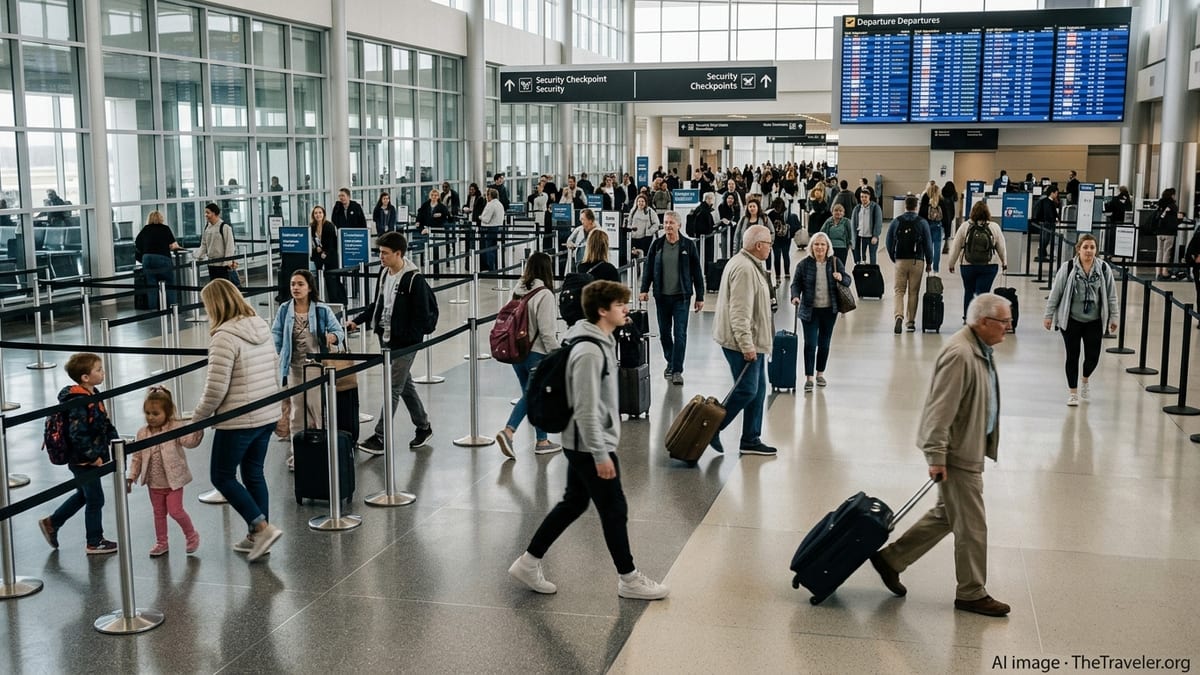
As spring break and Easter travel reach their peak, Detroit Metropolitan Wayne County Airport is emerging as a relative bright spot, maintaining short security waits and largely routine operations even as a partial federal government shutdown and severe weather trigger long lines and cancellations at airports across the United States.
Get the latest news straight to your inbox!
Heavy Spring Demand Without Major Meltdowns
Publicly available flight-tracking and aviation data show Detroit Metro is handling a sharp seasonal upswing in passenger volumes typical for late March, as college spring breaks overlap with Easter getaway traffic. Airlines serving the airport, led by Delta Air Lines, have expanded schedules to popular leisure destinations, while low-cost carriers have added or resumed seasonal routes aimed at Florida, the Carolinas and other warm-weather markets.
Federal aviation status boards and airline trackers indicate that, aside from localized disruptions tied to the mid-March North American blizzard system, Detroit has avoided the gridlock and multi-hour security waits seen at some large hubs. In recent days, overall operations at Detroit have been described as busy but orderly, with delays concentrated in specific banks of flights rather than spreading across the entire schedule.
Recent route announcements underscore how airlines are leaning into demand. Spirit Airlines, for example, has resumed or expanded seasonal nonstop service from Detroit to several East Coast and Sun Belt cities this spring, while new leisure-focused flights such as Avelo Airlines’ link between Detroit and Lakeland in central Florida tap into spring training and beach travel demand.
Historic traffic figures also set the stage for a robust season. Wayne County Airport Authority statistics show Detroit Metro’s passenger volumes in 2023 were approaching pre-pandemic levels, and 2024 and early 2025 totals continued that recovery trend, suggesting a broad base of demand heading into this year’s spring peak.
Short TSA Waits Contrast With National Strains
While travelers in some parts of the country are reporting security lines stretching well beyond an hour amid staffing strains and the ongoing Department of Homeland Security funding standoff, recent traveler accounts and crowd-sourced updates indicate security wait times at Detroit Metro have remained comparatively short. Posts shared this week on regional forums describe typical waits of under 20 minutes and, at times, just a few minutes at both the McNamara and Evans terminals.
That experience differs markedly from reports out of other U.S. airports, where long screening queues have been attributed to Transportation Security Administration staffing challenges during the partial shutdown. In cities such as Austin and Chicago, coverage describes travelers arriving hours early to compensate for unpredictable processing times.
At Detroit Metro, the combination of multiple checkpoints, a large primary terminal designed around high-volume hub traffic, and the airport’s own real-time wait-time tools appears to be helping distribute crowds more efficiently. Passengers are able to check approximate security waits before leaving for the airport, and some have reported adjusting their arrival times or choice of checkpoint accordingly.
Travel organizations are still urging spring breakers to build in extra time, particularly for early-morning departures when both security and checked-bag counters are busiest. However, the emerging pattern at Detroit suggests that, so far, the national security squeeze has not translated into persistent logjams at the region’s main gateway.
Weather Disruptions Remain Localized
The primary operational test for Detroit this month came not from terminal crowding but from the powerful mid-March storm system that swept across the central United States and Great Lakes. The multi-day event brought heavy snow, ice and strong winds to parts of Michigan, prompting temporary ground delays and a wave of cancellations into and out of Detroit Metro.
Local coverage from the storm period documented clusters of delayed and canceled flights, particularly on March 16 and 17, when conditions in the upper Midwest were most severe. Some early spring break travelers encountered last-minute rebookings, longer-than-expected time on the tarmac and tight connections as airlines rebalanced their networks around the weather.
Despite those setbacks, Detroit has avoided prolonged operational fallout. As the storm system moved east and conditions improved, airlines restored most schedules, and airport status pages in subsequent days have shown largely normal operations with only scattered weather-related delays. That contrasts with prior holiday periods when winter storms occasionally led to days of residual disruption for major hubs.
Analysts note that airlines have been more conservative with scheduling around potential weather this year, trimming some marginal flights and building in additional recovery time. Combined with Detroit Metro’s role as a well-resourced hub, those choices appear to have reduced the risk of small disruptions snowballing into systemwide chaos.
Expanded Leisure Options Support Spring Breakers
Spring 2026 is also bringing a more leisure-focused route map from Detroit, which may be helping to spread demand more evenly across the day. Spirit Airlines has added or resumed seasonal nonstop flights from Detroit to Boston, Philadelphia, Dallas Fort Worth, Charlotte and Raleigh, expanding a network that already serves a wide range of coastal and Sun Belt destinations from the Motor City.
New service by Avelo Airlines between Detroit and Lakeland, Florida, provides a direct link to central Florida spring training and theme-park country, giving travelers another alternative to more congested hubs in Orlando or Tampa. Travel deal trackers point out that some of Delta’s Florida nonstops from Detroit for the second week of April are also priced competitively with ultra-low-cost carriers, encouraging more passengers to book nonstop flights rather than connecting through other airports.
More nonstop options can relieve pressure on connecting banks, where tight schedules and rolling delays often compound into missed flights. By offering additional point-to-point choices timed around peak spring break weekends, carriers may be contributing indirectly to Detroit’s smoother experience, even as national aviation systems handle one of the busiest travel windows of the year.
Regional airports in Michigan and neighboring states, including Grand Rapids and Lansing, continue to feed passengers into Detroit’s network. However, publicly available passenger data show that Detroit remains the dominant gateway for the state, making its relative stability during this period particularly significant for Midwest travelers.
Travel Tips as Easter Weekend Approaches
With Easter Sunday falling just days away, Detroit Metro is expected to remain busy through the end of March and into early April. National travel groups are forecasting near-record domestic air travel volumes over the combined spring break and Easter period, and airlines have warned that even a single day of severe weather or staffing issues can quickly tighten capacity.
For Detroit travelers, recent patterns suggest it is still prudent to arrive earlier than usual, especially for morning departures and international flights. Airlines continue to recommend at least two hours for domestic and three hours for international trips, but those heading out during the heaviest spring break weekends may benefit from adding extra buffer time for parking, check-in and potential weather-related slowdowns.
Passengers are also encouraged by consumer advocates to monitor real-time flight status and security wait information before leaving home, as same-day schedule adjustments remain common during peak travel seasons. Flexible itineraries, the use of mobile boarding passes and carry-on-only packing can all help reduce the risk of missed flights or lengthy rebooking processes if conditions change.
For now, Detroit Metro stands out as one of the large U.S. airports that has managed to keep crowds moving during a complex and politically charged travel season. As the combination of spring breakers, family Easter trips and ongoing federal funding uncertainty continues to test the system, the airport’s performance will remain closely watched by both travelers and the broader aviation industry.