

More news on this day
Armed conflicts, state collapse and fast-changing security alerts are reshaping the global map for American travelers, as an expanding list of countries now carry the stark “Do Not Travel” warning from the United States government.
Get the latest news straight to your inbox!
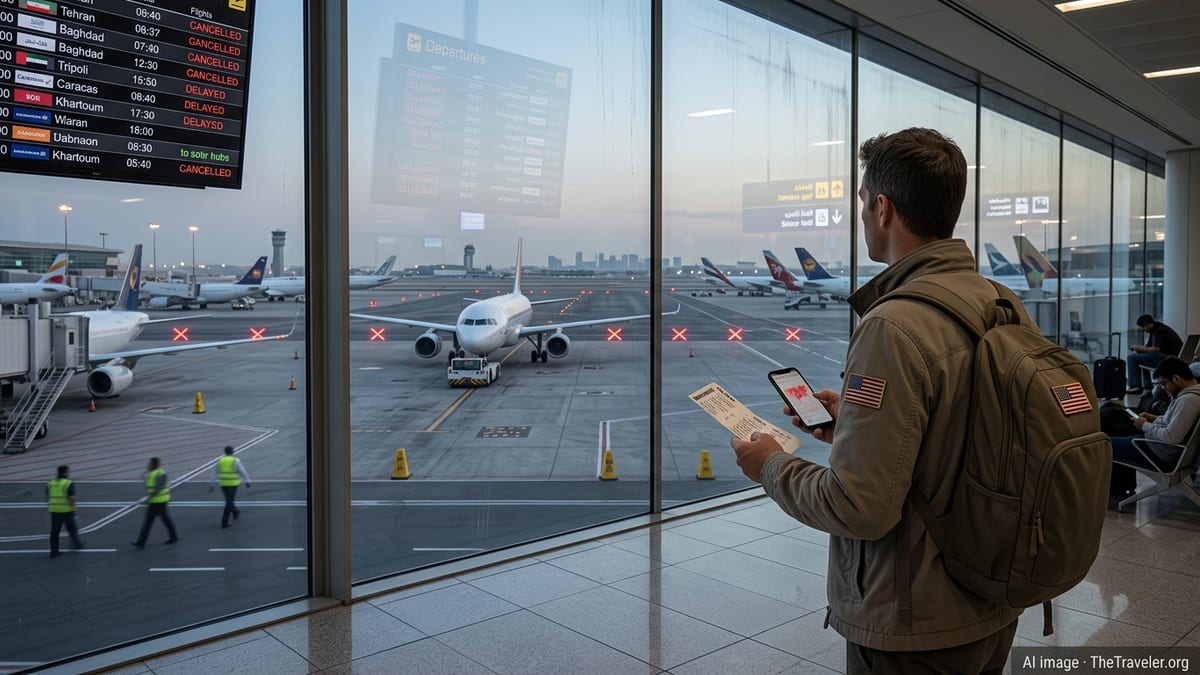
What a U.S. “Do Not Travel” Warning Really Means
The U.S. Department of State currently assigns every country a risk level from 1 to 4, with Level 4 representing the most serious advisory. A Level 4 label does not always mean Americans are legally barred from entering, but public guidance makes clear that travel is strongly discouraged and consular help may be extremely limited if something goes wrong.
Publicly available information shows that Level 4 advisories are generally reserved for places experiencing active war, widespread terrorism, kidnappings, rampant violent crime, or a breakdown in basic government services. In some cases, foreign governments or carriers have also cut commercial air links, leaving few viable routes in or out.
Recent analysis by travel-risk consultancies and government advisories indicates that the number of countries under Level 4 has grown in the past year, particularly across parts of the Middle East, Africa and Latin America. For Americans weighing trips to frontier destinations, the label has become a blunt but crucial signal that conditions on the ground can deteriorate faster than help can arrive.
Travel industry data further suggests that once a country receives a Level 4 advisory, tourism arrivals from the United States often collapse, sometimes for years. Even when on-the-ground realities vary regionally, the nationwide warning typically drives airlines, insurers and tour operators to scale back services, compounding the difficulties for anyone who still chooses to go.
Middle East on Edge as War With Iran Disrupts Travel
The U.S. and Israel’s ongoing war with Iran has rapidly turned large portions of the Middle East into high-risk territory for American travelers. Recent coverage describes widespread airspace closures, damaged airport infrastructure and cascading flight cancellations that have stranded hundreds of thousands of passengers on key corridors linking Europe, Africa and Asia.
According to recent advisories, Americans are being urged to avoid or depart a broad swath of the region, including Iran, Iraq, Syria, Yemen and parts of Israel and the Palestinian territories. Many of these destinations already carried Level 4 or near-Level 4 warnings before the latest escalation, and the conflict has amplified concerns over missile strikes, militia attacks and the potential targeting of Western interests.
Even relatively stable Gulf hubs face heightened scrutiny. While countries such as Qatar, the United Arab Emirates and Bahrain are not uniformly classified as “Do Not Travel” destinations, guidance now stresses the risk of spillover incidents and large-scale disruption. The message for Americans is nuanced but clear: even if individual cities may appear calm, regional conflict can shut borders or airspace with little notice.
Security analysts note that the Middle East’s role as a global aviation crossroads complicates the picture. Travelers who never intended to set foot in a conflict zone can still be caught up in diversions and mass cancellations if their itineraries rely on major hubs in the Gulf or on routes that overfly high-risk airspace.
Africa’s Expanding Cluster of Level 4 Hotspots
Africa now accounts for one of the largest concentrations of Level 4 advisories affecting American travelers. Recent travel guidance highlights eight countries under “Do Not Travel” warnings, including Libya, Somalia, Sudan, South Sudan, Mali, Niger, Burkina Faso and the Central African Republic.
Publicly accessible risk assessments attribute these designations to overlapping crises: entrenched insurgencies, coups and political instability, kidnapping for ransom, and, in some regions, severe shortages of medical care. In the Sahel belt in particular, the convergence of armed groups and fragile state institutions has eroded the ability to protect foreign visitors or respond to emergencies.
Independent security maps for 2026 similarly place several of these countries in their highest danger tiers, citing frequent attacks along major roads and in regional capitals. In practice, this means that road trips, overland border crossings and even short internal flights can involve levels of risk that far exceed what most tourists or business travelers are prepared to accept.
While parts of Africa remain popular and relatively safe for tourism, the widening cluster of Level 4 states has knock-on effects for transit routes and regional itineraries. Tour operators have trimmed multi-country trips, and airlines have reduced or rerouted services around the most volatile areas, limiting options for Americans who once combined higher-risk frontier stops with more established safari or beach destinations.
Latin America: Venezuela and Mexico Under Scrutiny
In the Western Hemisphere, Venezuela stands out as one of the starkest warnings for Americans. Updated advisories and recent analysis describe a country where political tension, economic collapse and security crackdowns create overlapping dangers for foreign visitors, including the risk of detention, kidnapping and the near-absence of reliable medical infrastructure.
Late-2025 measures tightened airspace and operational restrictions linked to alleged narcotics trafficking and regional instability, leaving flights to and from Venezuela heavily constrained. Although some officials have since signaled an interest in reopening parts of the airspace, risk-focused publications continue to treat the country as effectively off-limits for nonessential American travel in early 2026.
Mexico occupies a more complicated place on the risk map. It is not universally classified as Level 4, and its major resort zones still attract millions of American visitors each year. Yet a spate of high-profile cartel violence, including unrest that temporarily disrupted international flights at key coastal airports, has prompted several governments and private risk firms to flag specific states and border regions as areas where travel should be reconsidered or avoided.
The dividing line in Mexico often runs between heavily policed resort corridors and hinterlands where organized crime, fuel theft and kidnapping remain acute concerns. For American travelers, this means that blanket characterizations of the country as either “safe” or “dangerous” are increasingly misleading. Instead, the practical risk level can change dramatically from one state to the next, and even short detours off the tourist path may carry heightened danger.
How Travelers Can Read and React to “Do Not Travel” Alerts
For Americans planning international trips in 2026, the expanding roster of “Do Not Travel” destinations underscores the need to monitor advisories continuously, not just at the moment of booking. Security conditions in several highlighted countries have shifted within weeks or days, catching travelers who relied on outdated information.
Experts recommend treating Level 4 advisories as a clear signal to avoid nonessential trips and reconsider even urgent travel unless there is robust, on-the-ground support. For destinations rated at Level 3 or below but bordering conflict zones, travelers are advised to pay close attention to regional developments and transportation disruptions, which can ripple far beyond the countries directly named in warnings.
Insurance policies, airline waivers and tour operator terms have also evolved in response to the new risk landscape. Many now distinguish between routine travel disruption and changes triggered by government advisories, wars or acts of terrorism, affecting whether travelers can rebook or recover costs when conditions deteriorate.
As of early 2026, the map of danger for Americans abroad is being redrawn by conflict, climate shocks and political decisions made far from departure gates. For anyone determined to keep traveling, understanding what “Do Not Travel” actually signals, and where it applies, has become as important as comparing fares or reading hotel reviews.