

Connecticut may be a small New England state, but its entry rules are shaped entirely by United States immigration law. Whether you are heading to Mystic’s seaport museums, touring Ivy League campuses in New Haven, or driving the fall foliage route along the Connecticut River, your ability to enter does not depend on state authorities but on federal border controls. Understanding whether you need a visa, an ESTA, or simply your passport can save you delays at the airport and stress at passport control.
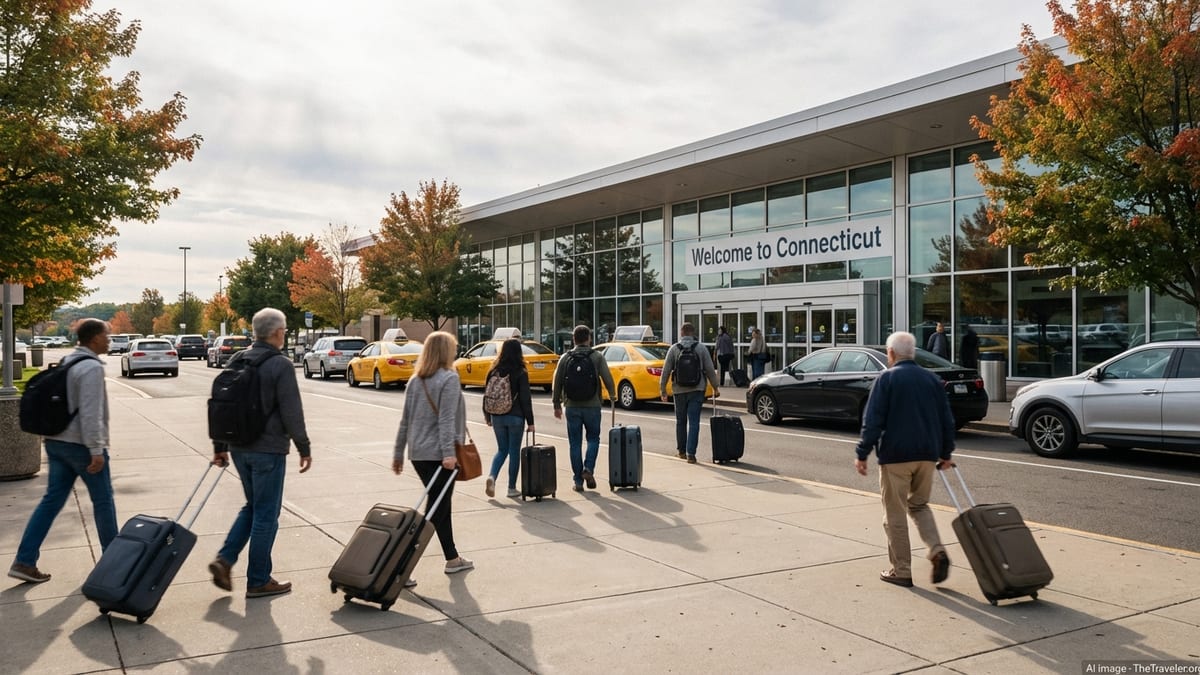
Connecticut Entry Basics: How U.S. Rules Apply
There is no such thing as a visa specific to Connecticut. The state is part of the United States, so all entry requirements are determined and enforced by the U.S. federal government. That means the same visa and immigration rules that apply when visiting New York or California also apply when your destination is Hartford, New Haven, or any coastal town in Connecticut.
You will normally enter the United States through an international airport, land border, or seaport that has federal immigration control. Many travelers flying to Connecticut will arrive first at a major international gateway such as New York City or Boston. Your documents are inspected at your first U.S. port of entry, not when you actually cross into Connecticut. Once you clear federal immigration and customs, you are free to travel domestically to Connecticut without further border checks.
Because Connecticut has no separate immigration policy, your key task is making sure you meet U.S. entry requirements in general. That includes having a valid passport, the correct visa or travel authorization if needed, and proof you intend to respect the terms of your stay. The exact documents required depend heavily on your nationality, your residence status, and the purpose and length of your visit.
Entry rules are updated periodically, especially for security, public health, or diplomatic reasons. Requirements can change with relatively short notice, so you should always verify current U.S. government guidance for your nationality shortly before you travel. Use official sources and avoid relying only on social media or old blog posts.
Who Can Visit Connecticut Without a Visa?
Many foreign visitors can travel to Connecticut without applying for a traditional visa, but that does not mean they can arrive without any paperwork. Some travelers can enter with just a passport due to their citizenship or residence status, while others use the U.S. Visa Waiver Program with an approved electronic authorization. Understanding which group you fall into is essential.
Citizens of the United States do not need any special permission to visit Connecticut. Lawful permanent residents of the U.S., commonly known as green card holders, also do not obtain separate visas for Connecticut. They still need to present their passports and permanent resident cards when returning from abroad, but once admitted they can move freely between states.
Citizens of Canada and most citizens of Bermuda visiting for tourism or short business generally do not need a U.S. visa for typical short stays, provided they meet standard eligibility conditions. Even though they are often exempt from visas, they must still carry valid travel documents, answer questions at the border, and may need to show evidence of ties to their home country, such as employment or a return ticket.
For many other nationalities, the main way to visit Connecticut without a traditional visa is through the U.S. Visa Waiver Program. Eligible travelers from participating countries may enter for tourism or business for up to 90 days, provided they hold an approved Electronic System for Travel Authorization, known as ESTA, before boarding. ESTA is not a visa but a pre-travel clearance. Without it, airlines can refuse boarding even if your passport is from a Visa Waiver country.
When You Do Need a U.S. Visa to Visit Connecticut
If you are not a citizen or permanent resident of the United States, a Canadian exempt traveler, or from a visa waiver country with an approved ESTA, you will usually need a visa issued by a U.S. consulate before traveling to Connecticut. The type of visa depends on why you are visiting. For typical tourism, sightseeing, or visiting friends and family, the most common option is a B1/B2 visitor visa.
A B1 visa category generally covers short business visits such as meetings, conferences, or contract negotiations, while B2 covers leisure travel, tourism, and medical visits. The two are often issued together as a combined B1/B2 visa in your passport. This visa allows temporary stays but does not authorize you to work in the United States or enroll in a long study program.
If your primary purpose in Connecticut is to study, work, or participate in an exchange program, a visitor visa will not be appropriate. Students typically require an F or M visa, depending on the type of school or program, and must have an acceptance document from a U.S. institution approved to host international students. Employees and temporary workers need an employment-based visa such as H, L, O, or other categories, supported by an approved petition filed by a U.S. employer.
Visa applications are handled by U.S. embassies and consulates abroad. The process usually involves filling out online forms, paying a fee, scheduling a consular interview, and presenting supporting documents, such as proof of ties to your home country, financial means, and your travel plans. Processing times vary widely between locations and seasons, so you should apply well in advance of your planned trip to Connecticut.
Passports, Validity Rules, and Travel Documents
No matter where you are from, you will need a valid passport or recognized travel document to enter the United States and continue on to Connecticut. In most cases, your passport must be valid at least until the end of your intended stay. Some travelers are subject to the six month rule, which means their passport should be valid for at least six months beyond the date they plan to depart the U.S., but some countries are exempt under specific agreements.
If you are traveling under the Visa Waiver Program, the United States requires a biometric or e-passport. These passports have a small electronic chip and are usually marked with a special symbol on the cover. If your passport is older or non-biometric, you may need to renew it before you can qualify for visa-free travel on ESTA. Otherwise, you may have to apply for a regular visitor visa instead.
Children and minors must also hold their own passports; most border controls no longer accept children listed in a parent’s passport alone. If a child is traveling without both parents, officials may ask for documentation showing consent, custody arrangements, or authorization, especially in cases of shared custody. While rules can vary, carrying birth certificates and consent letters can help avoid delays.
Refugee travel documents, emergency passports, and other special documents may be accepted case by case but can involve more scrutiny. If your passport is damaged, nearly expired, or has missing pages, it is safer to replace it before traveling. Airlines and border officers have discretion to deny boarding or entry if they doubt the authenticity or integrity of your documents.
Health, Security, and Other Border Controls
Beyond visas and passports, you must meet the United States’ health and security requirements to reach Connecticut. Health-related entry rules have evolved in recent years, especially during and after the global pandemic period. While most broad travel restrictions have eased compared with 2020 and 2021, the U.S. government can still adjust public health requirements when necessary, including proof of vaccination or testing for certain travelers.
Security checks are a routine part of entering the United States. Visitors are usually photographed and fingerprinted on arrival, and their details compared with security databases. Officers can ask about your travel history, purpose of visit, where you will stay, and how long you intend to remain. Answering truthfully and calmly is very important; misleading or incomplete answers can lead to refusal of entry.
Customs rules also apply when you enter the U.S. before continuing on to Connecticut. You will be required to declare items such as cash over a stated threshold, food products, agricultural goods, and certain commercial merchandise. The United States takes agricultural and biosecurity risks seriously, so failing to declare food or plant products can result in fines, even if the items themselves are permitted.
Travelers with previous immigration violations, criminal records, or security flags may face additional questions or restrictions. In some cases, a special waiver or additional documentation is required. Because these issues are highly sensitive and can change with policy updates, it is wise for anyone with a complicated history to seek expert advice and check official guidance well before booking a trip to Connecticut.
Practical Tips for a Smooth Arrival in Connecticut
Arriving in the United States smoothly is often about preparation. Before you even pack your bag for Connecticut, confirm your passport’s expiration date and check whether you need a visa or ESTA. Print or save confirmation emails, visa approval pages, and accommodation details. Having digital copies in your phone and paper copies in your hand luggage can make it easier to answer questions at the border.
Airline staff conduct initial checks at the departure gate, especially on flights bound directly for the United States. They may verify your passport, visa, or ESTA approval before allowing you to board. If something is missing or incorrect, they are usually required to deny boarding to avoid fines. For that reason, you should not rely on fixing documentation issues after arriving at a connecting airport.
On your arrival in the United States, you will go through immigration and then customs. Keeping your answers short, accurate, and consistent with your documents is key. If asked where you are going, you can explain that you are traveling on to Connecticut and mention your accommodation or host. If you are staying with friends or family, having their address and phone number ready can be helpful.
Once you clear immigration and customs at your first U.S. entry point, any onward flight to Connecticut will be domestic. You will still go through standard airport security screening, but there is no second immigration step inside the country. Within Connecticut itself, you can move freely between cities and towns, though you should always carry identification, especially if you are a foreign visitor.
The Takeaway
There is no separate visa for visiting Connecticut. The rules that matter are the same ones that govern entry to any part of the United States. Whether you need a visa, ESTA, or no formal authorization depends on your citizenship, residence status, and purpose of travel, not on your final destination within the country.
Planning ahead is the most effective way to ensure your trip begins smoothly. Confirm whether you qualify for the Visa Waiver Program or require a visitor or other category of visa. Check your passport’s validity, keep an eye on any updated health or security measures, and carry evidence of your travel plans and ties back home. With the paperwork in order, you can focus on the real attraction of visiting Connecticut: historic seaports, leafy college towns, coastal villages, and the classic New England landscapes that make the state so memorable.
FAQ
Q1. Do I need a special visa just for Connecticut?
There is no separate visa for Connecticut. You enter under general United States immigration rules, and once admitted you are free to travel to Connecticut.
Q2. I am from a Visa Waiver country. Can I visit Connecticut with just ESTA?
If you are eligible for the U.S. Visa Waiver Program and have an approved ESTA, you can visit Connecticut for tourism or short business as part of your up to 90 day stay.
Q3. How long can I stay in Connecticut on a visitor visa?
On a typical B1/B2 visitor visa, the immigration officer at entry usually grants a stay of up to several months, but the exact period is noted in your admission record.
Q4. Can I work in Connecticut on a tourist or business visitor visa?
No. Visitor visas and Visa Waiver entries allow tourism and certain business activities, but they do not authorize you to take paid employment in Connecticut or elsewhere in the U.S.
Q5. Do children need their own passports to visit Connecticut?
Yes. In most cases, each child must have their own passport. Children listed only on a parent’s passport will usually not be accepted for international travel.
Q6. If I study in Connecticut, is a visitor visa enough?
No. For full time study at a school or university in Connecticut you normally need an appropriate student visa, backed by official acceptance from an approved institution.
Q7. Can I extend my stay in Connecticut after I arrive?
Extensions are possible in some circumstances, but they require an application to U.S. immigration authorities and are not guaranteed. You should not assume an extension will be granted.
Q8. Is my passport’s six month validity rule always required for visiting Connecticut?
Many travelers are expected to have passports valid for six months beyond their planned departure, but some nationalities are exempt. It is safest to have a passport well beyond expiry.
Q9. Do I have to pass immigration again when I fly from another U.S. city to Connecticut?
No. You complete immigration and customs at your first U.S. entry point. Any onward flight to Connecticut is treated as a domestic journey.
Q10. What happens if my documents are not in order when I arrive?
If your visa, ESTA, or passport are missing, invalid, or inconsistent, you may be refused boarding by the airline or refused entry by border officers and required to return home.