

More news on this day
Travelers moving through Houston’s George Bush Intercontinental Airport this weekend encountered significant disruption, with publicly available data indicating 97 delayed flights and 11 cancellations tied to a mix of security bottlenecks, staffing shortages and weather and capacity pressures.
Get the latest news straight to your inbox!
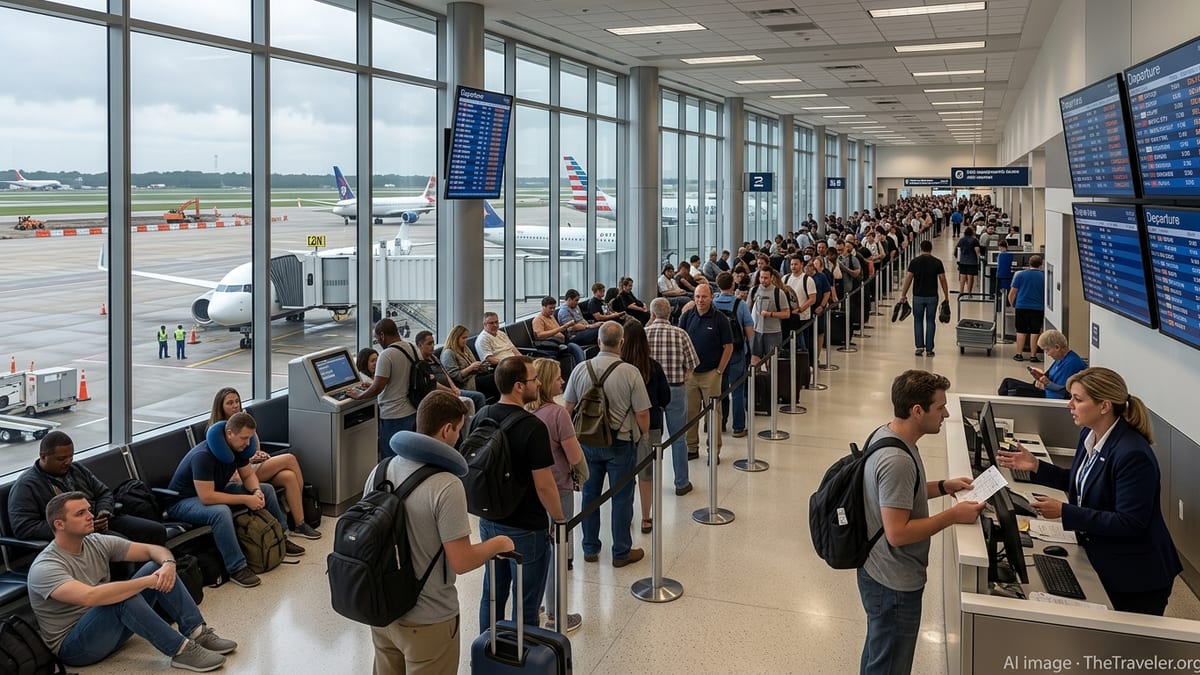
Delays and Cancellations Ripple Across Sunday Schedules
The latest operational snapshots for George Bush Intercontinental show that the 97 delays and 11 cancellations were concentrated around peak travel periods, affecting both morning departures and late afternoon inbound flights. The disruption primarily impacted major domestic hubs and a handful of international routes, creating missed connections and extended layovers for many passengers in transit through Houston.
Tracking services indicate that the majority of delayed flights experienced waits ranging from 45 minutes to more than two hours, with a smaller number pushed back longer as aircraft and crews fell out of position. Cancellations were spread across several carriers rather than limited to a single airline, reflecting broader strain in the system rather than one isolated operational failure.
Although the total number of cancellations remained relatively modest compared with nationwide weather emergencies earlier in the year, the clustering of 97 delays at a single hub compressed into a short time window translated into crowded gates, rebooked itineraries and full standby lists. Travelers described on social forums a patchwork of rolling departure time changes and sudden gate shifts as operations teams attempted to recover the schedule.
Publicly visible data suggests that the disruption at Bush Airport did not reach the scale of the largest national meltdowns seen during major winter storms, but it marked one of the more acute localized episodes of 2026 so far at the Houston hub.
Security Lines, Staffing Strains and a System Under Pressure
The flight disruption unfolded against a backdrop of mounting pressure on security screening at Houston’s airports. Recent national coverage has highlighted that Bush Intercontinental has recorded some of the longest Transportation Security Administration wait times in the United States during the current government funding impasse. Reports indicate that hundreds of federal screening officers have resigned nationwide since the partial shutdown began, and Houston has consistently ranked among the hardest hit locations.
Travelers posting in public forums over the past week have described security lines at Bush Airport that stretch through the terminal and into lower levels, with reported waits of two to three hours at peak times. Accounts mention limited checkpoint lanes in operation and the intermittent closure of expedited programs such as CLEAR and TSA PreCheck on certain days, funneling more travelers into standard screening queues.
These screening slowdowns feed directly into departure performance. When large numbers of passengers reach gates at the last minute, airlines face longer boarding times and may need to hold flights for connecting travelers trapped in security queues. In some cases, planes have reported sitting at the gate ready to depart while crews wait for final passenger counts, further compounding the delay statistics recorded for the day.
Industry observers note that staffing challenges at security checkpoints come on top of existing pilot, flight attendant and ground handling shortages at several major carriers, leaving limited margin to absorb additional disruption once a schedule begins to slip.
Weather and Construction Add to Operational Complexity
Weather remains an unpredictable but persistent factor in Houston’s air travel picture. In recent weeks, strong storm systems across Texas have triggered temporary ground stops and airborne holding patterns that forced aircraft to divert or wait for safe arrival windows at major hubs, including Bush Intercontinental. Even brief periods of lightning or low visibility can leave arriving aircraft circling while departures line up on taxiways.
At the same time, Bush Airport continues to work through a multi‑year program of airfield and terminal improvements. Federal aviation planning documents note reduced capacity and greater delay impact at the airport while key runway, taxiway and terminal projects remain under construction. While these works are intended to improve reliability and throughput in the long term, they can limit available infrastructure on busy days, particularly when weather compresses traffic into shorter operating windows.
When a bank of storms intersects with temporary runway closures or constrained taxi routes, the result can be longer taxi times, slower gate turns and a higher likelihood that minor issues develop into measurable delays. Operational data surrounding the latest disruption suggests that some of the 97 affected flights experienced extended ground time even after boarding had completed, as crews waited for departure slots or suitable routing around adverse conditions.
Combined with the tight staffing backdrop, these infrastructure and weather complications help explain how a seemingly moderate set of challenges translated into a disproportionately difficult travel day for passengers at the Houston hub.
Knock‑On Effects for Connections and Regional Travel
As is often the case at large connecting hubs, the immediate disruption at Bush Intercontinental spread beyond Houston. Delayed departures from the airport meant late arrivals into downstream cities, pushing back evening schedules and forcing some regional flights to depart without all connecting passengers. In several instances, public tracking data shows aircraft arriving close to or after overnight curfews at secondary airports, prompting reroutes or last‑minute cancellations.
For travelers using Houston as a connection point between Latin America, Europe and domestic destinations, the 97 delays and 11 cancellations translated into missed onward flights and unexpected overnight stays. Social posts from connecting passengers describe long lines at customer service desks and difficulty finding remaining hotel inventory near the airport once major carriers’ disruption waivers took effect.
Regional markets served by smaller jets or less frequent service are particularly sensitive to such disruptions. When a single evening flight from Houston to a mid‑sized city is cancelled, there may be no same‑day alternative, pushing all affected travelers into the next day’s limited schedule. This dynamic can quickly fill subsequent flights, leaving little flexibility for new bookings until operations stabilize.
While larger hubs such as Chicago or Denver can sometimes absorb mispositioned aircraft and crews more readily, Bush Intercontinental’s role as a primary connecting point for certain international routes leaves fewer alternatives when one day’s operation encounters compounding delays.
What Travelers Can Expect in the Coming Days
Looking ahead, the mix of security staffing constraints, ongoing construction and seasonal weather volatility suggests that conditions at Bush Airport may remain fragile in the short term. Airlines typically require several operational cycles to fully recover from a day with concentrated delays and cancellations, as aircraft and crews return to their intended rotations and maintenance windows are rescheduled.
Public advisories and local reporting in recent days have consistently encouraged travelers using Bush Intercontinental to arrive significantly earlier than they might have a year ago, particularly during early morning and late afternoon peaks. Three hours or more is increasingly framed as a prudent buffer for domestic departures during busy periods, with even longer lead times advised for international flights departing from terminals that have experienced the longest lines.
Analysts observing the current conditions in Houston suggest that travelers build flexibility into itineraries where possible, avoiding tight layovers at Bush Airport and considering alternate routings through less congested hubs if schedules allow. They also note that same‑day change options, mobile rebooking tools and real‑time gate alerts have become more important as large airports operate closer to their capacity limits.
While the 97 delays and 11 cancellations recorded at Bush Airport represent a snapshot of one difficult day rather than a systemwide collapse, the episode underscores how staffing, infrastructure and weather pressures can quickly converge to disrupt travel for thousands of passengers at one of the nation’s key gateways.