

Alpine scenery, well maintained roads and efficient infrastructure make Austria an appealing country to explore by car. Yet for visitors, the combination of vignettes, strict winter tyre rules and local driving customs can be confusing. Understanding how the system works before you arrive will save you time, money and potential fines once you get behind the wheel.
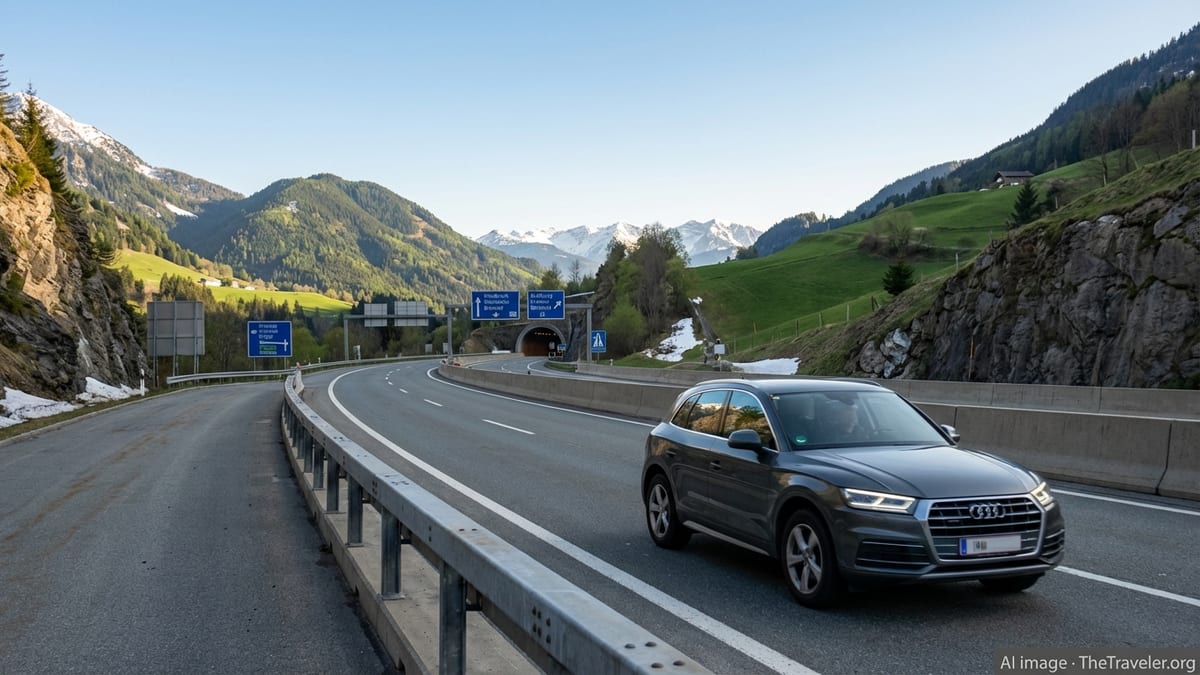
Driving in Austria at a Glance
Austria has an extensive network of motorways and main roads that connect major cities with mountain regions and neighboring countries. Surfaces are generally in very good condition and routes are clearly signposted, but regulations are enforced rigorously. Foreign drivers are expected to know and follow the rules from the moment they cross the border.
For most visitors, the two biggest surprises are the motorway toll vignette and the strict approach to winter equipment. On top of that, speed limits vary by road type, alcohol limits are low and police carry out regular spot checks. Ignorance is not accepted as an excuse, and on the spot fines are common for missing vignettes, speeding or incorrect tyres.
If you prepare in advance and drive defensively, Austria is one of the easiest European countries to navigate. Distances are relatively short, service areas are frequent and the scenery, particularly in alpine regions such as Tyrol, Salzburg and Vorarlberg, can be spectacular. Careful planning turns the rules from a hurdle into a simple checklist.
Whether you arrive in your own car or rent one on arrival, take time to understand the fundamentals: where and when you need a vignette, what winter equipment is required, and how everyday rules differ from those in your home country. This foundation will make your road trip smoother and safer from day one.
Understanding the Austrian Vignette System
The vignette is a prepaid toll that covers the use of most Austrian motorways and expressways for vehicles up to 3.5 tonnes. Instead of passing through toll booths, you pay once for a set period and your vehicle is then authorized to use the network. Without a valid vignette, driving onto a motorway can result in a substantial fine, typically starting at more than one hundred euros, payable on the spot in many cases.
Today most travelers opt for a digital vignette linked to the vehicle’s registration plate. This electronic record is recognized by roadside cameras and mobile enforcement teams. Paper windscreen stickers still exist for some products, but digital versions are steadily becoming the standard and are expected to fully replace physical stickers for future annual vignettes. When buying online as a private consumer, note that longer term digital vignettes usually become valid only after a short waiting period linked to consumer cancellation rights, while short term products such as the one day and ten day vignette can typically be activated for immediate use.
Vignettes are sold in several validity periods, commonly including around ten day, two month and annual products, with approximate car prices in the low to mid double digit euro range for temporary options and around one hundred euros for a year. Motorcycles are cheaper. Newer one day products exist for drivers who only need brief access. You must purchase and activate the vignette before entering a motorway or expressway; buying one retrospectively after you are stopped does not cancel a fine.
Not every high quality road requires a vignette. Some alpine motorways and tunnels are subject to separate special tolls, often collected at physical booths or through digital “section toll” products. In practice, visitors who stick to main transit corridors will usually need both a vignette and occasional additional tolls. Rental car counters in Austria often sell or include the vignette, but if you rent in a neighboring country you must check whether the vehicle is already covered for Austria. Never assume the vignette is included unless this is clearly confirmed in writing.
How and Where to Buy Your Vignette
Digital vignettes and section tolls can be purchased via the official Austrian toll operator’s online shop or mobile app, at border fuel stations, from automobile clubs and at many kiosks near the frontier. Third party resellers also operate online; these can be convenient but may charge additional service fees. Whenever possible, use an official or clearly reputable channel, keep your payment confirmation and verify that your registration plate number and country code are entered exactly as they appear on your vehicle documents.
At physical outlets you can still often buy a traditional sticker vignette, especially for short term use. If you choose this option, it must be affixed directly to the inside of the windscreen, usually near the rear view mirror or in another unobstructed area specified on the backing paper. It is not valid if it is taped, placed behind a tinted band or simply left lying on the dashboard. Removing and reusing a sticker from another car is not permitted, even if it looks undamaged.
For the digital vignette, private buyers should pay attention to the start date of validity. Consumer protection rules mean that long duration products bought online typically do not become valid until several days after purchase, unless you explicitly waive the right of withdrawal where that option is available. If you are about to cross the border, choosing an immediate start date for a short term vignette at a fuel station or sales kiosk is often simpler. Companies are generally not subject to the same delay and may receive immediate validity.
When passing through toll enforcement cameras, your licence plate is scanned and checked against the database of valid vignettes and section tolls. If a problem is detected, a notice of charge or fine can be issued. In addition to vignettes, separate digital products cover specific motorway sections such as alpine tunnels and high mountain routes. For these, drivers can choose between paying every time at the toll station or pre purchasing a digital ticket for more convenient passage.
Key Road Rules and Speed Limits
Austria largely follows standard continental European driving rules. Traffic keeps to the right, and overtaking is done on the left. Seat belts are compulsory for all occupants, and children must be secured in appropriate child restraint systems that are suitable for their age, height and weight. Using a handheld mobile phone while driving is prohibited; only properly installed hands free devices are allowed, and even then, distraction can be penalized if it affects your driving.
Typical speed limits for passenger cars are around 50 km/h in built up areas, 100 km/h on rural roads outside cities and 130 km/h on motorways, unless signs indicate otherwise. Local reductions to 30 km/h are common near schools, residential streets and in many city districts. Variable electronic signs on motorways adjust limits according to traffic density, weather and air quality, and these lower temporary limits are enforceable even if you feel conditions seem better than indicated.
Austrian authorities take speeding seriously, particularly in tunnels, near construction zones and in danger areas such as steep alpine descents. Fixed and mobile speed cameras are widely used, and fines increase with the level of excess speed. In severe cases the police can impose a driving ban, confiscate your licence for a period or, in extreme situations, impound the vehicle. Visitors should avoid the common mistake of assuming that speed limits allow a margin; many cameras are calibrated with only a small technical tolerance.
The legal blood alcohol limit for private car drivers is low by international standards, generally at or below 0.5 grams per litre, with even stricter thresholds for novice and professional drivers. Random breath tests are common, especially at night and near entertainment districts. Combining alpine driving, narrow mountain roads and alcohol is particularly dangerous, and penalties can quickly escalate if an accident occurs. As a rule, if you plan to drive, do not drink at all.
Winter Tyres, Snow Chains and Seasonal Obligations
Austria’s winters can be harsh, especially in the mountains, so the country has detailed legal requirements for winter equipment. From 1 November to 15 April, passenger cars and light goods vehicles up to 3.5 tonnes are subject to a situational winter equipment obligation. This means that in wintry conditions such as snow, slush or ice on the road, these vehicles may only be driven if suitable winter tyres are fitted on all wheels or, in limited circumstances, if snow chains are fitted to at least two driven wheels on roads continuously covered in snow or ice.
To count as winter tyres, they must carry recognised markings such as M+S or the alpine snowflake symbol and meet minimum tread depth requirements. For typical radial tyres, authorities recommend or require at least around 4 millimetres of tread; below that, tyres may legally be regarded as summer tyres even if marked M+S. All season tyres can qualify if they have the proper symbols and sufficient tread depth. Drivers are personally responsible for ensuring that a rental car meets these standards, so it is vital to check before leaving the depot, particularly early or late in the season when equipment can vary.
For heavier lorries over 3.5 tonnes and buses, obligations are stricter. Between 1 November and 15 April for lorries, and 1 November to 15 March for buses, winter tyres must be fitted on at least one driven axle regardless of actual weather. These vehicles must also carry snow chains for at least two drive wheels in the same period, with some exceptions for certain types of public service vehicles. Failing to comply can bring fines that start modestly but can rise sharply, especially if other road users are endangered or an accident is linked to unsuitable tyres.
In practice, conditions in alpine regions can turn wintry well before November or remain dangerous after mid April, and shaded roads can retain ice even on clear days. Many local drivers change to winter tyres earlier than the legal minimum and only switch back to summer tyres once temperatures are consistently mild. Visitors heading into mountain areas should adopt the same cautious approach rather than relying strictly on calendar dates.
Driving Safely in the Alps and Rural Areas
Mountain roads are among the highlights of driving in Austria, but they demand extra attention. High passes often feature steep gradients, tight hairpin bends and long descents that can quickly overheat brakes if you rely on them constantly. Use low gears to control speed and engine braking rather than riding the brake pedal, and leave generous space to vehicles ahead, particularly buses and trucks that may need more time to manoeuvre.
Weather in the Alps is changeable and can deteriorate rapidly. A route that is dry and clear in the valley can be foggy, snowy or icy at higher altitude. Check local forecasts, road reports and any seasonal closures before setting out. Some high alpine roads and passes close for the winter months and only reopen in late spring or early summer, depending on snowfall. Even where roads remain open, chains may be required at short notice, indicated by circular blue signs showing a tyre with chains.
Rural roads away from main highways can be narrow and winding, with limited visibility at junctions and occasional livestock or farm machinery on the carriageway. When approaching blind bends, keep well to your side of the road and anticipate oncoming traffic using the centre line. In many regions, especially near villages, pedestrians and cyclists may use the road edge where pavements are absent, so moderate your speed even if the posted limit is higher.
In winter, snowploughs and gritters work to keep routes open, but smaller roads may only be cleared intermittently. If you are not used to driving on compacted snow, consider whether a mountain pass is really necessary or whether a lower, slightly longer route might be safer. Rental companies may restrict the use of some vehicles on certain mountain roads, so check your contract if you plan a particularly adventurous itinerary.
Urban Driving, Parking Rules and Low Emission Measures
In Austrian cities such as Vienna, Graz, Linz and Salzburg, traffic is generally orderly but parking can be challenging for visitors. Many central districts operate short term parking zones during the day on weekdays and often on Saturdays. These usually require a parking ticket or permit that is time limited. Failing to display a valid ticket or exceeding the allowed time can lead to fines or your vehicle being towed. Signs at the entrance to each zone set out the hours and maximum stay, but the system may feel unfamiliar if you are used to free on street parking.
Multi storey car parks and underground garages are widely available in city centres and near transport hubs. They are usually more straightforward for visitors, with clear entry barriers, automated payment machines and good lighting. Prices vary between cities and by location, so in busy areas it is worth comparing several options or choosing a park and ride facility outside the centre, then continuing by public transport. This approach is often cheaper and less stressful than attempting to park close to historic cores with narrow one way streets.
Austria is gradually expanding environmental measures that affect vehicle use. In some regions there are sectorial driving bans for heavy goods vehicles or rules that limit the use of older, more polluting vehicles on certain stretches, mainly aimed at freight traffic rather than tourist cars. Speed limits on some motorway sections are occasionally reduced for air quality reasons, particularly in parts of Tyrol. Any such restrictions are indicated by roadside signs and variable message boards; drivers are expected to follow them even if their own vehicle meets modern emissions standards.
Cyclists, trams and buses all share urban space with cars, and priority is often given to public transport. Expect to encounter tram tracks crossing the road and dedicated bus lanes where private vehicles are not allowed during specified hours. Red painted lanes usually indicate reserved space for buses or bikes. Entering or blocking these lanes can be fined, so watch for the associated signs at the start and end of each section.
Border Crossings, Documentation and Car Rental
Austria is part of the Schengen area, and land borders with many neighboring countries are open, but identity and customs checks may still be in place, especially at busy motorway crossings and during specific security operations. You should carry a valid passport or national identity card, your driving licence and the vehicle registration document at all times. If the car is not registered in your name, a letter of authorisation from the owner or rental agreement is useful to avoid questions.
For most visitors from within the European Union, a domestic driving licence is accepted. Travelers from further afield may be advised or required to carry an International Driving Permit alongside their national licence, particularly if the latter is not in Latin script. Check current requirements before travel, as rules can change. Insurance is mandatory; proof of cover, often in the form of a green card or certificate, should be readily available in the vehicle.
When renting a car in Austria, standard packages typically include basic legally required insurance, and many vehicles will already be equipped with a valid vignette if they are intended for motorway use. Confirm the vignette’s validity period and whether it covers the full duration of your rental. If you plan to cross into neighboring countries such as Italy, Slovenia, Switzerland or Hungary, confirm that cross border use is permitted and clarify which tolls or vignettes you are expected to arrange yourself.
Inspect the vehicle carefully before departure, noting any existing damage on the handover form and ensuring that safety equipment such as reflective vests and warning triangles is present. Ask specifically about winter tyres and snow chains if you are traveling between November and April or heading into mountain regions at other times. While the rental company must provide a roadworthy vehicle that complies with local law, you remain responsible for fines resulting from missing equipment once you accept the car.
The Takeaway
Driving in Austria combines the freedom to explore one of Europe’s most scenic countries with a regulatory framework that prioritizes safety and smooth traffic flow. For visitors, the system can feel demanding at first, especially when confronted with the vignette, winter tyre rules and strict enforcement of speed and alcohol limits, but in practice these measures create predictable conditions on the road.
If you understand how the vignette works, plan for appropriate winter equipment and remain attentive to signs and temporary restrictions, your journey should be straightforward. The network of well maintained motorways and thoughtfully engineered mountain roads rewards careful drivers with memorable views, from Danube river landscapes to snow capped alpine peaks.
Take a conservative approach to speed, give yourself extra time on alpine routes and do not underestimate how quickly weather can change at altitude. Treat the rules as tools to keep you safe rather than obstacles, and you will be free to enjoy Austria’s lakes, villages, cultural cities and high mountain passes at your own pace.
With a little preparation before you leave home, including purchasing or planning your vignette, checking tyre requirements and reviewing local road signs, you can arrive at the border confident rather than uncertain. That preparation often makes the difference between a stressful drive and an enjoyable road trip you will want to repeat.
FAQ
Q1. Do I need a vignette to drive in Austria as a tourist?
Yes, most foreign visitors need a vignette for cars or motorcycles up to 3.5 tonnes when using Austrian motorways and expressways; without one you risk on the spot fines.
Q2. Can I buy an Austrian vignette after I enter the motorway?
No, the vignette must be valid before you drive onto a toll motorway or expressway; buying it only after entry does not prevent a penalty if you are checked.
Q3. What is the difference between a digital vignette and a sticker?
A digital vignette is linked to your licence plate in an electronic system, while a sticker is physically attached to the windscreen; both grant the same right to use toll motorways during their validity.
Q4. When are winter tyres legally required in Austria?
From 1 November to 15 April, passenger cars and light goods vehicles must use winter tyres, or in limited cases chains, whenever roads are in wintry conditions such as snow, slush or ice.
Q5. Are all season tyres acceptable as winter tyres?
All season tyres can be used as winter tyres if they carry recognised winter markings like M+S or the snowflake symbol and meet the minimum tread depth requirements set by Austrian regulations.
Q6. What are the standard speed limits for cars in Austria?
As a general guide, cars are usually limited to around 50 km/h in built up areas, 100 km/h on rural roads and 130 km/h on motorways, unless signs set other limits.
Q7. Is it legal to use my mobile phone while driving?
You may not hold a mobile phone while driving; only properly installed hands free systems are allowed, and you can still be fined if using them distracts you from driving safely.
Q8. What documents must I carry when driving in Austria?
You should carry a valid passport or identity card, your driving licence, the vehicle registration document and proof of insurance, and if it is a rental car, the rental contract.
Q9. Do I need snow chains in addition to winter tyres?
In many cases winter tyres are sufficient, but snow chains are recommended and sometimes mandatory on certain mountain roads when indicated by signs, particularly after heavy snowfall.
Q10. Can I drive a rental car from Austria into neighboring countries?
Often yes, but you must confirm cross border permission with the rental company and check which additional vignettes or tolls are required in each country you plan to visit.