


More news on this day
Russia’s second city has become an uneasy frontline in the contest between drones and air defenses, with repeated airspace shutdowns over St. Petersburg forcing diversions, mass delays and temporary closures at Pulkovo International Airport.
Get the latest news straight to your inbox!
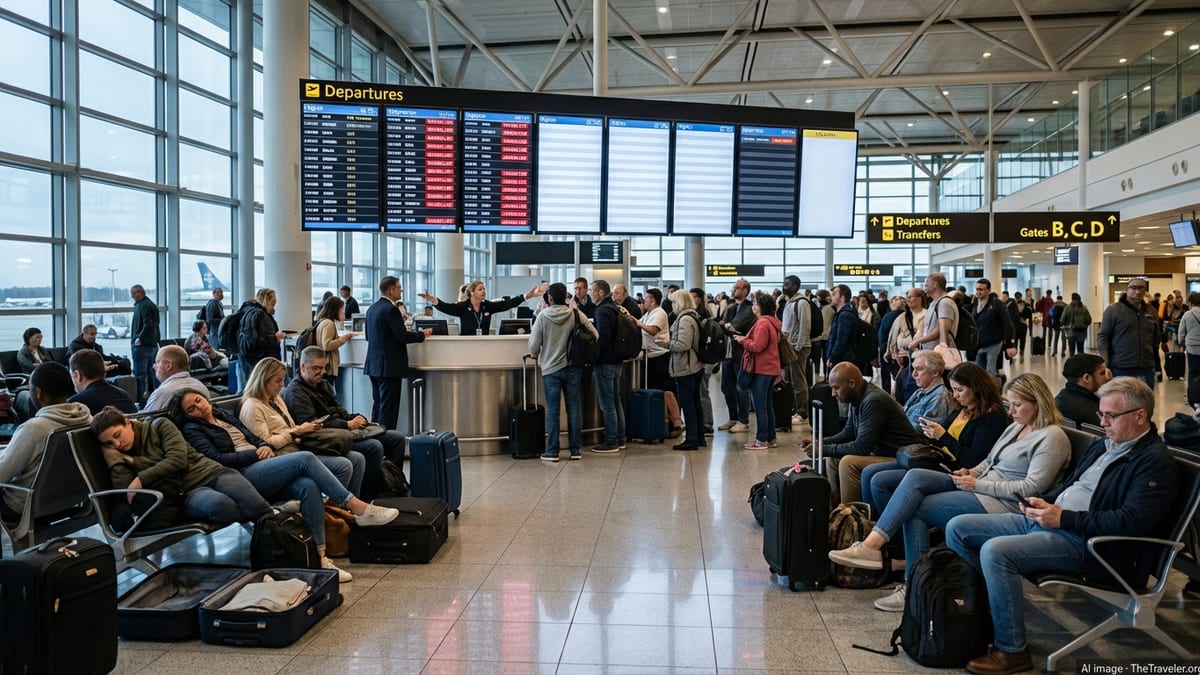
What Happened Over St. Petersburg’s Skies
Recent weeks have seen a succession of security alerts in Russia’s northwest, as suspected long-range Ukrainian drones targeted industrial and strategic sites, triggering air defense responses across the wider St. Petersburg region. Publicly available information indicates that on several occasions, airspace around the city was abruptly restricted and Pulkovo International Airport ordered to halt arrivals and departures.
Reports from Russian and international outlets describe temporary closure zones extending up to 200 kilometers around Pulkovo at various points, effectively freezing traffic into one of the country’s busiest hubs. Flights already en route were told to circle, divert or return to origin airports while air defense systems responded to what officials described in open statements as unidentified or hostile aerial objects.
According to published coverage, drones intercepted over the broader Leningrad region have been linked to wider Ukrainian campaigns against energy and logistics infrastructure inside Russia. Although there have been no verified reports of direct strikes on Pulkovo itself, the nearby airspace has repeatedly been treated as a potential conflict corridor, prompting precautionary shutdowns that immediately ripple through the national network.
Russian aviation data and independent flight-tracking platforms show that these shutdowns have often been concentrated into intense windows of one to three hours, but even brief closures have proven enough to push aircraft and crews out of position and overwhelm alternate airports in Moscow and other cities.
Mass Diversions, Cancellations and Stranded Passengers
Operational data cited in local business media and international reports indicates that each St. Petersburg alert has disrupted dozens of flights. In one recent episode, flight restrictions in the Pulkovo area were in force for around eight hours, with the airport’s own public channels reporting more than 100 flights delayed or canceled over a 24-hour period and nearly 40 diversions to other cities.
On other days, shorter airspace closures lasting roughly 80 to 120 minutes still resulted in several dozen late departures and arrivals. Publicly available schedules and airport statements show that on a single morning, more than 25 flights were delayed by over two hours and close to 20 were canceled outright, with follow-on disruption continuing well into the evening as airlines struggled to restore rotations.
Some of the most acute pressure has been felt on the trunk routes linking St. Petersburg with Moscow, Sochi and regional centers such as Ufa and Kaliningrad. Local outlets in Russia’s Bashkortostan region, for example, have reported repeated interruptions to the Ufa–St. Petersburg service as drone-related airspace restrictions forced carriers to delay or re-time departures until Pulkovo could safely accept traffic again.
For travelers, the result has been overnight delays, missed connections and sudden diversions to unfamiliar airports hundreds of kilometers from their intended destination. Social media testimonies and traveler forums describe passengers held onboard aircraft during holding patterns, followed by unscheduled landings in Moscow or smaller regional hubs, with onward rebooking complicated by already strained capacity across the network.
How Pulkovo’s Shutdowns Disrupt Russia’s Wider Network
Pulkovo occupies a strategic position in Russia’s aviation system, functioning as the main gateway for St. Petersburg and a key domestic connector between the country’s northwest and the rest of the federation. Analysis published in Russian and international aviation media notes that the airport handles not only point-to-point leisure and business traffic, but also a significant volume of connecting passengers transferring to secondary cities.
When airspace around St. Petersburg is closed or heavily restricted, Pulkovo’s role as an alternative and diversion field for other airports comes under strain. During large-scale drone attack waves focused on Moscow, for instance, coverage from independent Russian newsrooms has documented long lines of diverted aircraft parking at Pulkovo overnight, even as the airport itself periodically faces its own threat-driven restrictions.
This interdependence means that any disruption in St. Petersburg can cascade across the wider Russian network. Airlines must reposition aircraft, re-crew flights and manage knock-on schedule changes that affect cities far from the initial shutdown. Industry-focused reporting has cited internal estimates suggesting that a single extended diversion of a medium-range flight can cost tens of thousands of dollars in additional fuel, handling, crew duty extensions and passenger care.
Repeated interruptions also come at a time when Russian carriers are already dealing with constrained fleets and maintenance challenges, the legacy of international sanctions that have complicated access to parts and leasing markets. The added unpredictability of drone-related closures pushes scheduling margins even tighter, raising the likelihood of rolling delays that outlast the initial incident by days.
Safety, Security and What Travelers Should Expect
Although travel demand to and from St. Petersburg remains significant for domestic passengers, the recent shutdowns underscore how quickly circumstances can change in an active conflict environment. Publicly available guidance from aviation authorities and airline advisories suggests that restrictions are being imposed out of caution whenever unidentified aerial activity is detected within reach of civil air corridors.
In practice, this means that flights may operate normally for weeks, then suddenly face disruptions with little advance warning. Travelers with tickets to or through Pulkovo are increasingly advised by carriers to monitor flight status up to departure and be prepared for schedule changes, especially during periods when cross-border drone activity reported in open sources appears to be intensifying.
Security protocols around the airport have also visibly tightened in response to the evolving threat picture. While details are not fully disclosed in public sources, observable measures include more frequent checks on approach routes, heightened scrutiny of airside operations and closer coordination between civil navigation services and military radar assets during periods of increased aerial activity.
For international travelers, practical options remain limited. Many foreign airlines halted services to Russia early in the full-scale invasion of Ukraine, and current schedule data show that Pulkovo’s traffic is dominated by Russian carriers and airlines from countries maintaining air links with Russia. In this context, disruptions caused by drone threats are being absorbed by a smaller group of operators, with fewer alternative routings available when flights are canceled or diverted.
Planning a Trip Through St. Petersburg Now
For those still planning to travel via St. Petersburg, recent events highlight the importance of flexibility. Industry reporting and traveler experiences suggest that itineraries routed through multiple Russian hubs may be particularly vulnerable to cascading changes when drone alerts trigger airspace closures at short notice.
Passengers are increasingly encouraged, in airline FAQs and public advisories, to allow generous layover times for domestic connections, to keep essential items and documentation in carry-on baggage in case of unexpected diversions, and to monitor airline communication channels closely in the 24 hours before departure. Travel insurance policies that specifically address missed connections and security-related airspace closures may also offer an added layer of financial protection.
Despite the disruptions, Pulkovo continues to function as a crucial node in Russia’s aviation system and has, in most recent cases, resumed operations within hours of a shutdown once the immediate threat has passed. However, as long-range drone warfare continues to evolve, publicly available analysis suggests that St. Petersburg’s airspace will likely remain vulnerable to sudden restrictions, making situational awareness a key part of any trip planning into or out of the city.