

More news on this day
Dubai International Airport has restored normal flight operations after a drone-related incident near the busy global hub led to an evacuation, minor damage and injuries to four airport staff, adding fresh urgency to safety concerns for travelers across the United Arab Emirates.
Get the latest news straight to your inbox!
Drone Debris Triggers Evacuation and Injures Four Workers
Authorities in Dubai confirmed that two drones fell in the vicinity of Dubai International Airport in the early hours of Wednesday, prompting an immediate evacuation of affected areas and the deployment of emergency crews. Initial assessments indicated limited structural damage near one of the concourses, but four members of ground staff were hurt as debris struck airside facilities.
Officials said two Ghanaian nationals and a Bangladeshi worker sustained minor injuries, while an Indian member of staff suffered moderate injuries. All four were treated rapidly on site before being transferred to hospital for further observation. No passengers were reported injured and there were no casualties inside the terminal buildings.
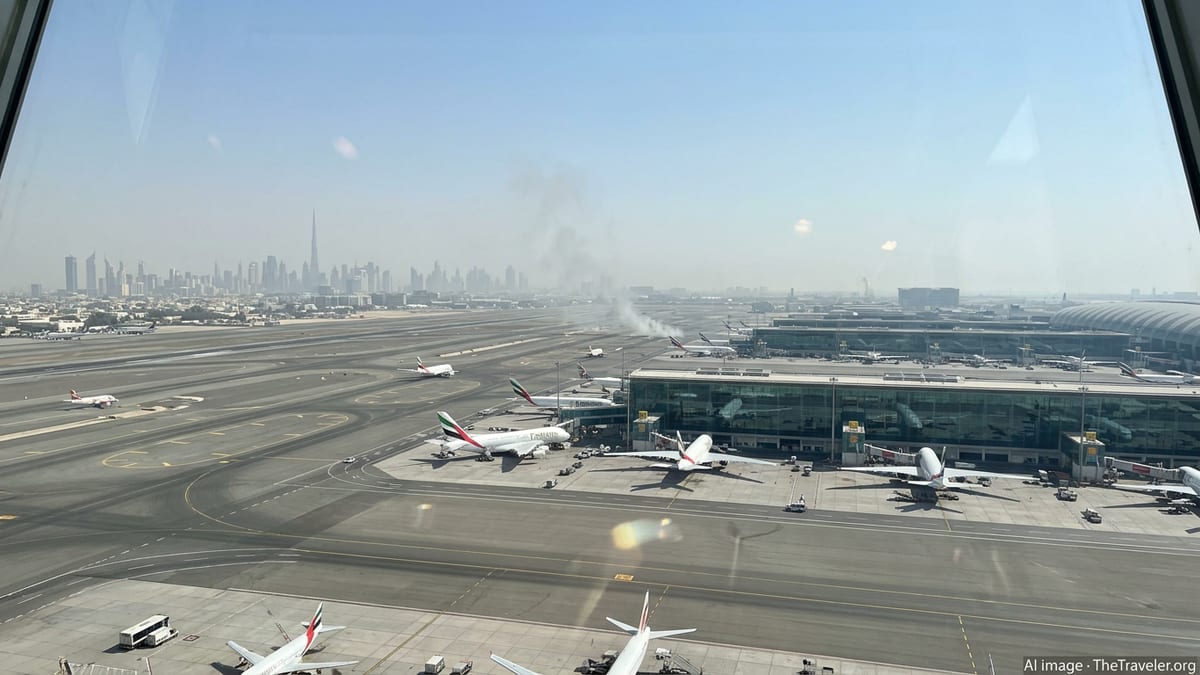
Airport emergency procedures were activated as alarms sounded and staff directed passengers away from windows and airside zones. Witnesses reported smoke visible from sections of the airfield and brief congestion at security and immigration checkpoints as operations were temporarily paused.
Dubai’s government stressed that contingency plans for such incidents had been in place and were executed within minutes, limiting the scale of disruption despite the dramatic scenes captured in videos circulating on social media.
DXB Resumes Flights After Brief Suspension
Dubai Airports, the operator of DXB, confirmed that flight movements were halted for a short period while damage assessments were carried out and runways were inspected for foreign objects. Several inbound flights were placed in holding patterns over the Gulf or briefly diverted to regional alternates as air traffic controllers cleared the airspace around the city.
By late morning, the government’s media office said air traffic was operating as normal, with both arrivals and departures progressively returning to schedule. Airlines including Emirates and flydubai began reinstating delayed services, prioritising long-haul connections and passengers with onward itineraries that had been at risk of misconnection.
Passengers already inside the terminal reported a mix of confusion and calm as public address announcements referred to a security incident and advised travelers to remain in place. Check-in counters reopened in stages, and electronic departure boards gradually shifted from long columns of delays back to a more typical pattern of on-time flights.
Aviation analysts noted that the world’s busiest international airport has rehearsed closure and recovery scenarios repeatedly in recent years, a factor that likely helped DXB return to normal operations within hours rather than days.
Part of a Wider Pattern of Regional Drone and Missile Strikes
The incident near DXB comes against the backdrop of an escalating regional confrontation in which Iranian missiles and drones have targeted sites across the Gulf and wider Middle East. The United Arab Emirates, a key aviation and logistics hub, has already experienced several days of air defense activity as its systems intercepted incoming projectiles.
In recent weeks, authorities have recorded hundreds of drones launched toward the UAE, the vast majority intercepted before impact. Nonetheless, debris from successful interceptions and stray projectiles has caused damage on the ground, including earlier interruptions at both Dubai International and Al Maktoum International airports.
Security experts say the latest event underscores how even near misses can have outsized consequences for global transport. A relatively small amount of debris near a runway or taxiway can force a major hub to suspend operations, rippling through airline networks from Europe to Asia and leaving passengers stranded far from the immediate conflict zone.
For the UAE, which has marketed itself as a safe and stable transit point between East and West, the optics of smoke rising near its flagship airport are especially sensitive. Officials have repeatedly emphasized that defensive systems are engaged, that risk to passengers remains low and that any disruption is being managed under established safety protocols.
Impacts on Airlines, Travelers and Global Connectivity
The temporary suspension at DXB added fresh pressure on airlines already navigating rerouted corridors and longer flight times due to restricted airspace over parts of the Middle East. Carriers have been adjusting schedules, adding fuel reserves and in some cases canceling frequencies as they balance safety, cost and reliability.
Travelers passing through Dubai on Wednesday experienced a range of disruptions, from relatively minor delays at the gate to missed onward connections requiring rerouting and overnight stays. Airport hotels and airline customer service desks reported heavy demand as staff worked to rebook passengers and reallocate aircraft.
Industry observers warn that repeated interruptions, even if brief, could challenge Dubai’s reputation for smooth connections that underpin its role as a central node in global aviation. Frequent fliers and corporate travel managers are already reviewing contingency plans and considering alternative routings should missile and drone threats persist over the coming weeks.
At the same time, aviation safety specialists stress that no flights have been reported struck in the air, and that operators are coordinating closely with authorities to avoid known risk zones. For now, the primary hazards have arisen on or near the ground, where infrastructure, parked aircraft and support vehicles remain vulnerable to falling debris.
Heightened Security and Travel Advice for Those Heading to Dubai
In the wake of the latest drone incident, consular services and risk advisory firms urged travelers to monitor official advisories, allow extra time at the airport and remain flexible about potential schedule changes. Some governments have issued updated guidance recommending that nonessential travel to the region be reconsidered while tensions remain high.
Within DXB itself, passengers can expect an intensified security posture. Additional screening, more visible police and military presence, and occasional rerouting within terminals are likely as authorities reassess perimeter protection and airspace monitoring around the city’s airports.
Travel risk consultants advise that those with upcoming trips through Dubai keep itineraries and contact details updated with their airlines, ensure that mobile apps are enabled for real-time alerts, and carry essentials such as medication, chargers and a change of clothes in hand luggage in case of unexpected layovers.
For now, Dubai International Airport is once again moving tens of thousands of people per hour, its departure lounges busy and its runways active. Yet the latest drone incident has made clear that even the most sophisticated hub is not insulated from regional conflict, and that the resilience of global travel networks will continue to be tested as the security crisis evolves.