

More news on this day
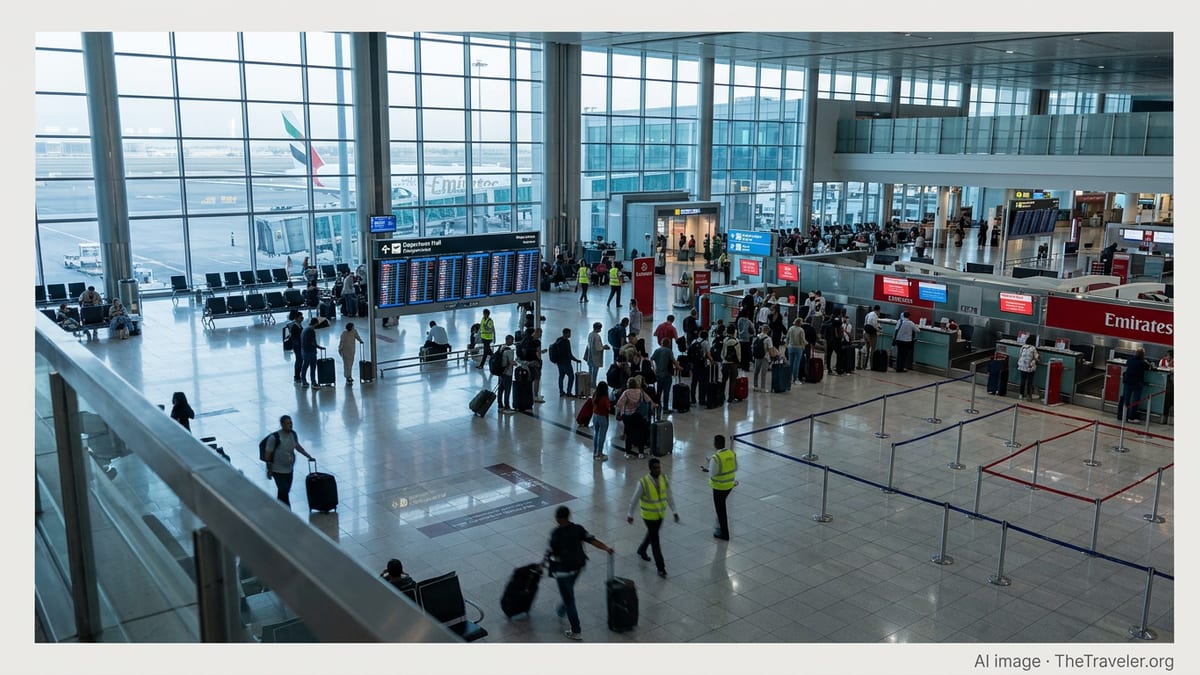
Dubai International Airport has begun restoring passenger services after a temporary closure of United Arab Emirates airspace, easing one of the most severe disruptions to global flight networks seen in recent years but leaving airlines, travelers and tourism operators grappling with continuing knock-on effects.
Get the latest news straight to your inbox!
From Sudden Shutdown to Gradual Reopening
Flight operations at Dubai International Airport were suspended on 28 February 2026 after regional airspace was temporarily closed in response to escalating security tensions and missile and drone attacks across the Gulf. Publicly available information shows that flights to and from Dubai were halted almost entirely in the immediate aftermath, grounding tens of thousands of passengers at one of the world’s busiest international hubs.
According to published coverage, Dubai International began a phased restart on 2 March, initially operating a small number of services on carefully controlled routes and corridors. Airport updates described a “limited flight schedule” focused on priority routes and essential traffic, as air-navigation authorities gradually reopened segments of airspace under enhanced safety protocols.
Travel advisories issued in early March indicated that airspace across parts of the United Arab Emirates and neighboring states remained subject to restrictions or short-notice closures, even as Dubai’s main hub started to move from full suspension to partial operations. Airlines were instructed to plan for potential diversions and extended routings, which lengthened flight times and complicated crew and fleet rotations well beyond the Gulf.
By the second week of March, operations at Dubai International had increased but were still far from normal. Airline statements and industry reports highlighted that passenger flights were prioritized by route demand and available capacity, while some cargo operations were used to reposition aircraft and support relief movements for stranded travelers.
Ripple Effects Across Global Flight Networks
The temporary airspace closure above Dubai and parts of the wider region quickly cascaded across international flight schedules. Data from aviation trackers and airline network updates showed widespread cancellations and delays on services linking Europe, Asia, Africa and the Americas that would ordinarily connect via Dubai, Abu Dhabi, Doha and Bahrain.
Major European and Asian carriers temporarily suspended services to Dubai or significantly reduced frequencies, with some operators publicly confirming that flights to both Dubai and Abu Dhabi would remain paused into mid-March. Long-haul itineraries built around Middle Eastern hubs were particularly affected, forcing rerouting through alternative gateways in Europe, South Asia and East Africa.
Publicly available information from travel-management companies described the situation as one of the most complex rerouting challenges since the peak of the pandemic-era border closures. Corporate travelers and tour groups reported being rebooked through Istanbul, Riyadh, Jeddah, Muscat and other hubs, often adding one or more stops and many hours of extra journey time to reach destinations in Asia-Pacific and Southern Africa.
Even airlines without direct services to Dubai experienced knock-on effects. When aircraft and crews could not reach their next scheduled sectors because they were stranded in the Gulf region, downstream flights in Europe, North America and Asia were delayed or cancelled, highlighting the central role Dubai plays in global aviation connectivity.
Passenger Experience: Backlogs, Diversions and Stranded Tourists
For passengers, the partial reopening of Dubai International has brought a mix of relief and continued uncertainty. Public reports describe large backlogs of travelers left waiting for new itineraries, with some stranded for several days as airlines worked through rebooking lists and aircraft positioning constraints.
In the first days after flights resumed, access to Dubai airport remained tightly controlled. Airport guidance and airline notices strongly advised passengers not to travel to the terminals unless they held a confirmed, revalidated booking, in order to reduce overcrowding and allow priority handling of those already in transit. Social media accounts and traveler forums carried numerous accounts of families and business travelers seeking alternative routes via neighboring countries.
According to traveler reports, diversions to secondary airports in the United Arab Emirates and nearby states became more common as airlines sought operational flexibility. Some long-haul services that would ordinarily land in Dubai were redirected to other regional airports, with passengers continuing their journey to the city by road or on short connecting flights when capacity was available.
Consumer-rights guidance circulated by travel agencies and aviation observers stressed the importance of checking airline channels and official departure boards rather than relying solely on third-party tracking applications. With schedules changing rapidly, reissued tickets, refund options and hotel vouchers varied widely between carriers and jurisdictions, adding another layer of complexity for affected travelers.
Tourism and Hospitality Sector Under Pressure
The disruption to Dubai’s aviation hub has had immediate implications for the city’s tourism and hospitality sector. Dubai typically records some of the highest international arrival numbers in the world, and industry analyses indicate that a multi-day shutdown followed by weeks of constrained capacity is likely to weigh on hotel occupancy, conference attendance and discretionary travel spending.
Travel and tourism bodies tracking the situation note that the timing of the airspace closure has been especially challenging, overlapping with major trade shows, cultural festivals and peak-season leisure travel from Europe and Asia. Organizers of large-scale events have had to accommodate speaker and attendee cancellations, while some meetings were moved fully online or postponed to later in the year.
At the same time, publicly available market commentary points out that Dubai’s tourism ecosystem is more diversified than during earlier shocks, such as the 2020 pandemic travel freeze. Domestic and regional visitors, including travelers arriving via road from neighboring emirates or rerouted through alternative Gulf airports, have helped soften the downturn for some hotels, restaurants and attractions, even as international arrivals fell sharply in early March.
Travel advisors are monitoring how quickly the city’s flagship carrier and other international airlines rebuild frequencies into Dubai. The pace of that recovery will shape booking patterns for the remainder of 2026, influencing everything from seasonal package prices to the viability of marginal long-haul routes that rely on high volumes of transit passengers.
Outlook for Recovery and Ongoing Risks
Analysts following Middle East aviation expect a staged recovery in Dubai’s flight operations rather than an immediate return to pre-closure capacity. Industry assessments published in mid-March suggest that airlines are prioritizing trunk routes with strong year-round demand, while some secondary destinations may see reduced services or delayed resumptions until operational risks and insurance considerations stabilize.
Airspace management remains a central variable. While regional skies have been partially reopened to commercial traffic, travel-security advisories continue to highlight the possibility of renewed restrictions or temporary closures if geopolitical tensions flare again. Airlines are weighing the operational benefits of using Dubai and other Gulf hubs against the costs of route diversions, higher fuel burn and schedule buffers required to manage residual risk.
For global travelers, the events surrounding Dubai’s temporary airspace closure underline the importance of flexibility. Sector watchers recommend building in longer connection windows, maintaining up-to-date contact details with airlines and travel agents, and considering travel insurance products that explicitly cover airspace-related disruptions, which have become more prominent in recent risk assessments.
Despite the challenges, many aviation experts remain cautiously optimistic about Dubai’s medium-term outlook. The city’s role as a crossroads between continents, the scale of its home-based carrier and the resilience shown during previous crises suggest that traffic volumes could rebound once airspace conditions normalize and confidence returns. In the meantime, the resumption of limited operations marks an important, if fragile, first step toward restoring one of the world’s key travel corridors.