

More news on this day
Air travel across Dubai and the wider Middle East is shifting from shutdown to slow recovery, as key Gulf hubs reopen with limited flights following weeks of airspace closures, security concerns and disruptive spring weather.
Get the latest news straight to your inbox!
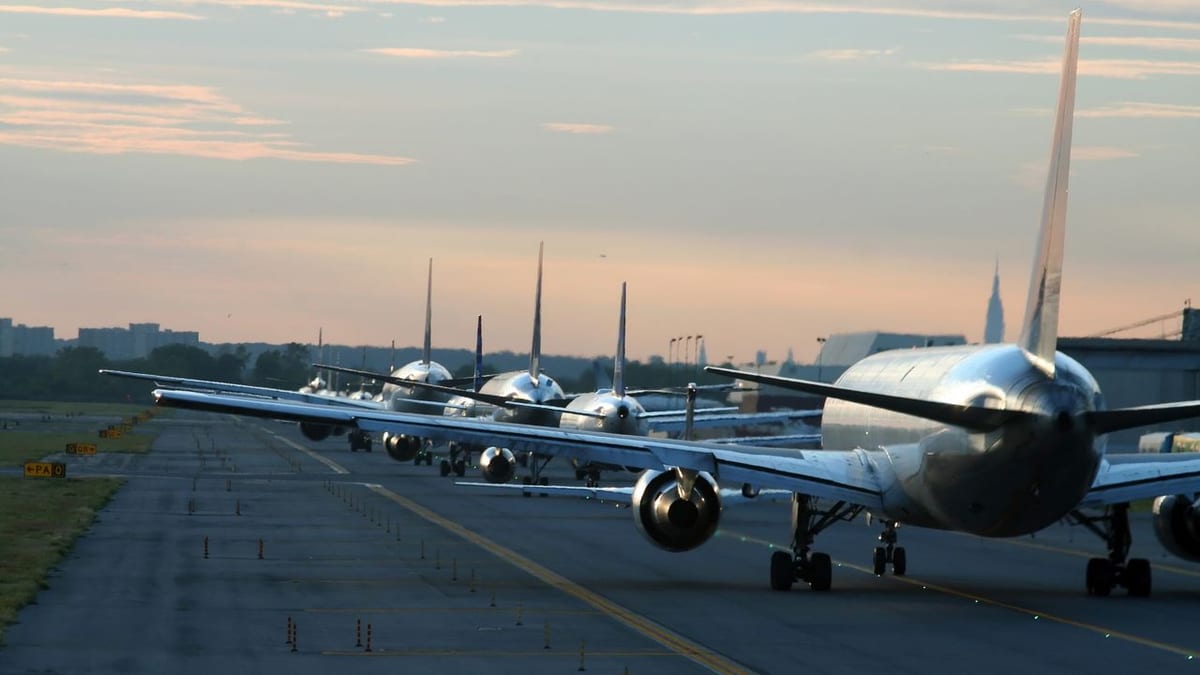
From near standstill to partial recovery at Dubai International
Dubai International Airport, one of the world’s busiest long-haul hubs, has moved from near-total suspension of passenger traffic in early March to a patchwork of limited services through April. Published coverage indicates that airspace closures at the end of February triggered a rapid collapse in scheduled departures, with Emirates and flydubai initially operating only a fraction of their usual network.
Operational data referenced by aviation analysts shows Emirates’ daily flights falling from more than 500 movements to just a few dozen in the first days of the crisis, before gradually rebuilding. By early March, Dubai International had reopened for restricted passenger operations, with priority given to long-haul trunk routes and essential regional links while many point-to-point services remained off the board.
Publicly available guidance circulated to travelers in March advised passengers not to go to the airport without a confirmed booking and up-to-date flight status. Airport access controls, crowded terminals and rolling schedule changes meant that even operating flights were subject to short-notice delays, diversions and equipment swaps as airlines worked around airspace constraints.
As of early April, available industry updates suggest that Dubai is functioning as a hub again, but not yet at full capacity. Flight tracking snapshots and airline advisories describe a network still thinner than pre-disruption levels, with gaps in Europe, South Asia and the Levant while certain corridors remain constrained by overflight restrictions.
Emirates and flydubai rebuild routes under tight constraints
Emirates has adopted a phased restart strategy, concentrating capacity on high-demand markets while maintaining flexible rebooking policies for disrupted passengers. Travel trade bulletins describe the carrier operating a reduced schedule across more than 120 destinations, with some cities receiving fewer weekly frequencies and others temporarily dropped to allow better aircraft and crew utilization.
Rebooking notices seen in the corporate travel sector outline options for customers whose flights were cancelled between late February and mid-April, including free changes within a defined travel window and refunds where no suitable alternatives are available. These policies are being adjusted route by route as the airline adds back services and gains confidence in the stability of regional airspace.
Flydubai, which relies heavily on short- and medium-haul services across the Middle East, North Africa and Central Asia, has resumed a limited but growing schedule from its Dubai base. Operational updates on its public channels highlight selective restoration of services alongside targeted cancellations, particularly on routes that cross the most affected airspace or rely on night-time slots during periods of heightened risk.
Both carriers continue to advise passengers to monitor booking management tools and flight-status pages closely on the day of travel. Industry observers note that while mass cancellations have eased, last-minute retimings remain a possibility as air traffic control restrictions, military activity and weather patterns interact across multiple flight information regions.
European and Asian airlines extend suspensions to Gulf hubs
While Gulf-based airlines cautiously rebuild, several European and Asian carriers are extending suspensions to Dubai, Abu Dhabi and other regional destinations into late April and beyond. Travel advisories from corporate booking platforms and visa services point to a growing list of airlines choosing to keep their Gulf operations paused, citing insurance considerations, crew safety protocols and the complexity of rerouting around restricted airspace.
Recent reports describe Austrian Airlines prolonging its suspension of services to Dubai and Abu Dhabi until at least the end of May, aligning with earlier decisions by British Airways, SWISS, Brussels Airlines and leisure carriers such as Edelweiss. These moves reduce connectivity between major European capitals and the United Arab Emirates, pushing more long-haul demand onto the reduced schedules of Gulf-based airlines and a handful of Asian and Turkish competitors still serving the region.
In Asia, advisories circulated by travel agencies highlight a series of cancellations and schedule cuts on routes into the Gulf, including services from Seoul and select Indian metros. Some carriers have kept a skeleton presence with occasional non-scheduled or relief flights, but the broader pattern remains one of caution, with decisions often reviewed on a rolling basis as the regional security picture evolves.
This patchwork of operating decisions has left many passengers relying on multi-stop itineraries, often combining Gulf carriers with European or Asian partners where flights still operate. However, reduced frequencies and tight aircraft rotations mean long rebooking queues and limited same-day alternatives when flights are disrupted.
Weather adds fresh strain to already fragile operations
Compounding the impact of security-driven airspace closures, unsettled spring weather across the United Arab Emirates has introduced an additional layer of disruption. Regional business outlets recently reported periods of heavy rain, gusty winds and rough seas affecting airports and coastal infrastructure, prompting airlines to issue fresh alerts over delays, go-arounds and diversions.
Travel advisories from carriers serving Dubai, Sharjah and Abu Dhabi have urged passengers to allow extra time for journeys to the airport and to ensure their contact details are up to date for short-notice notifications. In some cases, adverse weather has forced aircraft already operating on longer rerouted tracks around restricted airspace to hold or divert, stretching crew duty limits and disrupting aircraft rotations further down the line.
Industry commentators point out that the combination of airspace restrictions and meteorological challenges has magnified the operational complexity of even routine flights into and out of Dubai. On days of particularly intense storms, anecdotal accounts from travelers describe extended tarmac waits, missed connections and sudden gate changes as airlines and air traffic controllers juggle safety priorities with the practicalities of moving thousands of passengers through constrained infrastructure.
Despite these challenges, there are indications that hubs across the UAE are becoming more adept at managing the new normal, drawing on experience from earlier weather-related disruptions and recent crisis planning exercises to shorten recovery times once storms pass.
What passengers flying through Dubai and the Middle East should expect now
For travelers with upcoming itineraries involving Dubai or neighboring Gulf hubs, publicly available information suggests a cautiously improving picture, but one that still demands flexibility. Schedules are more robust than during the peak of the disruption, yet remain subject to change, particularly on routes traversing sensitive airspace or operated by foreign carriers that have not fully restored their networks.
Travel management companies are advising clients to treat any booking touching the Middle East as dynamic rather than fixed, building in longer connection times where possible and avoiding tight self-transfers between separate tickets. Passengers are also being encouraged to travel with essentials in carry-on baggage and to familiarize themselves with airline disruption policies in case of overnight delays or rerouting.
Reports from frequent flyers and aviation forums indicate that check-in and security queues at Dubai International have improved compared with early March, though peak-time congestion remains a factor, especially when multiple widebody departures are banked together. Many airlines recommend arriving around three hours before departure, but not significantly earlier, to prevent unnecessary crowding in departure halls.
Looking ahead, analysts expect further normalisation of flight patterns through late April and May if regional tensions do not escalate and if seasonal weather remains within forecast norms. However, they also caution that the past weeks have exposed the vulnerability of tightly timed global aviation networks to overlapping shocks, leaving airlines and passengers alike more alert to the possibility of renewed disruption in the months to come.