

More news on this day
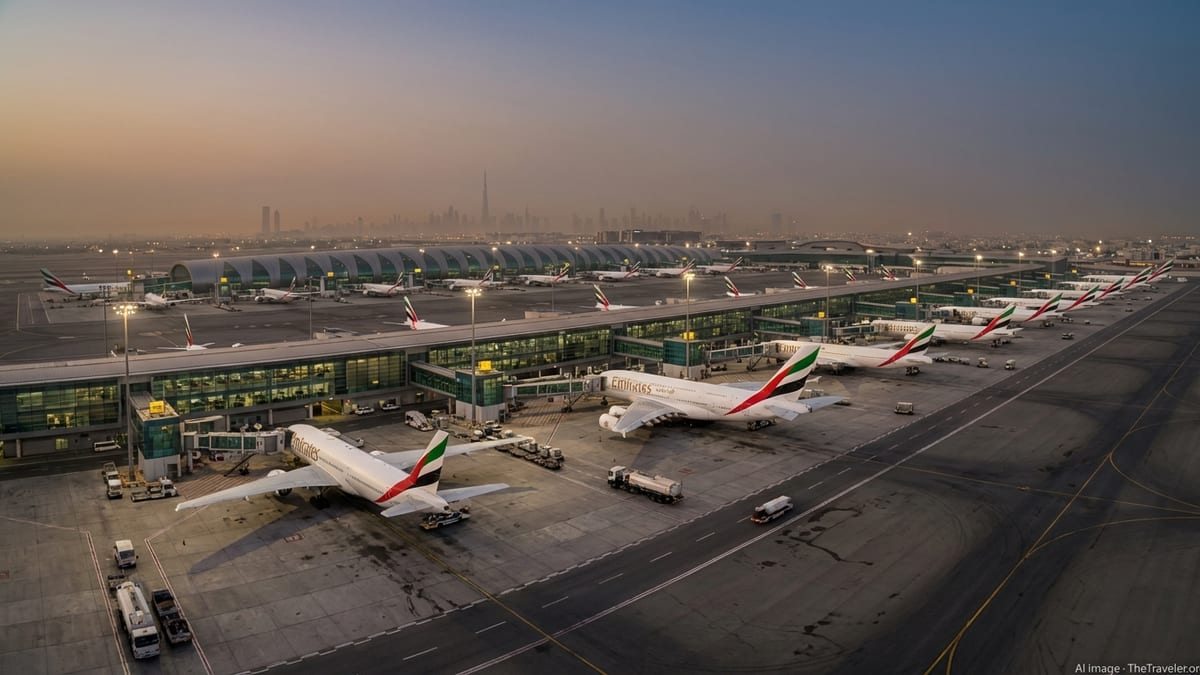
Dubai’s role as one of the world’s busiest aviation crossroads ground to an abrupt halt on Saturday, February 28, 2026, as authorities suspended all flights at Dubai International Airport and Al Maktoum International Airport amid fast-escalating regional security developments linked to strikes on Iran.
Airports Ordered Shut as Gulf Airspace Tightens
Dubai Airports confirmed that operations at Dubai International (DXB) and Dubai World Central Al Maktoum International (DWC) have been suspended until further notice, following a temporary partial closure of United Arab Emirates airspace. The decision, described by officials as a precautionary response to unfolding security risks, effectively froze movements through a hub that normally handles hundreds of thousands of passengers a day.
Authorities have urged travelers not to proceed to either airport and instead to contact airlines directly for the latest information. Terminal access is being tightly controlled, with ground staff focusing on assisting passengers already airside or in transit when the shutdown took effect. Airlines and airport operators have stressed that safety remains the overriding priority as the situation evolves.
The suspension in Dubai coincides with sweeping airspace closures across parts of the Middle East, including Iran, Iraq, Israel, Bahrain, Qatar and Kuwait. Flight tracking maps showed large swathes of regional skies virtually empty, creating a cascading operational challenge for carriers that rely on Gulf air corridors to connect Europe, Asia, Africa and Australasia.
Regional Conflict Sends Shockwaves Through Air Travel
The aviation standstill in Dubai follows a dramatic escalation in regional tensions after joint United States and Israeli strikes on targets in Iran, and subsequent retaliatory actions. Governments across the Gulf have moved quickly to restrict or close airspace, citing heightened risks to civil aviation from potential missile or drone activity and military operations.
Analysts say the closures come at a time when Middle East routes are already under strain from existing restrictions over parts of Eastern Europe and Russia, leaving carriers with fewer viable options for long haul services. With multiple neighboring countries simultaneously limiting overflights, airlines are facing circuitous rerouting, extended flight times and additional fuel and insurance costs.
Civil aviation regulators in Europe and beyond have issued fresh guidance warning of elevated risk levels in affected airspace, advising operators to avoid designated zones whenever possible. While officials emphasize that the measures are temporary, industry observers caution that any prolonged disruption would have significant implications for global connectivity and airline schedules.
Emirates, flydubai and Global Carriers Suspend Dubai Operations
Dubai’s flagship airline Emirates has temporarily suspended all flights to and from its home base, citing multiple regional airspace closures and the halt in airport operations. Sister carrier flydubai confirmed that its services for February 28 have been fully paused, with teams working to contact affected passengers and arrange rebooking options when conditions allow.
Other regional airlines, including low cost carriers based in the UAE and across the Gulf, have also announced cancellations and schedule changes as they assess routes passing through or near restricted zones. In Abu Dhabi, Zayed International Airport has reported delays, diversions and cancellations, with Etihad Airways suspending certain departures until at least Sunday afternoon local time.
The ripple effects extend far beyond the region. Major international carriers in Europe, Asia and North America have diverted flights away from Dubai and neighboring hubs or returned aircraft to their points of origin. Industry data indicates that hundreds of services across the Middle East have been cancelled or significantly delayed in a single day, with a particularly heavy impact on connections to Israel, Qatar, Kuwait and other Gulf states.
Travelers Stranded as Airlines Race to Replan Networks
The suspension of operations in Dubai has left thousands of travelers in limbo, many of them mid journey on long haul itineraries that would usually route through the emirate. Airport hotels and transit lounges are under strain as passengers await clarity on when flights might resume, while airline call centers and digital channels are experiencing high demand.
Airlines are encouraging customers to avoid traveling to airports without confirmed departure times and to rely on official apps and customer service notifications for updates. Flexible rebooking policies, fare waivers and extended validity for unused tickets are being introduced across multiple carriers to manage an expected surge in itinerary changes once regional airspace gradually reopens.
For now, travel experts advise passengers with upcoming trips through Dubai or other Gulf hubs to prepare for significant disruption, including possible last minute cancellations, diversions to secondary airports and extended journey times. Those with non essential travel plans are being urged to consider postponing until there is more stability in regional security assessments.
Global Aviation Faces a New Test of Resilience
The shutdown of Dubai’s airports underscores how quickly geopolitical flashpoints can reverberate through the modern aviation system. As one of the world’s most important transfer points between continents, Dubai serves as a crucial link for business travelers, holidaymakers and migrant workers alike, making the suspension of flights a major stress test for airlines and passengers worldwide.
Industry analysts note that in recent years carriers have already had to adapt to pandemic related border closures, conflicts altering flight paths and fluctuating demand patterns. The current situation adds another layer of complexity, particularly for airlines whose business models depend on high frequency transfer traffic through Gulf megahubs.
While there is cautious optimism that airspace restrictions will ease once immediate security concerns are reassessed, the timeline for a phased restart of operations in Dubai remains unclear. Until authorities signal that conditions are safe enough to restore regular traffic, the emirate’s usually crowded runways and terminals will stay uncharacteristically quiet, a stark illustration of the aviation sector’s vulnerability to fast moving regional crises.