

More news on this day
A fragile ceasefire between the United States and Iran has started to ease some of the most severe airspace closures in the Middle East, but passengers flying via Dubai and other Gulf hubs are still facing curtailed schedules, rerouted journeys and lingering uncertainty.
Get the latest news straight to your inbox!
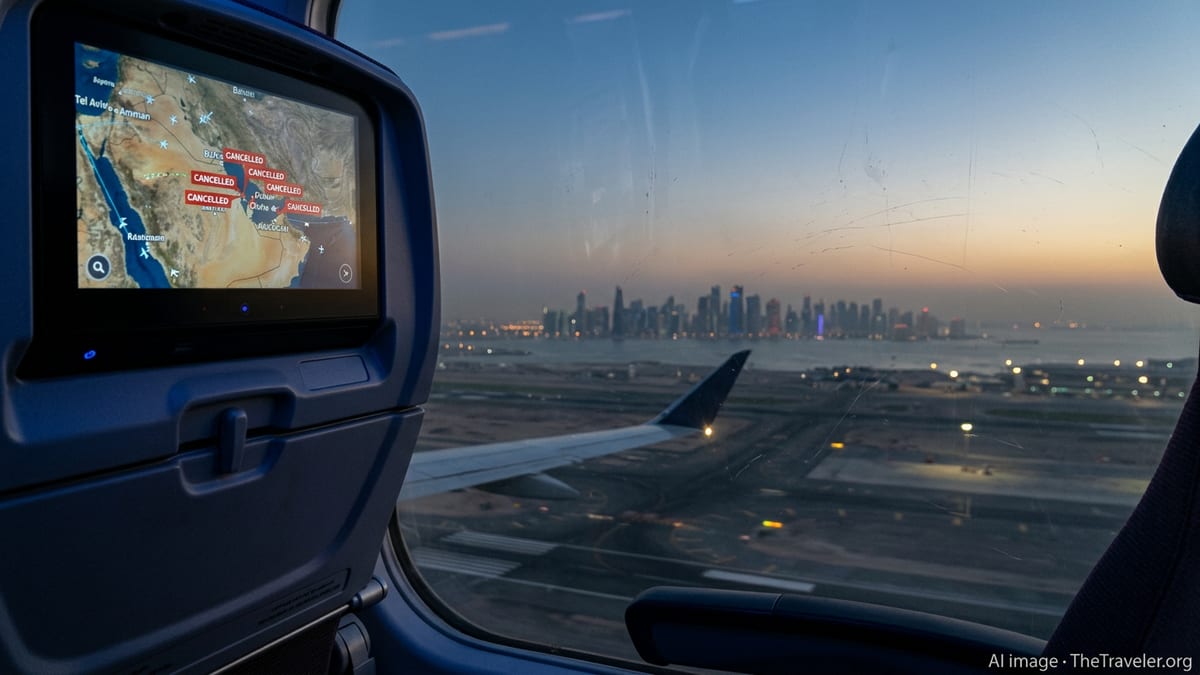
Ceasefire brings limited relief to regional airspace
The two-week ceasefire, which took effect on 8 April 2026 in the Middle East, has reduced the immediate risk of new strikes on key aviation corridors but has not yet restored normal operations. Publicly available information shows that several Gulf states have begun reopening portions of their skies, while others maintain tight restrictions after months of missile and drone activity that affected major airports including Dubai International.
Reports on the 2026 Iran war ceasefire indicate that the agreement has been described as temporary and conditional, with military forces on both sides remaining on high alert. As a result, aviation authorities across the region are proceeding cautiously, keeping contingency routings in place and preserving some closure zones over sensitive areas. Airlines are continuing to balance safety, insurance requirements and commercial demand when deciding which routes to restore.
According to recent travel and business coverage, airspace in parts of Kuwait and Iran remains either closed or heavily restricted, forcing carriers to extend flight times and divert traffic over alternative paths. The knock-on effect is being felt well beyond the immediate conflict zone, as long-haul routes between Europe and Asia that typically rely on Gulf hubs are operating with thinner schedules and less redundancy.
Dubai’s capacity squeeze continues to reshape global connections
Dubai, traditionally one of the world’s most reliable mega-hubs, remains under pressure despite a gradual ramp-up in operations. Travel industry reports highlight that authorities have imposed temporary limits on foreign airlines, allowing only one daily rotation per carrier into Dubai International (DXB) and Al Maktoum International (DWC) until at least the end of May. This cap is intended to manage congestion and operational complexity while airspace options remain constrained.
The restrictions have significant implications for global connectivity. Coverage of the situation notes that airlines from India, Europe and the wider Middle East have had to consolidate multiple daily services into single departures, leading to higher load factors, fewer available seats and complex rebooking challenges for travelers. The measures are also affecting passengers who use Dubai purely as a transfer point between other regions, as many previously convenient connection patterns are no longer available.
Information compiled by regional business outlets suggests that Emirates and flydubai, as home carriers, are rebuilding their networks more aggressively than foreign competitors, but are still operating below pre-conflict capacity on some routes. While transit flows through Dubai are climbing back from the sharp drop that followed February’s airspace closures, the hub currently offers less flexibility for last-minute itinerary changes, missed connections and irregular operations than travelers may be used to.
Airline-by-airline responses across the Middle East
Across the wider Middle East, publicly available airline advisories describe a patchwork of resumptions, cancellations and reduced frequencies. A recent breakdown of schedules in regional media shows that major Gulf carriers such as Emirates, Etihad Airways, Qatar Airways and flydubai have restored large parts of their long-haul networks, yet many services to and over high-risk countries remain suspended or heavily thinned out.
In Bahrain, coverage from travel publications reports that airspace has reopened and Gulf Air has begun rebuilding its schedule from Bahrain International Airport after weeks of diversion to Saudi Arabia’s Dammam. Initial frequencies remain modest, with a limited number of weekly flights to London and Dubai as the carrier tests demand and monitors security conditions. Other regional airlines, including Saudia and Air Arabia, have announced phased resumptions of services into the United Arab Emirates, while advising passengers that timings are subject to late changes.
International airlines beyond the Gulf are also adjusting their operations. Recent reports from industry and business outlets indicate that carriers in South Asia and Europe have cut or consolidated flights to Dubai, Doha and Abu Dhabi in response to both the capacity caps and the need to avoid certain airspace segments. Some Asian airlines, including those based in Hong Kong, have extended suspensions of services to Dubai and Riyadh into late June, citing both safety concerns and higher fuel costs linked to the conflict.
Knock-on impacts for global travelers
The combined effect of airspace restrictions and airline capacity cuts is reshaping travel patterns between Europe, Asia and Africa. Travel platforms tracking disruption note that itineraries which once relied on smooth, one-stop connections through Dubai or Doha may now involve longer layovers, multiple stops or detours via alternative hubs such as Istanbul, Jeddah or European gateways. Passengers are also contending with higher fares on routes where capacity remains constrained.
Consumer-facing guidance from online travel agencies and price-comparison sites stresses that travelers transiting Dubai, Abu Dhabi or Doha should only proceed to the airport once they have verified that both legs of their journey are operating. Live departure boards and airline apps are being updated frequently as flight times are tweaked to accommodate airspace corridors and crew duty-time restrictions. Same-day schedule changes remain common on some Middle East and South Asia routes.
Insurance conditions and ticket flexibility remain a central concern for many passengers. Published advice from travel and legal commentators highlights that when a flight is cancelled by the airline due to security or airspace issues, travelers are generally entitled to rebooking or refunds under the carrier’s disruption policies. However, those who cancel proactively because of perceived risk or itinerary changes may face more limited options, depending on fare rules and insurance coverage.
What to expect in the coming days
Analysts quoted across business and travel publications broadly agree that the two-week ceasefire, currently in effect until around 22 April 2026, is unlikely to deliver an immediate return to pre-war levels of air connectivity. Even in a best-case scenario where the truce holds and is extended, airlines will need time to restore suspended routes, reposition aircraft and crew, and renegotiate insurance terms for flights over previously contested areas.
Short-term schedules for Dubai and other Gulf hubs are expected to remain conservative, prioritising core trunk routes and essential regional links. Carriers are likely to add back frequencies incrementally as operational reliability improves, leaving some secondary destinations with fewer options for the foreseeable future. Travelers planning to transit the region in late April and May should be prepared for potential time changes, aircraft swaps and rolling schedule updates.
For now, publicly available commentary from aviation specialists suggests that flexibility is the most valuable asset for passengers. Those with non-essential travel may find it easier to postpone or reroute via less affected corridors, while travelers who must transit through Dubai or neighboring hubs are being encouraged to build in longer connection times and stay alert to notifications. The ceasefire has eased immediate fears of further escalation, but the Middle East’s role as a seamless global crossroads is still some distance from full restoration.