

More news on this day
Dubai’s red hot tourism industry, fresh from a record 2025, is facing a new test in early 2026 as Emirates and Flydubai reroute services through emergency safe air corridors, unsettling traveler confidence and leaving hotels to grapple with a sudden chill in forward bookings.
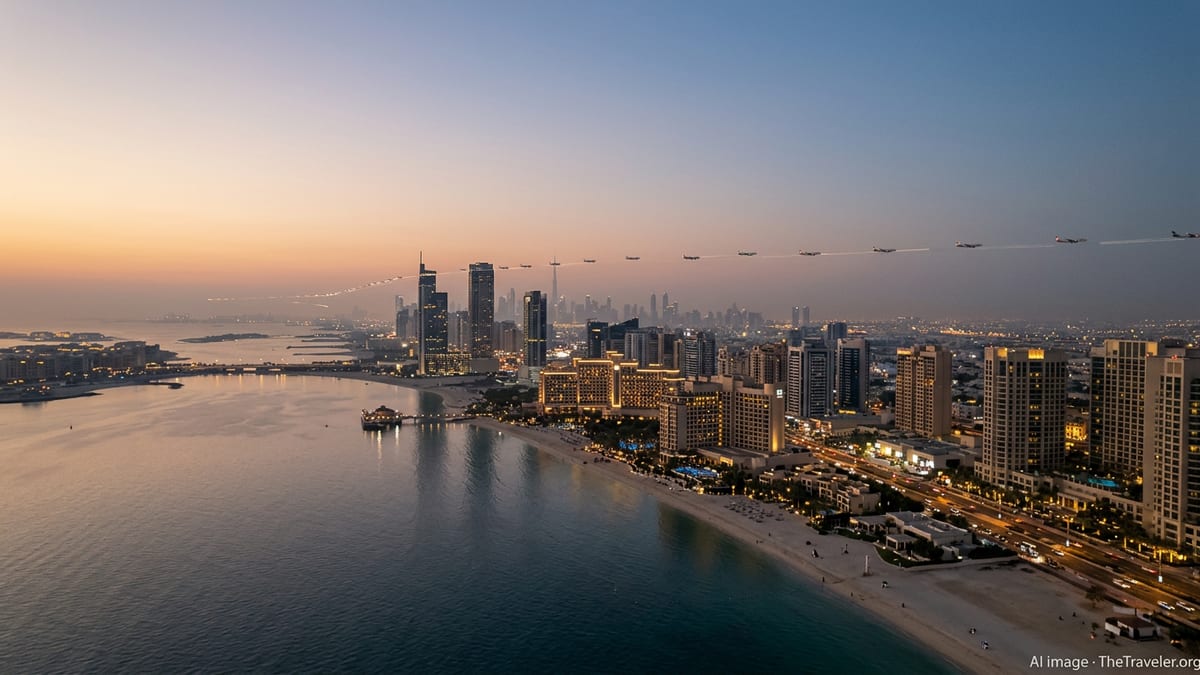
From Record Visitor Highs to a Sudden Aviation Shock
Until late February 2026, Dubai appeared on track to extend its tourism winning streak. Official and industry data showed the emirate drawing close to 20 million visitors in 2025, with citywide hotel occupancy hovering above 80 percent and room rates at historic highs as new properties opened across prime districts. Analysts had been projecting as many as 22 million international arrivals in 2026, underpinned by expanding long haul air connectivity and a strong calendar of events.
That outlook began to fray when escalating regional tensions triggered missile and drone strikes across parts of the Gulf, prompting sweeping airspace restrictions. Dubai International Airport, one of the world’s busiest hubs, briefly suspended most movements as authorities and airlines assessed the risks. For an economy where tourism and aviation are tightly intertwined, any disruption in flight schedules rapidly ripples through hotel lobbies, tour desks and waterfront promenades.
Emirates, Dubai’s flagship carrier, and low cost sister airline Flydubai responded by cancelling select services, consolidating others and then progressively restarting operations via designated safe air corridors approved by regulators. While this restored a limited flow of traffic in and out of the emirate, the patchwork of reroutes, extended flight times and continuing uncertainty has left many would be visitors reconsidering or delaying trips.
Industry executives say the timing is particularly sensitive. Late winter and early spring traditionally mark peak visitation from Europe, North America and parts of Asia, with beach resorts and city hotels often trading close to full capacity. Any sustained dent in arrivals during this window threatens to drag on performance metrics for the rest of the year.
How Safe Air Corridors Are Reshaping Flight Paths
The new safe air corridors in use around Dubai are tightly mapped lanes through which civilian aircraft can transit while avoiding the most volatile airspace. Coordinated between the United Arab Emirates aviation authorities, foreign regulators and regional air navigation centers, these routes steer clear of designated risk zones, including much of the Tehran Flight Information Region and other areas flagged for potential missile or air defense activity.
For Emirates and Flydubai, this has meant redrawing parts of their extensive network almost overnight. Flights that once followed relatively direct great circle paths across Iran and surrounding airspace are now arcing south over the Arabian Sea or detouring via the Red Sea and North Africa, adding flying time and operational complexity. Schedules have had to be compressed, with some frequencies trimmed or merged to free up aircraft and crew within the narrower operating window permitted by the corridors.
Passengers are feeling the effects in longer journeys, tighter connection banks and a higher risk of missed onward flights. Travel agents report a spike in inquiries about routings that avoid the Gulf entirely, even when that entails additional stops or higher fares. For those still determined to reach Dubai, flexible tickets and travel insurance with robust disruption cover have quickly shifted from optional extras to perceived necessities.
Despite the unease, safety experts note that such corridors are a proven tool for keeping essential air links open in conflict affected regions while significantly reducing risk. Airlines are required to comply with strict altitude, routing and communication protocols, and any new intelligence typically triggers immediate route adjustments. For many travelers, though, the reassurance of procedure competes with visceral concerns about proximity to active military operations.
Hotels Pivot From Volume to Reassurance
On the ground, Dubai’s hotels are moving from managing oversubscription to coping with volatility. After years of expansion that pushed the city’s room inventory beyond 150,000 keys, operators had grown accustomed to fine tuning rates and minimum stay rules to capture surging demand during major events and holiday periods. The safe corridor era introduces a different challenge: more erratic arrivals, shorter booking windows and elevated cancellation risk.
Luxury beach resorts on Palm Jumeirah and along Jumeirah Beach Residence, which rely heavily on long haul leisure travelers, are among the first to feel the tremors. Revenue managers describe a noticeable softening in high value bookings from markets most sensitive to security headlines, particularly families planning extended stays. Some properties are quietly introducing added flexibility on date changes, reduced deposits or appealing upgrade offers to keep nervous guests from abandoning their trips outright.
City center business hotels, especially those near Dubai International Airport and major convention venues, face their own headwinds. Corporate travel departments are revisiting risk assessments and in some cases postponing meetings or incentive trips scheduled for the first half of 2026. While last minute regional demand and domestic staycations can plug some gaps, hoteliers say such segments rarely replicate the average spend of long haul visitors drawn by Dubai’s shopping, dining and entertainment scene.
At the same time, many properties are stepping up communication about safety and contingency planning. Detailed pre arrival emails set out what guests can expect at the airport, how transfers will operate if flights are retimed and what support the hotel can provide in case of further disruption. For an industry built on perceptions of ease and glamour, the task now is to blend reassurance with the promise of escapism.
Vacationers Weigh Risk, Value and Timing
For international vacationers looking at Dubai in 2026, the calculation has become more nuanced. On one hand, the city remains a highly attractive destination, with warm winter weather, polished infrastructure and a deep bench of hotels ranging from budget friendly options to marquee luxury brands. On the other, the prospect of traveling through constrained air corridors in a region experiencing active military tensions is leading many would be visitors to pause.
Travel advisors report a growing split between seasoned travelers who are comfortable relying on regulatory safeguards and aviation risk assessments, and more cautious holidaymakers who prefer to wait for a clear, sustained de escalation before committing. Some tour operators are proactively redirecting clients to alternative sun destinations, particularly for trips involving families with young children, while keeping Dubai packages live for flexible travelers who are attracted by emerging discounts.
Price dynamics are adding another layer. After several years of steadily rising room rates, a number of midscale and upscale hotels have begun offering tactical promotions to stimulate demand over the coming months. Paired with loyalty program incentives and bundled extras like resort credits or free theme park access, these deals could tempt travelers who are willing to accept some degree of uncertainty in exchange for value that would have been hard to find in early 2025.
Vacationers already on the ground in Dubai are largely finding that the situation in tourist districts contrasts with the tense headlines. Beaches, malls and attractions remain open, and the city’s public spaces are operating normally. The main friction point remains the journey itself, particularly for those facing repeated schedule changes or protracted waits for rebookings on disrupted flights.
Outlook for Dubai’s Tourism Playbook in 2026
How long the safe air corridor regime persists will be central to Dubai’s tourism trajectory for the rest of 2026. If regional diplomacy succeeds in de escalating the conflict and restoring broader airspace access in the coming months, airlines could progressively rebuild capacity in time for the next high season, allowing hotels to recover lost ground. A more protracted standoff, by contrast, would likely cement traveler caution and push some of Dubai’s ambitious visitor targets further out.
Authorities are already signaling that diversification of source markets and continued investment in new attractions will remain core to the emirate’s strategy. With major openings slated for late 2026 and 2027, and a pipeline of additional hotel keys under development, planners are banking on Dubai’s long term appeal to outlast cyclical geopolitical shocks. Industry insiders say the current disruption may even accelerate a shift toward higher yielding, experience focused tourism segments less dependent on pure transit traffic.
For now, hoteliers, airlines and tour operators are operating in lockstep, sharing data on booking patterns and coordinating responses to fresh waves of flight changes. Travelers, for their part, are advised to monitor airline advisories closely, build more slack into connection times and favor flexible arrangements that can adapt as the situation evolves. The same aviation links that powered Dubai’s rise as a global playground are being tested, and how effectively the city navigates this safe corridor era will help shape its tourism narrative well beyond 2026.