

More news on this day
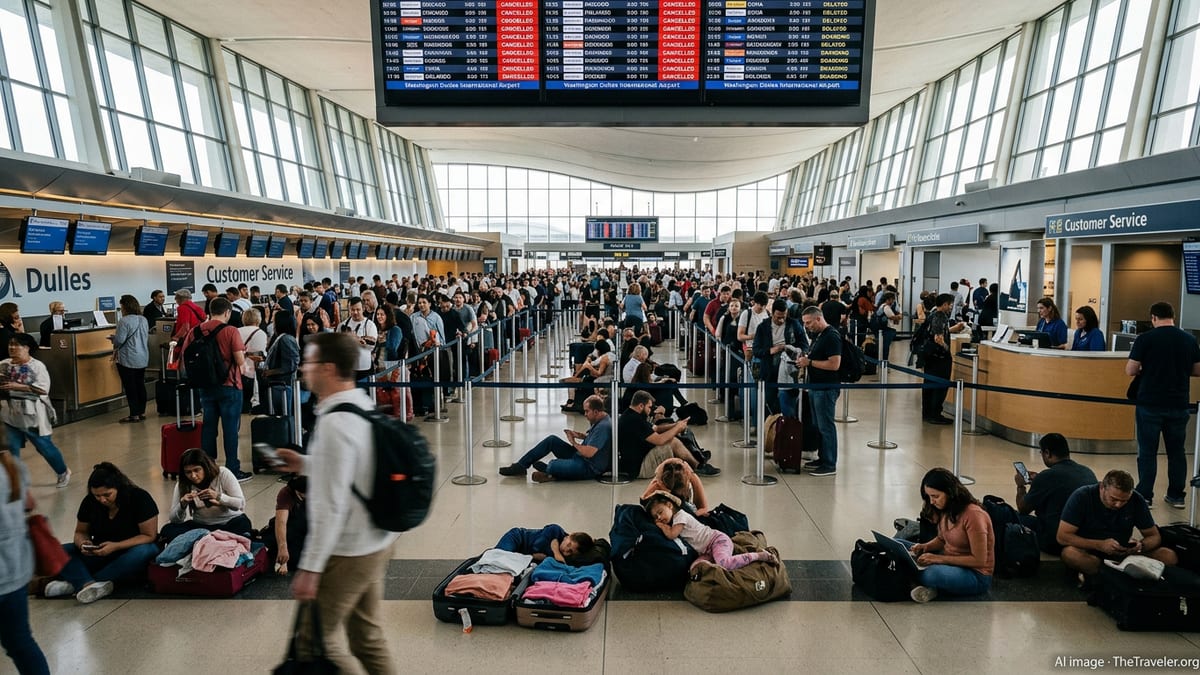
Travelers at Washington Dulles International Airport faced hours of uncertainty today as a cluster of cancellations on high-demand routes to Chicago, Orlando and Doha left passengers stranded, rebooking counters overwhelmed and departure boards lit with red notices across multiple airlines.
Get the latest news straight to your inbox!
What Triggered the Disruptions at Dulles
Publicly available flight-tracking data and airline status pages on Monday, March 16, indicate an unusual concentration of cancellations and extended delays on Washington Dulles routes linking to Chicago, Orlando and Doha. These routes connect one of the nation’s major international gateways with major leisure and connecting hubs, magnifying the impact for domestic and long-haul travelers alike.
The disruptions come just days after a wider air traffic control equipment issue and a brief ground stop affected Washington Dulles along with other Washington and Baltimore area airports. That earlier episode produced hours of knock-on delays across the region, and operational analysts note that residual schedule imbalances can linger through subsequent travel days, especially on already busy corridors.
Reports from passengers on social platforms describe scenes of crowded gate areas, long lines at customer service desks and repeated schedule changes throughout the morning and early afternoon. Although exact causes vary by flight and airline, the clustering of cancellations on the Dulles to Chicago, Orlando and Doha routes suggests a mix of aircraft and crew displacement, plus ongoing strain on the wider East Coast traffic flow.
Why Chicago, Orlando and Doha Are So Affected
Chicago and Orlando rank among the most heavily traveled domestic destinations from the Washington region, both as point-to-point leisure markets and as connection points to the broader United States. Chicago in particular is a major hub for several large carriers, meaning a canceled Dulles to Chicago flight can disrupt dozens of onward connections across the Midwest, West Coast and international network.
Orlando flights from Dulles are highly seasonal and leisure-heavy, with many families and group travelers on fixed itineraries. When a single rotation is canceled on this corridor, the available alternative seats can be very limited, especially during school breaks or peak holiday periods, leaving passengers with few same-day options and higher out-of-pocket costs if they must change hotels or activities.
The Dulles to Doha sector is one of the airport’s key long-haul links to the Gulf region and onward destinations in Africa and Asia. Cancellation of a single widebody departure on this route can affect hundreds of passengers at once, many holding complex itineraries purchased months in advance. Public schedules show that alternative same-day routings from the Washington region to Doha often require multiple stops or lengthy detours, increasing the stakes for anyone facing last-minute disruption.
How Airlines Are Handling Stranded Passengers
Airline policy pages and recent consumer guidance from the U.S. Department of Transportation highlight that passengers on canceled flights are generally entitled to a refund if they choose not to travel, even on nonrefundable tickets. For those who still wish to complete their journey, carriers typically prioritize rebooking onto the next available flight on the same route, though seat availability can be extremely limited when multiple departures are cut from the schedule on the same day.
Travelers at Dulles are reporting prolonged waits to speak with gate staff or reach airline call centers, a common pattern during irregular operations when call volumes surge. In some cases, passengers indicate that airline mobile apps are updating rebooking options before they are announced over the public address system, leading many to rely on their phones as the fastest way to secure new seats.
Accommodation and meal support for stranded passengers appears to vary depending on each carrier’s policies and whether the disruption is categorized as within the airline’s control or related to broader airspace or equipment constraints. Consumer advocates continue to remind travelers to keep receipts for food, ground transportation and hotels in case partial reimbursement or goodwill credits are later offered.
What Impact Travelers at Dulles Should Expect Next
Operational data from past large-scale disruptions in the national airspace system suggests that the effects of a cancellation wave can persist well beyond the initial day of turmoil. Aircraft and crews can end up in the wrong cities, and rebalancing the network often takes several schedule cycles. For Dulles, that means passengers booked on later flights to Chicago, Orlando or Doha could still see further adjustments, even if conditions appear to improve by the evening.
Travel industry analyses note that hub-to-hub routes such as Dulles to Chicago may recover more quickly because airlines have greater flexibility to swap aircraft and crews and to reroute passengers through alternative hubs. Leisure-focused routes like Dulles to Orlando, however, often have fewer daily frequencies and less slack in the system, which can leave travelers facing longer waits for open seats, particularly for larger family groups trying to stay together.
For long-haul travelers connecting from Dulles to Doha and onward to destinations in South Asia or Africa, missed connections can translate into overnight stays and complete itinerary rework. Published schedules show that replacement long-haul options from other East Coast gateways may depart only once daily, increasing the risk that a single cancellation cascades into multi-day disruptions.
Practical Steps for Travelers Caught in the Chaos
Passenger advocacy groups and experienced travelers consistently recommend checking flight status directly with the airline before leaving for Dulles, even if a ticket appears on time in third-party apps. During widespread disruption, departure and arrival times can change minutes before boarding, and gate assignments at Dulles’ expansive concourses are often shuffled as airlines reposition aircraft.
Once at the airport, combining digital and in-person options tends to yield the fastest solutions. Many travelers find success by simultaneously joining the physical customer service line, using the airline’s mobile app to search for alternative flights, and calling or messaging the carrier’s customer support channels. If one avenue produces an acceptable rebooking, the others can be abandoned.
Travel planners also highlight the importance of knowing your minimum requirements, such as the latest acceptable arrival time or whether an overnight stop is feasible. In periods of heavy disruption like the current situation at Dulles, the earliest available seat may involve a different connecting city, a red-eye flight or a partial refund to book on another carrier from a nearby airport. Being clear about priorities can help passengers make faster decisions when options appear and disappear quickly.