

More news on this day
Early April 2026 brought fresh turbulence to U.S. air travel as 44 flight delays and seven cancellations at Washington Dulles International Airport rippled through domestic and transatlantic networks, underscoring ongoing fragility in the nation’s aviation system.
Get the latest news straight to your inbox!
A Localized Disruption With National Reach
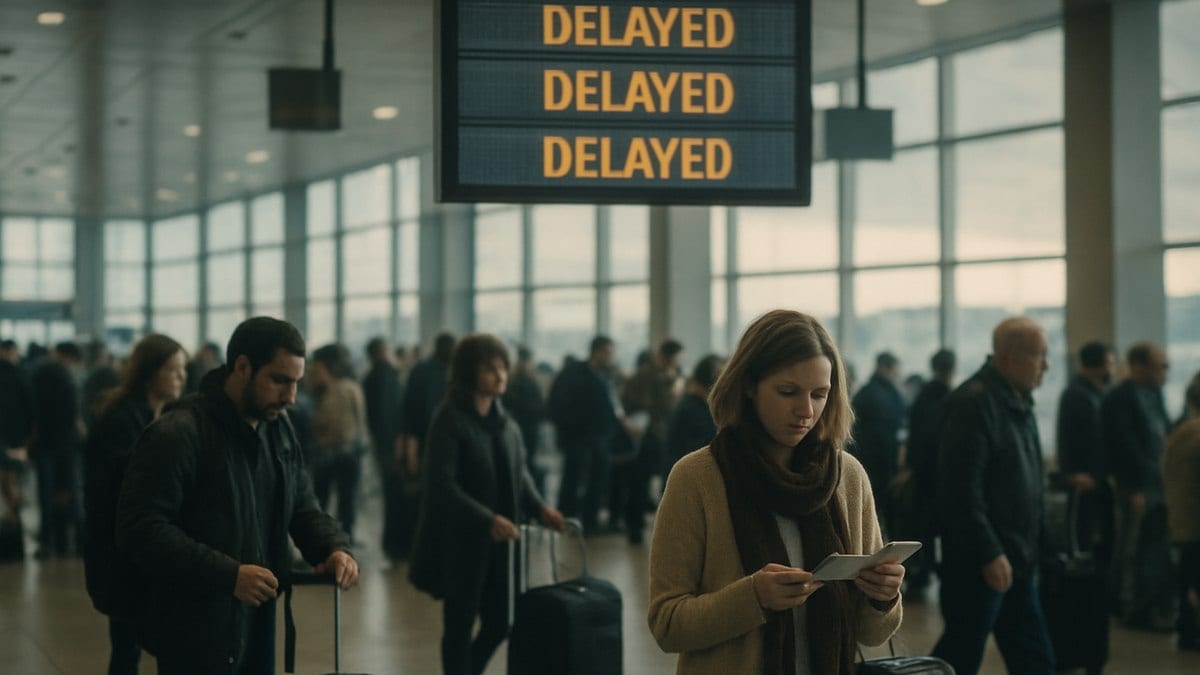
The latest operational figures for Washington Dulles show that, within a single day of early April, 44 departures and arrivals ran late while seven scheduled services were cancelled outright. While modest compared with the worst disruption days of recent years, the pattern highlights how even a relatively contained disturbance at a major hub can complicate connections across the country.
Publicly available flight-tracking data for that period indicate that the disruption was concentrated in peak morning and late afternoon banks, when Dulles typically handles a dense wave of departures toward major U.S. cities alongside a slate of international arrivals. When a handful of these flights are delayed, aircraft and crew availability can quickly slip out of position for onward legs, triggering secondary delays far from the original source.
Industry analyses of previous disruption episodes show that hub-and-spoke networks are particularly susceptible to such “knock-on” effects. A single cancelled outbound from Dulles to a regional airport can strand an aircraft needed later in the day for a completely different route, forcing airlines to juggle aircraft swaps, crew reassignments and, in some cases, preemptive cancellations to stabilize the schedule.
For travelers, the impact often shows up in missed connections and extended layovers rather than outright cancellations. Passengers departing from smaller airports may never pass through Dulles itself, yet still feel the effects in the form of aircraft arriving late from the Washington region, compressing turnaround times and pushing departure slots back throughout the day.
Spring Strain on an Already Busy System
The Dulles disruptions arrive at a time when spring travel demand is building and capacity at many U.S. airports is running near pre-pandemic levels. April typically marks the transition from late-winter weather hazards to heavier leisure travel volumes, and recent seasons have shown that this shoulder period can be particularly vulnerable to operational strain.
Federal transportation statistics for recent years have consistently recorded April as a month with elevated delay percentages compared with quieter winter weeks, reflecting a combination of lingering storms, airspace congestion and tight airline schedules. Historic data show that nationwide, roughly one in five flights in April runs late in a typical year, with cancellation rates usually hovering in the low single digits.
While the specific mix of causes behind Dulles’s 44 delays and seven cancellations has not been fully detailed, broader patterns across the network in late March and early April point to a combination of factors. A series of strong weather systems in late March affected large portions of the Mid-Atlantic and Northeast, while air traffic management initiatives aimed at easing congestion have introduced intermittent flow-control programs at busy hubs.
At the same time, airline schedules remain finely tuned to meet demand with limited slack. Analysts note that even short-lived episodes of low clouds, thunderstorms or ground congestion can force flight crews and dispatchers into difficult trade-offs between holding departures, rerouting aircraft or trimming the schedule through targeted cancellations.
Knock-On Effects Across U.S. and Transatlantic Routes
Because Dulles functions both as a domestic connector and a transatlantic gateway, disruption at the airport often sends ripples across multiple geographic markets. Early April operations suggest that flights linking Washington with major East Coast and Midwest cities bore the brunt of departure delays, which then cascaded into later banks of departures further west.
On transatlantic routes, even modest departure delays can trigger a chain of schedule adjustments lasting well into the following day. Long-haul aircraft that leave Dulles behind schedule often arrive in Europe outside their planned slots, tightening ground handling windows and leaving less time for routine maintenance or crew rest before the return leg. Airlines frequently respond by padding block times or re-timing specific flights, but the underlying pattern of compressed turnarounds can leave little margin for error.
Domestic connections are equally exposed. A delayed arrival from Dulles into a mid-continent hub may still be able to operate its onward leg, but with reduced recovery time and a greater likelihood of minor maintenance checks overlapping with boarding windows. Over the course of a day, these small inefficiencies accumulate, raising the probability that later flights will depart behind schedule even in the absence of fresh weather or airspace complications.
Observers point out that these dynamics are particularly pronounced during holiday and school-break periods, when load factors climb and the number of available spare seats dwindles. In those conditions, rebooking options for travelers affected by the seven cancellations at Dulles can rapidly narrow, forcing some passengers onto later-day or next-day departures and spreading the impact over several travel days.
Dulles in the Context of a Wider Disruption Pattern
The turbulence at Dulles fits into a broader picture of global aviation strain in early April 2026. European and Middle Eastern hubs have reported waves of delays and cancellations in recent days, driven by a mix of bad weather, airspace restrictions and staffing pressures. These international patterns matter for Washington in part because Dulles hosts significant connecting traffic to and from Europe, the Middle East and Africa.
Recent coverage of delays at major European airports has highlighted how multi-hour ground holds and slot reductions can push arriving flights into Washington and other U.S. cities well behind schedule. When these aircraft arrive late at Dulles, they commonly turn around to operate domestic segments, instantly embedding the overseas disruption into U.S. internal networks.
Analytical work published in recent weeks on U.S. delay propagation underlines the growing role of security screening, staffing variability and air navigation constraints as structural contributors to late operations. While no single factor has been singled out as dominant, the combination of lean staffing, high utilization of aircraft and complex airspace around major East Coast corridors creates a background environment in which even small disturbances can escalate.
In this context, the 44 delays and seven cancellations at Dulles are less an outlier than a visible instance of a system running close to its operational limits. Researchers examining multi-year patterns of delay emphasize that the geometry of the network, concentration of traffic at a relatively small number of hubs and tight bank structures all increase the potential for localized issues to spread quickly.
What Travelers Can Do During an Unstable Period
For passengers, the Dulles episode offers a reminder that even on days without dramatic weather or headline-grabbing meltdowns, schedules can still be fragile. Travel advisories issued by airlines and airports in recent weeks have repeatedly encouraged passengers to build extra time into itineraries, especially when connecting through busy hubs such as Dulles.
Industry guidance suggests that travelers with same-day connections should favor longer layovers where possible and avoid the tightest legal connection times, particularly on itineraries involving evening arrivals into Washington. Booking the first flight of the day from an origin airport is often recommended, as early departures are statistically less exposed to accumulated knock-on delays from earlier legs.
Passengers are also encouraged to make full use of airline mobile apps and notification tools, which can provide early warning of creeping delays or schedule changes. When disruptions do occur, having these tools in hand can speed up the process of securing alternative routings or same-day standby options, especially in periods when call centers and service desks are under pressure.
More broadly, the pattern of 44 delays and seven cancellations at Dulles in early April 2026 illustrates how a modern hub can tip from routine operations into a churn of small but consequential schedule adjustments. For now, the episode serves as another data point in an ongoing debate over how much resilience is built into U.S. aviation infrastructure and what changes might be needed to give both airlines and passengers a greater margin of certainty.