

More news on this day
Dutch F-35A Lightning II stealth fighters have deployed to Hill Air Force Base in Utah for an intensive month of advanced combat training, using the vast Utah Test and Training Range to rehearse high-intensity air operations alongside United States Air Force units in support of NATO defense readiness.
Get the latest news straight to your inbox!
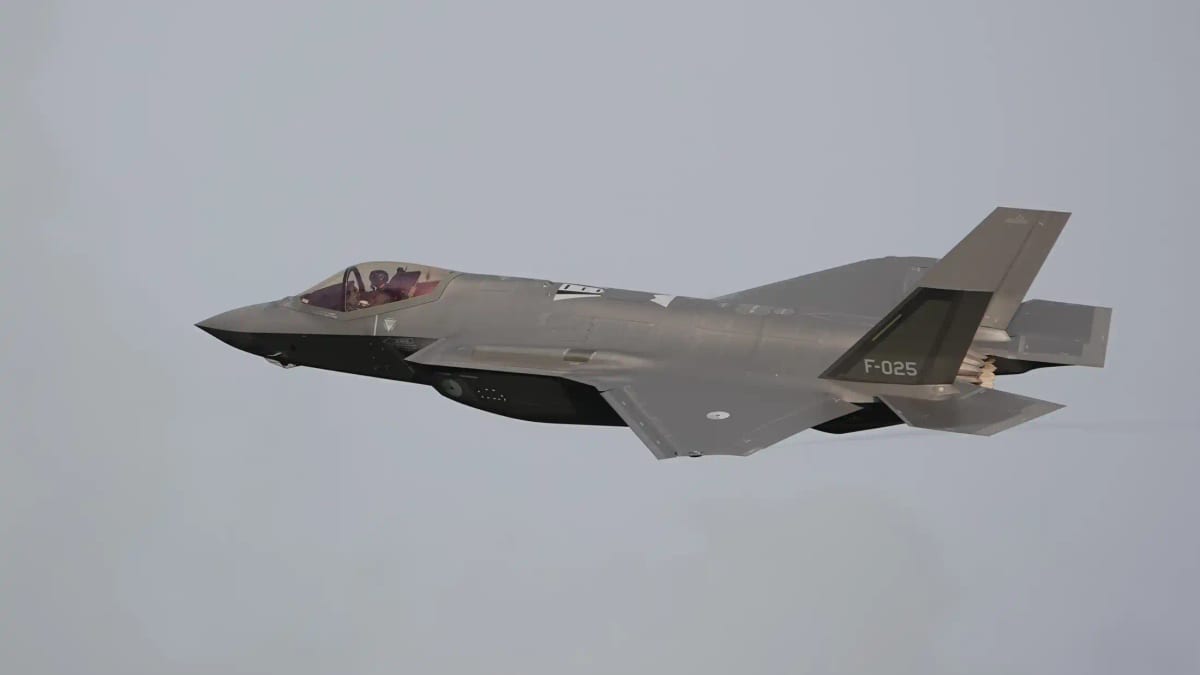
Image by Aviation News
Largest Dutch F-35 Deployment Yet to the American West
Publicly available information from the Dutch Ministry of Defence and recent exercise coverage indicates that twelve Royal Netherlands Air and Space Force F-35A fighters and several hundred personnel have relocated from Volkel Air Base to Hill Air Force Base for the March deployment. The contingent includes pilots, maintenance crews, weapons specialists and planners drawn from the Dutch F-35 community.
The training period in Utah follows earlier Dutch fifth-generation deployments to U.S. locations such as Mountain Home Air Force Base in Idaho and Red Flag exercises at Nellis Air Force Base in Nevada, but reports describe the current presence at Hill as one of the most ambitious to date. The focus is on sustained, high-tempo flying that mirrors the demands of modern large-scale combat operations rather than short demonstration sorties.
Exercise activity at Hill Air Force Base during March has featured multiple daily waves of F-35 launches, with Dutch fighters integrating into mission packages alongside American F-35A squadrons from the 388th and 419th Fighter Wings. The deployment also relies on tanker support from a Dutch KC-30M multi role tanker transport aircraft, underlining the expeditionary nature of the operation and the need to practice long-range deployments far from European bases.
For the Netherlands, which has transitioned from legacy F-16s to the F-35A as its main combat aircraft, the Utah deployment is part of a broader effort to validate how the fleet can be generated, sustained and protected during extended overseas operations. The ability to move a sizable F-35 force to North America and keep it flying at high intensity for weeks is seen in open reporting as a key benchmark for allied combat readiness.
Utah Test and Training Range Offers Rare High-Intensity Environment
Reports from Hill Air Force Base describe the surrounding Utah Test and Training Range as central to the deployment’s value. The range provides a large, instrumented airspace with room for multiple aircraft packages, simulated adversary fighters, surface-to-air missile threats and complex mission profiles that are difficult or impossible to replicate over the densely populated Netherlands.
According to published coverage of the Lightning Forge exercise, Dutch F-35 crews are flying scenarios that emulate operations in contested airspace, including offensive counter air, defensive counter air and strike missions against well-defended targets. These missions often involve electronic warfare effects, simulated jamming and cyber elements that stress the F-35’s advanced sensors and data fusion systems.
The Utah setting also allows Dutch and U.S. units to practice long mission durations, rapid turnarounds and night flying in a realistic setting. Observers note that crews are generating multiple sortie lines per day, with F-35s recovering, being refueled and rearmed on the ground, then returning to the air for follow-on missions that build on the previous scenarios. This kind of serial, multi-wave activity is intended to mirror the strain of real-world high-intensity combat.
Terrain is another factor. The mountainous backdrop and wide desert expanses around Hill and the test range differ sharply from the flat, low-lying landscape of the Netherlands. Dutch pilots have publicly highlighted in past exercises that training in such varied geography improves navigation, threat masking techniques and low-level tactics that are relevant to potential operations on NATO’s flanks.
Deepening NATO Interoperability With U.S. F-35 Forces
The Utah deployment is structured around close cooperation between Dutch F-35 units and their American counterparts. Official exercise summaries and defense-industry reporting describe mixed formations of aircraft, shared mission planning cells and integrated debriefs that bring together crews from both nations after each sortie series.
Operating alongside experienced U.S. F-35 squadrons at Hill Air Force Base gives Dutch pilots access to tactics, techniques and procedures that have been refined during combat deployments and large multinational exercises. At the same time, the Royal Netherlands Air and Space Force contributes its own perspective, shaped by years of Baltic air policing and air defense missions on NATO’s eastern flank.
Interoperability extends beyond the cockpit. Maintenance teams from both countries are working in parallel on the flight line, handling refueling, weapons loading and fault diagnosis on a common aircraft type. Publicly available photo captions from the deployment show Dutch and U.S. ground crews operating side by side, reinforcing the ability to share workloads and support aircraft in austere conditions.
Analysts note that this type of integrated training is especially important as more European allies bring their own F-35 fleets to full operational capability. The Netherlands was among the earlier European adopters of the aircraft, and its willingness to send full squadrons overseas for demanding exercises in the United States is viewed in open commentary as a sign of growing confidence in the platform and its role in NATO airpower.
From Routine Training to High-End Combat Readiness
Statements released by the Dutch Ministry of Defence ahead of the Utah rotation framed the deployment as a step beyond routine flying hours. The emphasis is on high-intensity operations that stress both personnel and equipment, aligning with NATO’s shift toward preparation for potential large-scale conflict in contested airspace.
To support that objective, the Lightning Forge exercise concept at Hill combines air-to-air and air-to-ground tasks, complex command and control arrangements and realistic opposing forces. U.S. units generate simulated enemy fighters and advanced air defenses, compelling the Dutch F-35s to use their stealth, sensors and data links to survive and complete assigned missions under pressure.
Observers of the deployment highlight that mission planning tools and secure data networks are being tested alongside the aircraft themselves. Preparing for high-end combat with a fifth-generation fleet is as much about information management and decision-making as it is about traditional flying skills, and the Utah environment allows both to be practiced at scale.
The Dutch deployment also fits within a wider pattern of fifth-generation readiness activities across NATO. Recent months have seen Dutch F-35s train in Finland on dispersed operations from highway strips and participate in Red Flag scenarios in Nevada. The Utah rotation adds another layer by concentrating on sustained, integrated combat sorties that demonstrate how the force might fight day after day in a major contingency.
Implications for NATO Air Defense and Future Operations
For NATO planners, the Hill Air Force Base deployment provides a visible demonstration of how European F-35 fleets can plug into U.S.-based training pipelines and combat concepts. Reports from defense media and official outlets emphasize that Dutch pilots are rehearsing scenarios directly relevant to defending alliance airspace, including responses to cruise missile threats and coordinated offensive air campaigns.
By practicing mission generation, maintenance resilience and logistics support far from home, the Royal Netherlands Air and Space Force is also building the skills needed for rapid reinforcement of other theaters, whether in Europe or beyond. The experience gained in Utah is likely to inform how Dutch F-35 units are employed in future multinational operations, including rotational deployments and large-scale NATO exercises.
Public analysis of recent alliance air exercises suggests that lessons from Utah will feed into evolving concepts such as dispersed basing, agile combat employment and closer integration with ground-based air defenses. F-35 data-sharing capabilities allow the aircraft to act as airborne sensors for the wider coalition, and high-intensity training helps crews refine how that information is used by commanders on the ground.
As the March deployment progresses, observers view the Dutch presence in Utah as both a technical and political signal. It underlines the Netherlands’ intention to use its F-35 fleet as a front-line contributor to NATO deterrence and shows how transatlantic training partnerships are helping allies prepare for the demands of modern, high-end air warfare.