

More news on this day
Easter 2026 holiday travel across Europe has been thrown into turmoil as a combination of bad weather, labor action and airport capacity constraints triggered days of flight disruption at Frankfurt Airport and London Heathrow, two of the continent’s most important hubs.
Get the latest news straight to your inbox!
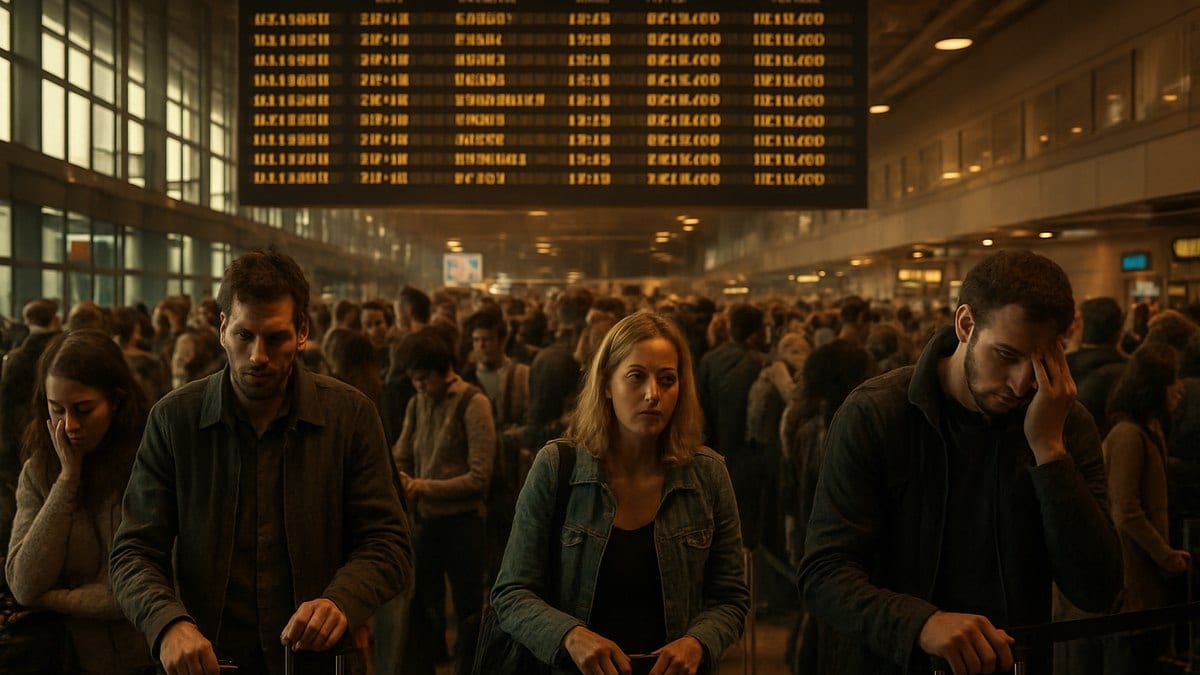
Perfect Storm of Pressure on Europe’s Busiest Hubs
Publicly available aviation data for late March and early April 2026 indicate that Easter travel demand returned to or exceeded pre-pandemic levels, with Frankfurt and Heathrow again operating near their maximum scheduled capacity. Industry monitoring from Eurocontrol and other operational databases shows both hubs handling dense banks of connecting traffic for European, transatlantic and Middle Eastern routes during the Easter school holidays.
At the same time, a succession of spring weather systems sweeping across northwestern Europe reduced runway throughput on several peak days. Analysis from passenger-rights platforms highlights Heathrow as a particular choke point in the first week of April, when strong crosswinds and low cloud forced the airport to trim arrivals and departures and reposition aircraft, leading to cascading delays across the region.
These conditions hit at a moment when airlines had already loaded their Easter schedules aggressively, betting on strong leisure demand to southern Europe, the eastern Mediterranean and long haul destinations. As a result, relatively modest reductions in hourly movements at the hubs quickly translated into missed connections, last-minute cancellations and long queues for rebooking, particularly for families returning from school holidays.
Lufthansa Strike Amplifies Disruption in Frankfurt
Frankfurt’s role as the primary hub for Germany’s Lufthansa group left it especially exposed when labor tensions flared in the run-up to Easter. According to recent coverage from aviation-focused news outlets and passenger associations, a series of industrial actions by Lufthansa cabin crew and ground staff during March and April forced the carrier to cancel hundreds of flights, including on key Easter return dates.
One strike on April 10, 2026, centered on Lufthansa and regional operator Lufthansa CityLine, reportedly resulted in more than 500 cancellations across the network in a single day, affecting flights at Frankfurt, Munich and several other German airports. Schedules show Frankfurt absorbing a significant share of these cancellations, with feeder services from secondary cities such as Hamburg and Hanover removed from the timetable and long haul departures adjusted or consolidated.
For passengers using Frankfurt as a connecting hub, the impact extended well beyond the strike window. Travelers reported on social media and consumer forums that inbound flights operated on time while onward connections were cancelled at short notice, leaving transiting passengers stranded in the terminal and putting further strain on airport hotels and customer service desks.
Operational planning documents published by European air traffic agencies also point to ongoing runway and airfield works at Frankfurt in early 2026, including resurfacing on one of the central runways. While such projects are scheduled to avoid peak bottlenecks, any loss of flexibility in runway use reduces the airport’s ability to recover quickly when irregular operations occur, magnifying the effect of strikes and weather-related delays.
Heathrow Weather and Airline Network Strains
London Heathrow, already operating close to its declared capacity on most days, has faced its own set of challenges this Easter. Passenger-rights organizations tracking disruptions across Europe report that bad weather over southern England in early April contributed to more than a thousand combined delays and cancellations linked to Heathrow and its connected routes.
British Airways, Heathrow’s dominant carrier, entered the Easter period under scrutiny after earlier episodes of disruption in March affected parts of its short haul and long haul network. Independent travel sites note that repeated schedule adjustments, aircraft swaps and crew reassignments have left limited slack in the airline’s operation, meaning any weather or technical issue can rapidly spill over into missed connections and overnight delays.
Reports from aviation data providers compiled over late March and early April show Heathrow regularly topping the rankings for knock-on delays across Europe during peak mornings and evenings. Even when flights were not cancelled outright, late arriving aircraft from weather-affected departures elsewhere in Europe caused successive rotations to push back behind schedule, leaving passengers facing lengthy waits at departure gates and crowded arrival halls.
Heathrow’s own travel advice for Easter, released ahead of the holiday period, urged passengers to arrive early, use online check in and be prepared for longer security and border queues. That guidance has taken on added urgency as disruption has grown, with consumer advocates warning that tight connection times at the airport may not be realistic under current conditions.
Knock-On Effects for Wider European and Long Haul Networks
The problems at Frankfurt and Heathrow have not been confined to local passengers. Both airports act as major connecting hubs, meaning irregular operations ripple across Europe, North America, the Middle East and Asia. Aviation analytics cited by European travel media indicate that Easter 2026 has seen significant secondary disruption at airports such as Vienna, Dubai and Istanbul, where inbound flights from Germany and the UK often arrive late or out of sequence.
On some days in late March, separate analyses of flight-tracking data highlight Frankfurt and Heathrow among a cluster of European airports suffering elevated cancellation and delay rates, alongside Paris Charles de Gaulle, Amsterdam Schiphol and Munich. Airlines attempting to protect long haul services have in some cases chosen to cancel shorter intra-European segments, leaving regional travelers with limited alternatives during one of the busiest leisure travel windows of the year.
For tour operators and package holiday providers, the knock-on effects have included disrupted hotel check ins, missed cruise departures and misaligned rail connections onward from destination airports. Trade press reports suggest that some companies have reactivated contingency teams last seen during the pandemic recovery phase, coordinating chartered coaches, rebooked flights and additional ground staff to manage stranded groups.
Travel insurance specialists note a corresponding spike in claims related to missed connections and extended delays, particularly for itineraries touching both Frankfurt and Heathrow within a 24-hour period. Policies that include coverage for weather-related disruption and labor action appear to have been especially relevant during this Easter period.
What Travelers Can Expect in the Weeks Ahead
Looking beyond the immediate Easter peak, there is little indication that Europe’s largest hubs will see an instant return to friction-free operations. Industry forecasts referenced in recent Eurocontrol planning documents show traffic levels remaining high into late April as school holidays in different countries overlap and business travel resumes after the break.
Frankfurt is simultaneously preparing to open its long-delayed Terminal 3 for passenger operations in late April 2026, an expansion that airport operator communications describe as essential for accommodating future growth. While the new terminal is expected to ease congestion in the medium term, the transition of airlines and ground operations may temporarily introduce new complexities in wayfinding, baggage handling and staffing.
At Heathrow, continued sensitivity to weather and the enduring lack of spare runway capacity mean that even modest operational shocks are likely to produce visible disruption on some days. Travel analysts suggest that until additional capacity or more resilient scheduling practices are introduced, Easter-style peaks will remain challenging.
Consumer organizations are advising passengers with upcoming trips via Frankfurt or Heathrow to monitor their bookings closely, allow extra connection time where possible and familiarize themselves with compensation and care rules under European air passenger regulations. With Summer 2026 schedules already loaded and advance bookings strong, the difficulties seen over Easter are being viewed by many observers as a stress test for a system that may face even greater strain in the months ahead.