

More news on this day
Europe’s two busiest international hubs, Frankfurt and London Heathrow, have been battling severe disruption over the Easter 2026 holiday period, as strikes, staffing shortfalls and wider operational pressures combined to trigger hundreds of cancellations and delays for passengers at the peak of spring travel.
Get the latest news straight to your inbox!
Lufthansa Strike Pushes Frankfurt to Breaking Point
Frankfurt Airport, Germany’s primary intercontinental gateway, has faced repeated waves of disruption in the run‑up to and during Easter 2026. A series of strikes at Lufthansa, centred on long‑running pay and pensions disputes with pilot and cabin crew unions, culminated in large‑scale cancellations just as many German states moved into or out of school holidays.
According to publicly available information from aviation data trackers and airline advisories, a 48‑hour Lufthansa pilot walkout in mid March already forced hundreds of flights to be scrapped, with Frankfurt recording the highest cancellation tally of any European airport over that period. Reports indicate that well over 300 departures and arrivals at the hub were removed from the schedule in just two days, creating large backlogs of displaced passengers and aircraft across the network.
Those problems were compounded in April when a separate strike by Lufthansa cabin crew, including staff at subsidiary Lufthansa CityLine, hit directly during the Easter return weekend. Published coverage suggests that more than 500 flights were cancelled across German airports during the one‑day action on April 10, with Frankfurt again among the worst affected. Airlines within the wider Lufthansa Group attempted to step in with larger aircraft and selective route substitutions, but the sheer volume of disrupted services meant many travellers still faced missed connections and overnight stays.
The repeated strikes have come against a backdrop of already stretched operations. Industry monitoring shows that Frankfurt has been operating close to pre‑pandemic traffic levels, with tight turnaround times and limited slack in the system. When a major carrier such as Lufthansa publishes an emergency timetable, even if around half of the original schedule operates, the ripple effects for connecting passengers at a hub the size of Frankfurt can take days to wash through.
Heathrow Struggles With Knock‑On Cancellations and Delays
While Frankfurt has been hit primarily by labour disputes at its largest airline, London Heathrow’s Easter turbulence has been driven more by accumulated operational strain across multiple carriers. In the weeks leading into the holiday period, travel‑data analyses highlighted Heathrow as one of Europe’s most disrupted hubs on several days, with British Airways, Lufthansa, and other major airlines reporting elevated levels of cancellations and delays.
On some March and early April days, Heathrow registered more cancellations and delays than any other European airport in aggregated flight‑tracking tallies, with several dozen services scrubbed and many more running late. British Airways, which dominates Heathrow’s slots, has seen clusters of flights withdrawn from its timetable because of aircraft availability issues and knock‑on effects from weather, airspace constraints and technical problems elsewhere in its network.
These difficulties have intersected with broader European challenges, including route closures and diversions linked to ongoing tensions in parts of the Middle East. Publicly available statements from airlines indicate that services to and from certain Gulf and Levant destinations have required rescheduling or rerouting, adding further pressure on prime transcontinental departure banks at Heathrow exactly when Easter demand has surged.
Heathrow is particularly vulnerable to such chain reactions because of its limited runway capacity and high load factors. When even a small portion of daily movements is disrupted, options for recovery are constrained. As a result, passengers have reported rolling delays, last‑minute gate changes and same‑day cancellations as operators try to reshuffle aircraft and crews to keep long‑haul and strategic routes running.
Passengers Face Long Queues, Missed Connections and Complex Rebookings
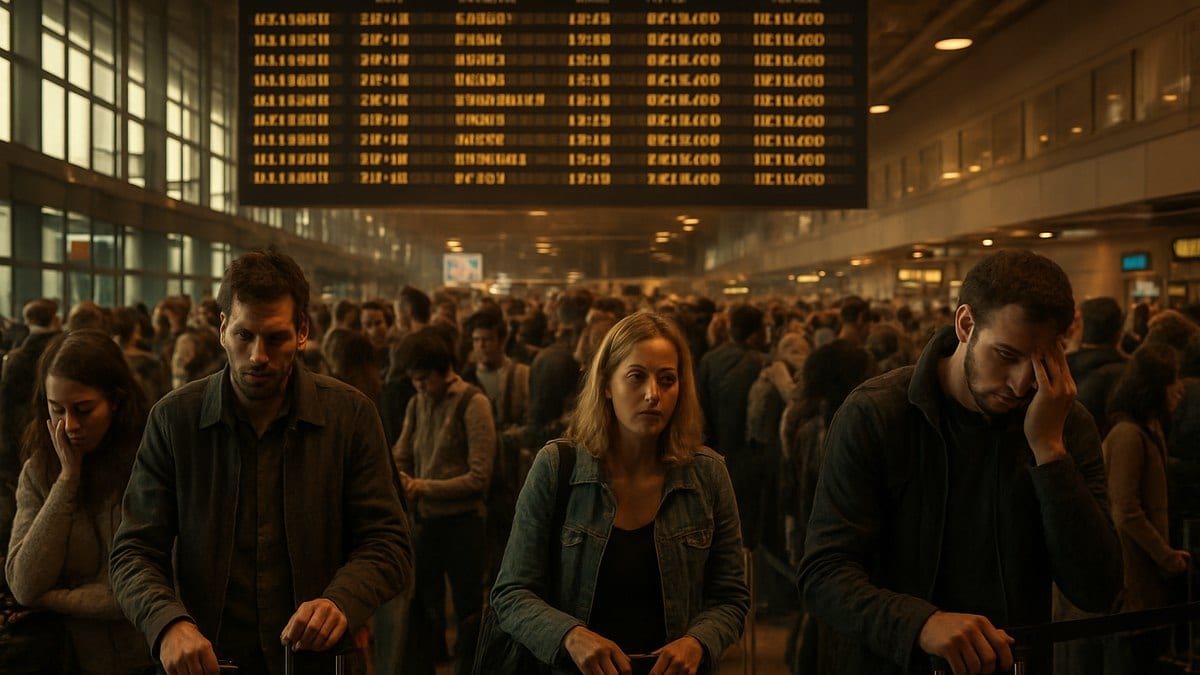
The human impact of the Easter 2026 disruption has been most visible in the crowded terminals of Frankfurt and Heathrow. Passenger accounts collected in consumer‑rights blogs, social media posts and travel forums describe long queues at check‑in, security and customer‑service desks, with some travellers waiting hours to receive rerouting or hotel vouchers after sudden cancellations.
At Frankfurt, the combination of strike‑driven cancellations and high connecting traffic has led to particularly difficult situations for those travelling onward to Asia, Africa and the Americas. Reports indicate that some long‑haul passengers arriving from North America or Asia discovered their intra‑European connections cancelled only after landing, forcing last‑minute rebookings onto already full services or alternative routings via Munich, Zurich or Vienna.
Heathrow passengers, meanwhile, have faced a patchwork of issues ranging from relatively short delays to multi‑day travel disruptions. In some cases, travellers reported having their long‑haul flights from North America, the Middle East or Asia cancelled with limited alternative capacity available for several days. Online discussions highlight frustration with rebooking rules, particularly when tickets were issued by one airline but operated or reprotected by another, complicating changes during a fast‑moving disruption.
Consumer advocates note that passengers affected by cancellations and long delays within Europe may have rights to care, rerouting and in some cases financial compensation under European and UK regulations, depending on the cause of the disruption. However, travellers often have to navigate complex claims processes and gather documentation such as booking references, written proof of cancellation and receipts for out‑of‑pocket expenses to support any later applications.
Airports and Airlines Race to Restore Normal Operations
Both Frankfurt and Heathrow have been working to stabilise schedules as the core Easter travel window draws to a close. Frankfurt’s operator and Lufthansa have published revised timetables around strike days, with the airline signalling in public updates that it aims to operate a majority of its long‑haul flights even during industrial action by redistributing capacity and enlisting partner carriers where possible.
Industry coverage indicates that in March’s pilot strike, Lufthansa ultimately operated around 60 percent of its long‑haul programme despite the walkout, leaning on larger aircraft and alliance support. Similar strategies have been visible during the April cabin crew action, though the timing during Easter has limited the availability of spare seats. Ground‑handling teams at Frankfurt have also been under pressure to turn aircraft quickly when they do operate, in order to prevent further knock‑on delays.
At Heathrow, airlines have been adjusting schedules in advance where they can, trimming frequencies on certain short‑haul routes to protect long‑haul departures and arrivals. Some carriers have issued travel waivers around the busiest days, allowing passengers to move their journeys to less congested dates without penalty. Heathrow’s operator has emphasised in public messaging that passengers should check their flight status before travelling to the airport and allow extra time for all processing points.
Despite these efforts, aviation analysts caution that recovery from such concentrated disruption can be fragile. With aircraft and crew rosters out of position and terminals already close to capacity, even relatively minor incidents such as technical faults or localized weather can quickly tip operations back into irregular patterns. For travellers, that means continued uncertainty on some routes through the end of the Easter travel season.
What Easter Turbulence Signals for Europe’s Summer Peak
The Easter 2026 chaos at Frankfurt and Heathrow is being watched closely by aviation industry observers as an indicator of how Europe’s air travel system might cope with the even more demanding summer peak. Both hubs entered the holiday period with traffic levels near or above those seen in 2019, but with workforces and infrastructure still adjusting after the pandemic and amid ongoing labour disputes.
Frankfurt is preparing to open its long‑planned Terminal 3 to passenger traffic later in April, a development that is expected to relieve some pressure on existing terminals over the longer term. However, the immediate Easter period has illustrated that additional terminal capacity alone cannot insulate a hub from the effects of industrial action at its largest airline or from network‑wide operational shocks.
For Heathrow, the recent turbulence adds to a series of high‑profile disruption events over recent years, including a temporary closure in 2025 after a regional power‑infrastructure incident and periodic staff shortages in security and ground handling. The airport’s tight capacity and dependence on a small number of dominant carriers leave it exposed when those airlines experience technical, staffing or geopolitical headwinds that force late timetable changes.
Travel experts suggest that passengers planning trips through Frankfurt and Heathrow later in 2026 may wish to build in longer connection times, monitor airline communications closely in the days before departure and consider travel insurance products that specifically cover delays and cancellations. While the worst of the Easter disruption is expected to ease as holiday traffic subsides and strike calendars clear, the events of March and April underline how quickly Europe’s busiest hubs can move from routine operations to widespread chaos when multiple stresses collide.