

More news on this day
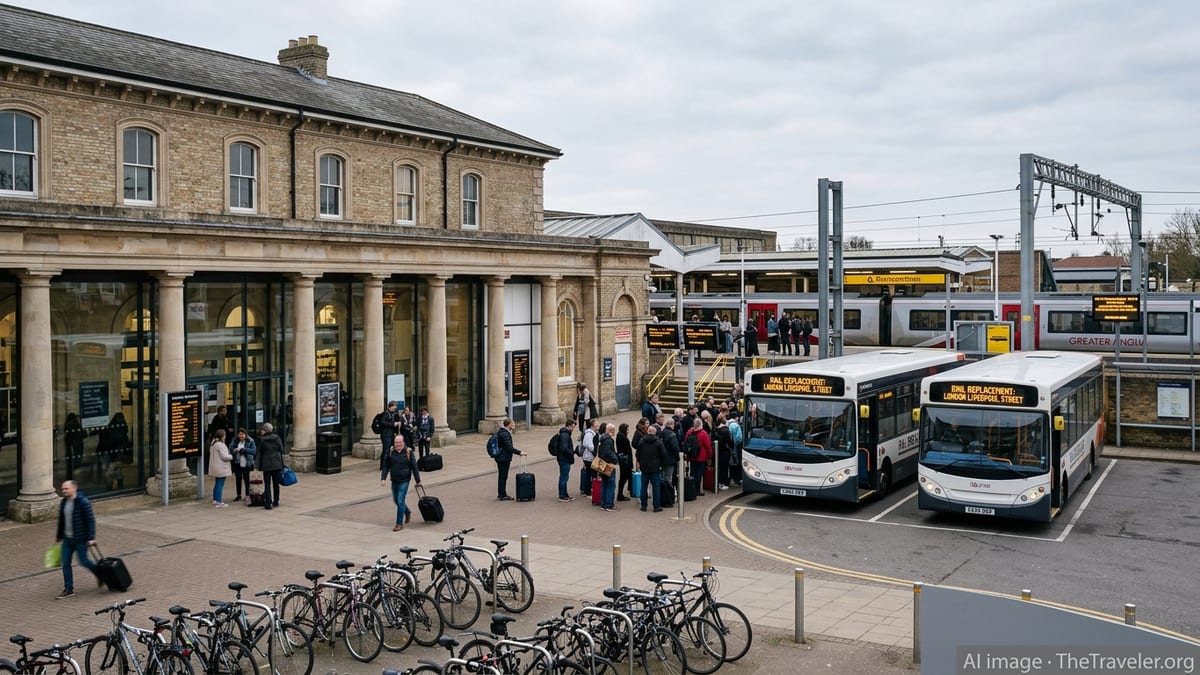
Passengers travelling through Cambridge and across Cambridgeshire over the Easter 2026 bank holiday face significant disruption, as major engineering works close key rail lines and trigger widespread use of replacement buses on some of the region’s busiest routes.
Get the latest news straight to your inbox!
When and where Easter 2026 disruption will hit
Publicly available information from National Rail and train operators shows that extensive engineering work is scheduled between Friday 3 April and Monday 6 April 2026, coinciding with the Easter bank holiday period. The most intensive activity is focused on the corridor between Cambridge, Ely, King’s Lynn and Bury St Edmunds, where all lines are due to be closed for the duration of the works.
National Rail’s engineering notice for the period confirms that services normally running between Cambridge and Ely, Cambridge and King’s Lynn, and Cambridge and Bury St Edmunds will not operate in their usual form. Instead, rail replacement buses are planned across multiple operators, increasing journey times and reducing capacity on what is traditionally one of the busier leisure travel weekends of the year.
The disruption will be felt across Cambridgeshire and into neighbouring counties, affecting CrossCountry, Great Northern and Greater Anglia services that use the key bottleneck north of Cambridge. While long-distance intercity services on other parts of the network will continue to run, travellers heading to and from Cambridge, Ely and surrounding market towns are being advised to expect altered routes, extra changes and crowded replacement buses across the four days.
Which train operators and routes are affected
National Rail’s detailed engineering summary lists three operators as directly affected by the Easter shutdown between Cambridge, Ely, King’s Lynn and Bury St Edmunds: CrossCountry, Great Northern and Greater Anglia. All are planning extensive use of buses in place of trains over the long weekend.
For CrossCountry customers, trains that usually run between Stansted Airport or Cambridge and Birmingham New Street will be broken at Ely. Buses are expected to replace trains between Stansted Airport and Ely on all four days, meaning passengers heading towards the Midlands will need to change from bus to train at Ely and allow extra time for the connection.
Great Northern’s King’s Cross to King’s Lynn corridor, a crucial commuter and leisure route through Ely and Cambridge, is also heavily impacted. Published plans indicate that buses will replace trains between Cambridge and King’s Lynn throughout the Easter period, with Great Northern services from London King’s Cross terminating at Cambridge rather than continuing to the Fenland and north Norfolk coast.
Greater Anglia is due to operate a mixed pattern of trains and buses. Information from the operator’s alteration pages shows that buses will replace trains between Cambridge and Ely and between Cambridge and Bury St Edmunds, while trains are expected to continue running between London Liverpool Street or Stratford and Cambridge, and between Peterborough and Ipswich. This creates a patchwork of rail and bus segments that will require careful journey planning, particularly for passengers making cross-country trips through Ely.
Why the works matter for Cambridge and the wider network
The Easter programme is part of a broader series of upgrades around Cambridge and Ely that Network Rail describes as essential for improving reliability and increasing capacity on one of the country’s most constrained rail corridors. The tracks between Cambridge and Ely carry a combination of intercity, commuter and freight services linking London, Stansted Airport, the Midlands and the East Anglian ports, and have long been recognised as a pinch point.
Separate project information on the Ely area capacity enhancement programme outlines plans to increase the number of trains that can safely pass through the junctions around Ely each hour. This would allow for additional passenger services and more freight paths between the Port of Felixstowe, the Midlands and the North. The complex signalling, track and junction changes required are being delivered in phases, making use of bank holiday closures when fewer regular commuters are travelling.
In and around Cambridge itself, major re-signalling work and preparation for the new Cambridge South station are shaping the wider pattern of access to the railway through 2025 and 2026. Earlier updates from Network Rail on Christmas and New Year engineering highlighted that substantial upgrades in the Cambridge area would continue into early 2026, with the Easter works forming one of several extended blockade periods needed to complete the job.
Operators argue that carrying out such intensive work over holiday periods ultimately reduces the number of disruptive weekends spread across the calendar. However, for passengers relying on Cambridge as a key gateway to the region over Easter, the cumulative effect of ongoing projects means another period of constrained capacity and longer journeys.
What passengers should expect over the Easter weekend
Journey planners and engineering summaries suggest that travellers passing through Cambridge and Cambridgeshire at Easter 2026 should prepare for longer door-to-door travel times, reduced direct services and busier trains and buses on the sections that remain open. Replacement buses typically take longer than trains, particularly on congested local roads between Cambridge, Ely and surrounding towns, and are more limited for luggage, cycles and pushchairs.
National Rail’s replacement bus guidance notes that pick-up and set-down points may be some distance from the main station entrances, and passengers with reduced mobility or heavy bags may need additional time to transfer between bus and train. Operators are advising customers to check specific accessibility arrangements in advance, as not all replacement vehicles can accommodate wheelchairs or full-size bicycles, and space is often allocated on a first-come, first-served basis.
With multiple operators funnelling passengers onto the same replacement routes, local bus services are likely to be busier than usual, particularly at key hubs such as Cambridge, Ely and Bury St Edmunds. Rail industry information indicates that people should avoid cutting connections too finely and consider travelling earlier in the day where possible, especially if catching onward flights from Stansted Airport or connecting with long-distance services at Peterborough or Birmingham.
Passengers planning leisure trips to destinations such as the Norfolk coast, the Fens or Suffolk market towns may find that journey times stretch significantly beyond normal schedules. Those with flexible plans are being encouraged, through operator messaging, to consider travelling outside the core closure period or exploring alternative routes that avoid the most heavily affected sections of line.
How to plan ahead and minimise disruption
Although Easter 2026 is still some months away, journey planners are already beginning to reflect the broad pattern of closures and replacement services around Cambridge. Industry guidance recommends that passengers use official journey planning tools and operator websites to check their specific dates and times, as detailed timetables for replacement buses are often confirmed closer to the start of works.
Travellers are also advised to pay close attention to station calling patterns and interchange points. For example, Greater Anglia’s outline service plan suggests that trains between London, Stratford or Stansted Airport and Cambridge will continue to run, allowing passengers to make use of rail for at least part of the journey before transferring to buses north of the city. Similarly, trains between Peterborough and Ipswich are expected to operate, offering an alternative route that skirts some of the most severely affected sections.
Passengers who normally travel with bicycles, mobility scooters or other large items may need to investigate contingency options well in advance, such as secure cycle parking at unaffected stations or pre-booked accessible taxis for the last leg of the journey. Given the potential for revised timetables and late alterations as engineering plans are finalised, industry sources emphasise the importance of checking again in the days immediately before travel.
For residents and visitors in Cambridge and across Cambridgeshire, the Easter 2026 works represent another short-term squeeze on rail capacity in a region experiencing rapid growth in both population and rail demand. While the upgrades aim to deliver a more reliable, higher-capacity network in the medium term, anyone planning to travel over the holiday weekend is likely to need extra time, flexibility and patience to navigate the temporary rail and bus patchwork surrounding the city.