

More news on this day
Europe’s two busiest international hubs, Frankfurt and London Heathrow, are emerging as focal points of Easter 2026 flight disruption, with strikes, staffing gaps and knock-on delays combining to upend travel plans for tens of thousands of passengers across the holiday period.
Get the latest news straight to your inbox!
Strikes at Frankfurt Collide With Easter Return Rush
Frankfurt Airport, already under pressure from strong holiday demand, entered the Easter return period with a fresh round of disruption linked to Lufthansa labor disputes. A 48 hour pilot strike on 12 and 13 March 2026 had already thinned out the carrier’s schedule and created a backlog of displaced travelers, according to airline statements and industry advisories. Although that walkout officially ended before the peak Easter weekend, residual rebookings and capacity constraints rolled into late March and early April.
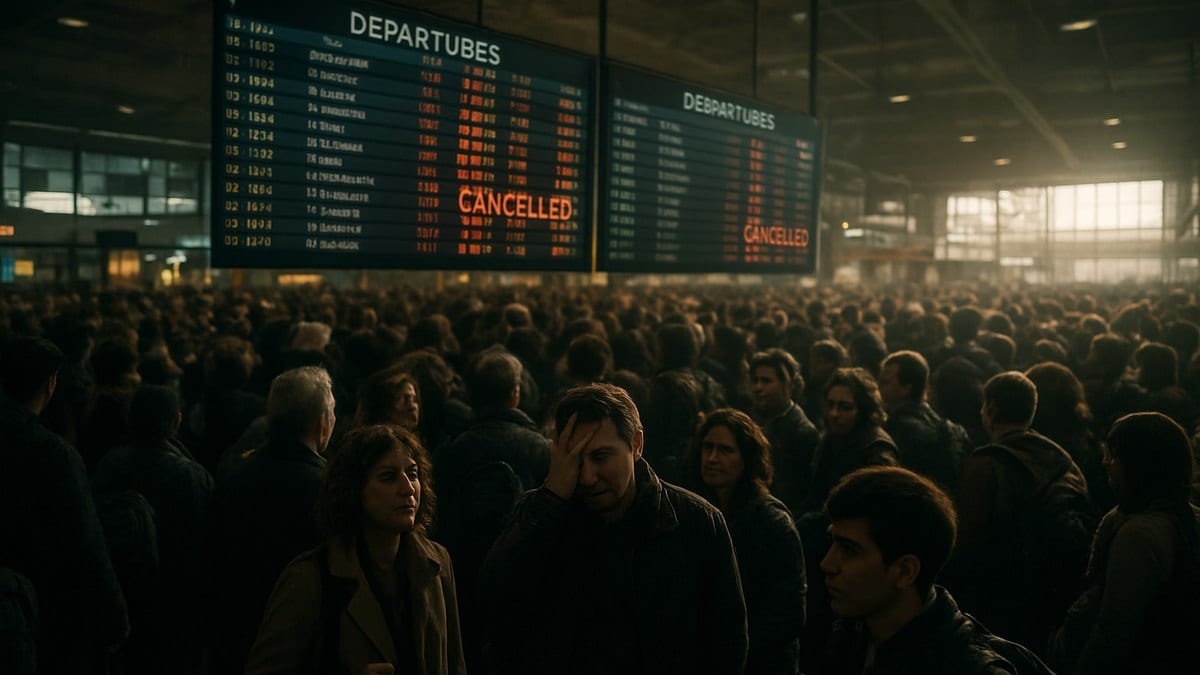
That fragile recovery was further strained when Lufthansa cabin crew staged another strike on Friday 10 April 2026, a day many travelers were flying home after the holiday. Reports from aviation news outlets indicate that more than 500 flights across Germany were cancelled in a single day, with Frankfurt bearing the brunt as the airline’s primary hub. At times, roughly half of the scheduled movements at the airport were removed from the timetable, leaving terminals crowded with stranded passengers.
Publicly available information from passenger forums and travel-management bulletins shows that many travelers only learned of cancellations upon arriving at the airport, despite airlines pushing notifications through apps and email. Rebookings often required rerouting via Amsterdam, Paris or Zurich, or pushing trips by several days, particularly for long haul connections to Asia and the Americas.
The timing of the strikes meant that passengers using Frankfurt purely as a transfer point were also heavily affected. With crews and aircraft out of position, otherwise unaffected routes saw last minute aircraft swaps and schedule changes, feeding additional disruption into European and intercontinental networks well beyond Germany.
Heathrow Feels the Squeeze From Strikes and Staffing Issues
Heathrow, Europe’s busiest international gateway, entered the Easter 2026 peak with its own challenges. Guidance published by UK-focused travel advisory services ahead of the holidays pointed to potential security staff walkouts and pressure on border operations, echoing previous industrial disputes that have periodically hit the airport during peak travel windows.
While full shutdowns were avoided, reports indicate that security queues stretched for hours at several points in late March and early April as staffing struggled to keep pace with a surge in outbound leisure traffic. Airlines warned customers to arrive significantly earlier than usual and, in some cases, brought forward check in opening times in an attempt to spread demand across the day.
The situation was complicated by knock on delays and cancellations linked to aircraft and crew arriving late from mainland Europe. With Frankfurt and other German hubs cutting dozens of departures during the March strikes and facing further cancellations around 10 April, a portion of Heathrow’s inbound schedule from Germany and Central Europe operated late or not at all. That led to missed connections for transfer passengers and created a ripple effect across popular transatlantic and Mediterranean routes.
Passenger accounts shared publicly over the Easter period describe departure boards at Heathrow terminals showing rolling delays, with some flights delayed multiple hours while airlines awaited aircraft freed from congested European rotations. Even where flights did depart, crowded departure lounges and full aircraft underscored how little slack remained in the system.
Knock On Impact Across European Flight Networks
The combination of labor action in Germany, staffing challenges in the UK and strong seasonal demand produced a web of cascading delays across Europe’s aviation network. Travel management companies and online booking platforms reported sharp increases in last minute rerouting, as passengers sought to avoid Frankfurt and, at times, Heathrow for critical connections.
Published industry commentary shows that alternative hubs such as Amsterdam Schiphol, Paris Charles de Gaulle and Brussels Zaventem absorbed additional connecting traffic from travelers who would normally route via Frankfurt. That shift brought its own pressure, with some carriers warning of limited seat availability on key Easter dates and advising passengers not to attempt self connecting itineraries with tight layovers.
Beyond cancelled flights, the turmoil manifested in lost baggage, missed cruises and disrupted rail connections. With aircraft and bags diverted around closed or congested hubs, some travelers reported waiting days for luggage to catch up. For those on tightly timed Easter breaks, a delayed bag or a missed onward leg often meant the effective loss of a large share of the holiday.
Analysts note that while winter storms and one off technical issues have long been a feature of spring travel in Europe, the layering of repeated labor disputes onto already stretched airport operations is increasingly responsible for the scale of Easter disruption. The events of March and April 2026 at Frankfurt and Heathrow are now being cited in industry discussions about buffer capacity and contingency planning at major hubs.
Passenger Rights and Airline Responses Under Scrutiny
The Easter turbulence has also renewed focus on passenger protections and airline response strategies in Europe. Under EU261 rules and related UK regulations, travelers departing from airports such as Frankfurt and Heathrow may be entitled to refunds, rerouting and in some cases compensation when flights are cancelled or heavily delayed. Legal experts and consumer advocates have been using the 2026 disruptions to highlight these entitlements and encourage passengers to document their experiences.
Publicly available guidance from regulators and travel insurers stresses that compensation eligibility can depend on whether a disruption is considered within the airline’s control. Industrial action by an airline’s own staff generally falls into that category, while external events such as air traffic control strikes or severe weather may not. With Lufthansa’s pilot and cabin crew strikes clearly rooted in contractual disputes, claims volumes are expected to remain high well beyond the Easter period.
Airlines, for their part, have pointed to emergency schedules, dedicated rebooking tools and flexible change policies as evidence that they are working to limit the impact of the turmoil. In the lead up to Easter, several carriers serving Frankfurt and Heathrow expanded voluntary rebooking windows, allowing customers scheduled to travel on peak strike days to shift to alternative dates without change fees, subject to seat availability.
Nonetheless, passenger feedback gathered across social and consumer platforms suggests a perception gap between formal policies and the experience on the ground. Long queues at service desks, overloaded call centers and limited same day alternatives left many travelers feeling that the system was unprepared for the scale of disruption that ultimately materialized around the 2026 Easter holidays.
Outlook for Late April and the Summer Peak
Looking ahead to the remainder of April 2026, published union statements in Germany have left open the possibility of further labor action if wage disputes remain unresolved. That uncertainty continues to weigh on forward bookings via Frankfurt, particularly from corporate travel buyers who prioritize reliability over marginal fare differences.
At Heathrow, airport management and service providers are using the Easter experience as a stress test ahead of the summer peak. Industry reports indicate a focus on bolstering staffing in security and ground handling, revisiting passenger flow in terminals, and coordinating more closely with airlines on early warning of schedule changes triggered elsewhere in Europe.
For travelers, the Easter 2026 disruptions at Frankfurt and Heathrow serve as a reminder that Europe’s interconnected air network can still be vulnerable during peak periods. Industry observers suggest that passengers with critical itineraries in late April and early summer consider building in longer connection times, avoiding the last flight of the day on key routes, and monitoring airline and airport updates closely as travel dates approach.
While operations at both hubs are gradually stabilizing after the worst of the Easter turmoil, the episode has added pressure on airlines, unions and airport operators to find more durable solutions to recurring disputes and resource bottlenecks before the next wave of holiday traffic arrives.