

More news on this day
Travellers heading to Spain for Easter are being urged to prepare for possible flight delays and baggage problems as ground staff at a dozen major airports begin an indefinite strike that coincides with one of the country’s busiest holiday periods.
Get the latest news straight to your inbox!
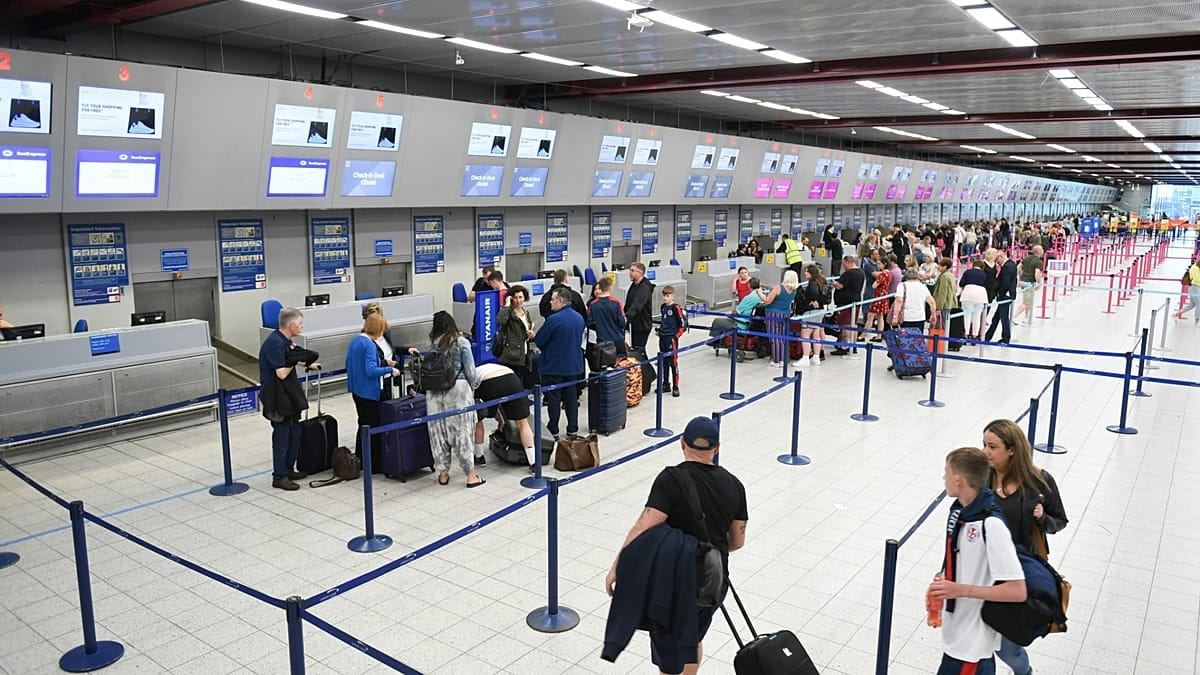
Image by Travel-news | Euronews RSS
Indefinite Ground-Handling Strike Hits 12 Key Airports
Ground-handling company Groundforce, part of the Globalia group, has become the focus of a major labour dispute that is now spilling into Spain’s peak Easter getaway. Unions representing some 3,000 workers have called an open-ended strike affecting 12 airports with heavy holiday traffic, including Madrid Barajas, Barcelona El Prat, Málaga, Valencia, Alicante, Bilbao, Palma de Mallorca, Ibiza, Gran Canaria, Tenerife, Lanzarote and Fuerteventura.
The industrial action officially shifts into an indefinite phase from Monday 30 March 2026, following earlier warnings and limited stoppages. Reports from Spanish media and regional outlets indicate that the walkout is structured around partial strikes each day rather than a complete shutdown, but the broad airport coverage and timing during Semana Santa significantly raise the risk of disruption.
According to published coverage, the dispute centres on salary updates and the interpretation of clauses in the current collective agreement. Union statements cited in Spanish press reports accuse the company of applying the agreement in a way that erodes workers’ purchasing power, particularly regarding inflation-linked pay increases. Groundforce management has not publicly signalled a breakthrough, leaving travellers facing an uncertain outlook as Holy Week begins.
The strike call comes just as Spain’s Easter traffic operation ramps up nationwide, with the country’s road authority forecasting tens of millions of long-distance journeys and airport operators expecting strong international demand. The combination of full flights, tightly scheduled turnarounds and reduced ground capacity increases the likelihood of delays even if minimum service requirements are enforced.
When and How Flights Are Most Likely to Be Affected
Current strike plans involve partial stoppages in three key time bands every day the dispute continues: early morning, midday to late afternoon, and late evening. Spanish news reports describe action typically running from 05:00 to 07:00, from late morning into the late afternoon, and again from 22:00 to midnight. These windows overlap with many peak departure and arrival waves for both short-haul and medium-haul services.
Because the strike targets ground-handling operations rather than air traffic control, aircraft can still technically operate. However, even limited slowdowns in baggage loading, unloading, refuelling and pushback services can quickly cascade into longer turnaround times. Travellers may therefore experience delayed boarding, late departure, missed connections and longer waits for checked luggage on arrival.
The airports involved are among Spain’s most important gateways for Easter tourism. Málaga and the Canary and Balearic islands are popular with holidaymakers from the United Kingdom, Ireland, Germany and Scandinavia, while Madrid and Barcelona handle a high volume of European and long-haul connections. Travel industry reports in Ireland and other countries have already warned of potential “Easter travel chaos” for passengers booked on Spain-bound flights.
The extent of actual disruption will depend on how strictly Spanish authorities impose minimum service levels, whether airlines can reassign tasks to alternative providers where permitted, and how the dispute evolves in coming days. Early indications from local coverage suggest that, while many flights are still operating, punctuality is under pressure at several of the affected airports.
Who Is Most at Risk of Disruption This Easter
Passengers travelling on the peak Easter dates are most exposed to the strike’s effects. In 2026, Palm Sunday falls on 29 March and Easter Sunday on 5 April, concentrating outbound and inbound flows around the weekends of 28–29 March and 4–6 April. Publicly available scheduling data and traffic forecasts point to especially heavy loads on services linking northern Europe with the Spanish islands and Mediterranean coast.
Holidaymakers with checked baggage face a higher risk of inconvenience than those travelling with hand luggage only. Ground-handling staff play a central role in baggage sorting and loading, and similar disputes in Spain and elsewhere in Europe have previously led to long waits at carousels and, in some cases, short-term baggage backlogs during strike days.
Travellers with tight connections, particularly those changing aircraft in Madrid or Barcelona, may also be vulnerable if inbound flights arrive late. Even a modest delay in ground services on arrival can reduce the time available to clear the aircraft, unload priority baggage and reposition equipment for the next leg. Families travelling with young children, groups with sports or music equipment, and passengers requiring assistance are among those likely to feel the impact most acutely.
On the other hand, passengers flying with airlines that operate their own in-house ground services at certain hubs may see fewer issues on those specific routes, although operations can still be indirectly affected by congestion elsewhere in the network. Travel forums and consumer reports already show passengers asking whether their carrier uses Groundforce at particular airports, underlining the patchwork nature of the disruption.
What Travellers Can Do Before and During Their Trip
Travel organisations and consumer advocates are advising passengers to build additional time into their journeys, especially for departures from the 12 affected airports. Arriving earlier than usual, keeping documentation and contact details for airlines to hand, and monitoring flight status repeatedly in the 24 hours before travel can help reduce stress if schedules change at short notice.
Many airlines now offer rebooking tools or travel alerts through their apps and online accounts, which may allow customers to move flights within a given window if disruption looks likely. Industry commentary suggests that carriers are encouraging travellers to use these digital channels rather than call centres where possible, to avoid long wait times during peak disruption.
Passengers are also being urged to check their airline’s policies on delays and cancellations, including meal vouchers, accommodation and potential refunds. While strikes by third-party staff can fall into complex categories under European passenger rights rules, consumer groups note that carriers must still provide care and assistance in many scenarios, even when compensation is not payable.
At the airport, carrying essential items in cabin baggage, including medications, chargers and a change of clothes, is recommended in case checked luggage is delayed. Travellers should also be prepared for longer queues at check-in and bag drop where Groundforce staff are involved, and pay close attention to airport announcements and display boards for last-minute gate or schedule changes.
Outlook for the Dispute and the Remainder of the Holiday Period
As of 30 March 2026, the Groundforce strike has no fixed end date, with unions stating that action will continue until a satisfactory agreement on pay and conditions is reached. Negotiations have been ongoing for months, but reports indicate that the two sides remain apart on key financial and contractual points. The decision to escalate to an indefinite strike during Easter underscores the high stakes for both workers and the tourism industry.
Spain’s airports are accustomed to operating under strike conditions, and the legal requirement for minimum essential services typically prevents a total shutdown. Even so, the timing of this dispute coincides with the first major holiday period of the year and an important barometer for Spain’s tourism performance after the winter season. Hoteliers and tour operators will be watching closely to see whether travellers encounter widespread disruption or only localised delays.
If the stand-off extends beyond Easter, pressure is likely to increase on all parties to find a compromise, particularly at airports where Groundforce is the dominant or sole handler for specific airlines. Longer-term industrial conflict could complicate not only spring holiday travel but also the run-up to the busy summer season, when passenger numbers climb further.
For now, people planning trips to Spain for Semana Santa are being advised to keep their plans but stay flexible. By closely tracking airline updates, allowing extra time at airports and preparing for possible schedule changes, travellers can improve their chances of reaching their Spanish Easter destinations, even as the ground-handling dispute continues to unfold.