

More news on this day
Easter getaway plans to Spain are facing fresh uncertainty as unions representing thousands of airport ground staff announce walkouts at key hubs, prompting warnings of long queues, disrupted schedules and potential missed connections during one of the busiest travel periods of the year.
Get the latest news straight to your inbox!
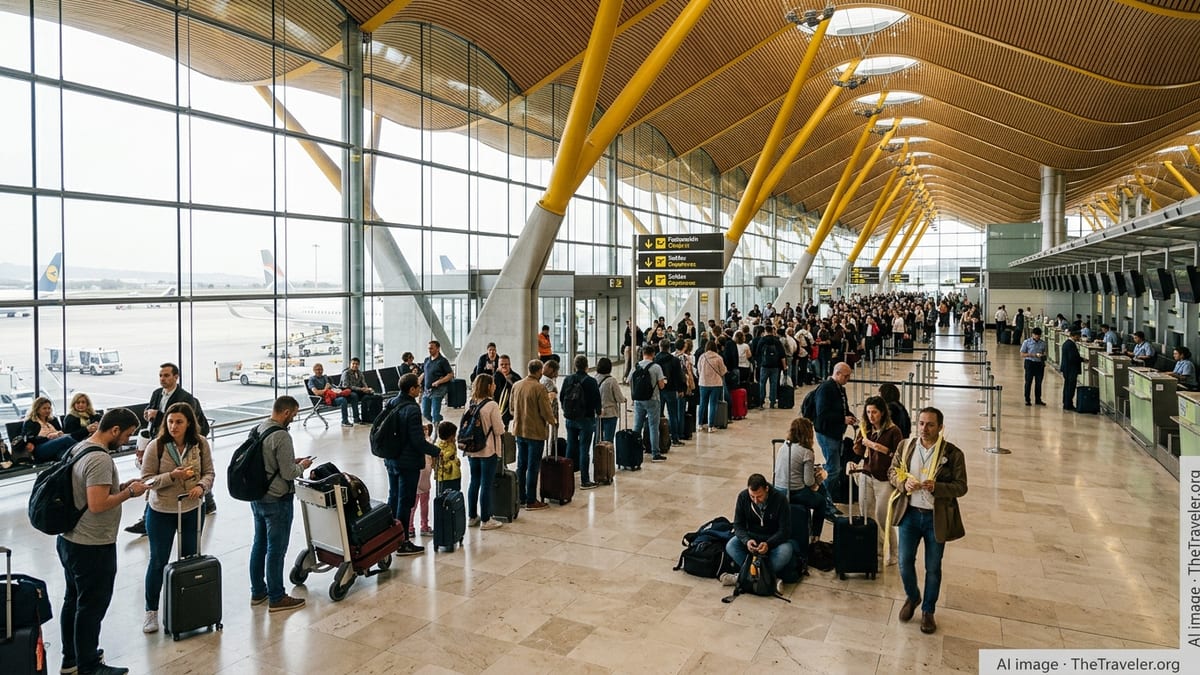
Partial Walkouts Planned Across Spain’s Busiest Airports
Published reports from Spanish media and union statements indicate that industrial action has been called at Groundforce, a major handling company within the Globalia group, covering around 3,000 workers at 12 airports in the Aena network. The affected sites include Madrid Barajas, Barcelona El Prat, Málaga, Valencia, Alicante, Bilbao, Palma de Mallorca, Ibiza, Gran Canaria, Tenerife, Lanzarote and Fuerteventura, all primary gateways for international Easter traffic.
The action has been framed as an indefinite strike with partial walkouts each day, timed to coincide with peak operating periods. According to local coverage, stoppages are planned in three daily blocks, typically early morning, late morning through afternoon, and late evening, a pattern designed to maximise pressure on airport operations while remaining within legal strike parameters.
The walkouts are set against the backdrop of the Semana Santa travel surge. In 2026, Maundy Thursday falls on 2 April and Good Friday on 3 April, with many travellers starting their journeys from the preceding weekend. Network data and historic Aena traffic figures show that Madrid, Barcelona and Málaga in particular operate near capacity during these dates, leaving little margin to absorb operational disruption.
While Spain’s minimum service laws require a baseline of airport operations to be maintained, past disputes around handling and security have still produced extended queues at check in, delays to baggage delivery and knock on schedule problems for airlines relying on tight turnarounds.
Pay Disputes and Contract Interpretation at the Heart of the Row
Union federations representing the handling workforce state in public communications that the dispute centres on pay and the interpretation of existing collective agreements. Coverage from national radio and press in Spain describes claims that promised inflation linked salary updates from 2022 onward have not been fully reflected in pay packets, leading to an erosion of real wages just as passenger traffic has rebounded strongly.
Ground handling roles include check in agents, ramp personnel, baggage handlers and staff responsible for loading, unloading and pushing back aircraft. Industry observers note that these functions are highly time sensitive and closely interdependent, meaning that even partial staffing gaps can cascade through departure banks and arrival waves, especially in hub airports where aircraft are scheduled to turn around quickly.
Analysts following Europe’s aviation labour landscape point out that the Spanish dispute fits a broader pattern of post pandemic industrial pressure. Across the continent, unions in aviation and rail have been pushing for wage growth aligned with high inflation and rising living costs, while companies highlight increased operating expenses and an environment of tighter margins despite strong passenger demand.
In Spain, these tensions are playing out just as regulators have recently approved higher aeronautical tariffs for Aena in 2026, a move critics argue underscores a mismatch between rising charges and front line pay. Travel industry commentators say the optics of higher airport fees combined with walkouts by lower paid operational staff could sharpen public scrutiny during the holiday peak.
Risk of Queues, Missed Connections and Baggage Disruption
Experience from earlier airport labour disputes in Spain and elsewhere in Europe suggests that Easter travellers should be prepared for longer than usual processing times at affected hubs. Even when flights operate close to schedule, queues at airline desks may lengthen if check in teams are reduced, while aircraft may depart late if ramp and baggage operations are understaffed during strike windows.
Hub airports such as Madrid and Barcelona, which handle a mix of domestic hops, long haul services and short haul European links, are particularly vulnerable to knock on effects. Delays on early morning departures can ripple through midday and evening rotations, increasing the risk of missed onward connections for passengers travelling via these gateways to the Canary and Balearic Islands or on to Latin America and other long haul destinations.
Baggage handling is another pressure point. Groundforce and similar handlers manage the bulk of luggage loading and transfers; any slowdown or temporary backlog can result in bags arriving late or missing connections even when passengers make their flights. Consumer protection bodies in Spain and across the EU routinely advise travellers in strike situations to keep essential items and at least one change of clothes in carry on bags.
Observers note that airlines often attempt to reduce disruption by adjusting schedules, upgauging aircraft, consolidating lightly booked flights or relying on alternative handlers where contracts allow. However, at airports where a single provider dominates ground operations, options for mitigation may be limited, particularly on short notice during a peak holiday period.
What Easter Travelers to and from Spain Can Do Now
Travel organisations and passenger rights groups are urging Easter holidaymakers to build in extra time and to seek early, verified information from their airlines. With walkouts targeting key operating windows, arriving at the airport well ahead of recommended check in times can provide a buffer if queues build or if some counters are staffed more thinly than normal.
Travel experts recommend completing online check in as early as permitted and downloading boarding passes to a phone or printing them in advance to reduce dependency on airport desks. For itineraries involving tight connections through Madrid or Barcelona, some agents advise considering earlier feeder flights or, where possible, rerouting through alternative hubs if disruption levels become clearer in the days before departure.
Passenger rights rules under EU Regulation 261 remain in force, although entitlements differ depending on whether disruption stems from airline staff disputes or third party providers such as airport handlers. Legal commentary highlights that strikes by external service providers are often treated differently from airline in house walkouts when it comes to compensation, even if carriers are still responsible for providing care in the form of meals, refreshments and accommodation during extended delays.
Given the evolving situation, regular checks of flight status, airport advisories and airline apps in the 48 hours before travel will be essential for anyone planning to pass through Spain’s major hubs during the Easter period. Industry monitors suggest further adjustments to timetables and staffing plans are likely as unions and employers continue negotiations in the critical days leading up to the holiday.