

More news on this day
Millions of people setting out for Easter getaways have faced widespread disruption across airlines, rail networks, motorways and ferry routes, as severe weather, record passenger demand and new border rules combine into one of the most challenging holiday travel periods in recent years.
Get the latest news straight to your inbox!
Airlines under strain as storms and demand collide
Air travel has been among the hardest hit sectors, with reports indicating thousands of delayed and cancelled flights across major US and European hubs over the Easter period. In the United States, strong storms intersecting with peak holiday traffic led to significant disruption from Thursday 2 April to Saturday 4 April 2026, affecting large parts of the national network and forcing airlines to thin out schedules to restore punctuality.
Across the Atlantic, aviation analytics and industry forecasts had already warned that Easter 2026 would be one of the busiest holiday peaks since before the pandemic, with carriers operating close to capacity on popular leisure routes. In the UK, projections suggested that Good Friday would be the most disruption-prone day of the year at some airports, as tight staffing levels in air traffic control and ground handling left little margin when bad weather or knock-on delays developed.
In Europe, the rush coincided with heightened pressure at border checkpoints. Recent coverage from Spain and Portugal describes airport queues stretching to around two hours at passport control during peak Easter arrivals, as the rollout of new EU entry and exit systems meets a surge in passengers. Although some member states have temporarily eased or slowed the checks to keep lines moving, the combination of additional screening and seasonal traffic has still produced long waits for many holidaymakers.
Passenger rights organisations are reminding travellers that compensation or refunds may be available when flights are significantly delayed or cancelled for reasons within an airline’s control. In the European Union and the UK, established regulations cover long delays, last-minute cancellations and denied boarding, while in the United States federal rules require cash refunds when flights are cancelled or a schedule change is substantial and a passenger chooses not to travel.
Rail passengers face engineering works and crowding
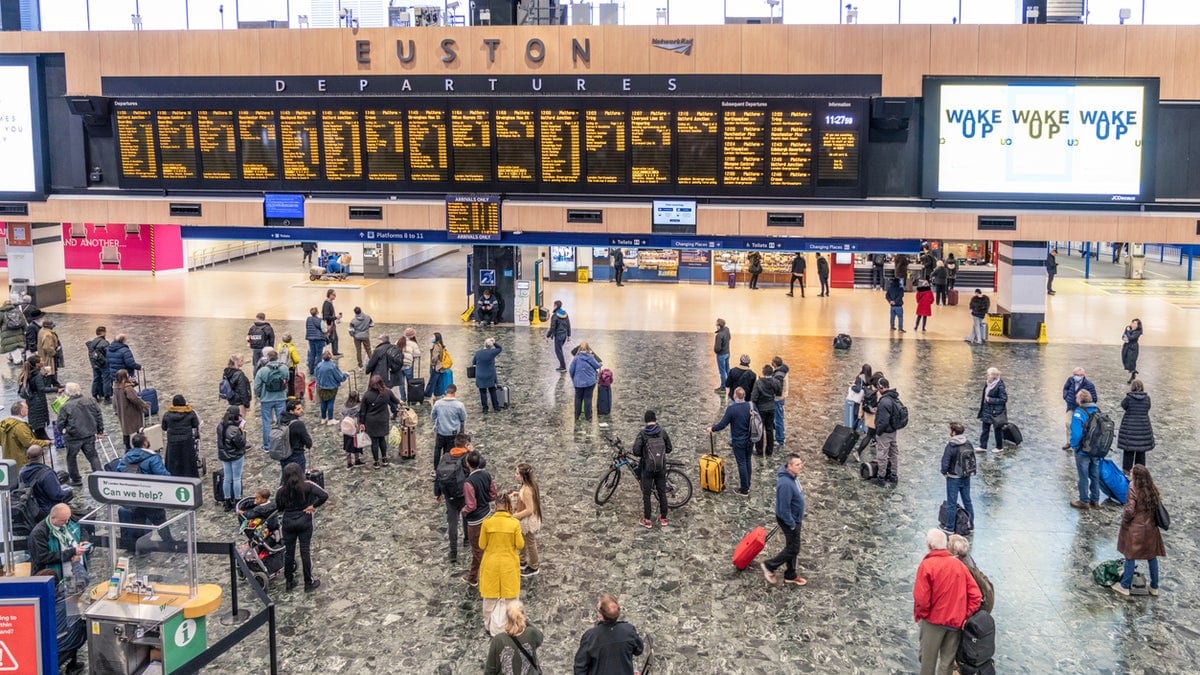
Rail networks have also experienced pressure, particularly in the UK where Easter is traditionally used for major engineering projects. According to recent travel advisories, closure of key mainline sections for track renewals and signalling upgrades has forced long-distance trains onto diversionary routes or replacement buses, adding considerable time to journeys just as families set out for school holidays.
Reports indicate that passengers on some intercity services have been required to change repeatedly between trains and buses, with limited luggage space and congestion at key interchange stations. While operators announced the works weeks in advance, demand for remaining direct services has still led to crowded carriages and standing-room-only conditions on popular morning and late afternoon departures.
In parts of continental Europe, rail services have been affected less by construction and more by capacity limits and earlier weather-related damage. Network summaries from the 2025 to 2026 winter season describe sections of track still recovering from storm-related disruption, with speed restrictions or temporary timetables carrying over into the Easter period. As leisure and cross-border flows increase, even relatively minor constraints have translated into missed connections and busy platforms.
Consumer groups advise rail users to check journey planners carefully for Easter dates, factor in extra time for transfers and consider travelling outside the busiest windows, particularly on the Thursday before Easter and Easter Monday itself, when return traffic typically peaks.
Record Easter getaway clogs key road corridors
On the roads, motoring organisations in the UK estimate that the number of leisure journeys over the Easter weekend is at or near post-pandemic records, driven by lower fuel prices compared with recent years and a continued preference among some travellers for private cars over public transport. Forecasts suggest tens of millions of trips across the four-day period, with Good Friday emerging as the single busiest day on several major motorways.
National highway agencies have lifted many planned roadworks to keep traffic flowing, but pinch points remain around long-term upgrade schemes and popular holiday routes to coastal areas and national parks. Live traffic reports over the holiday have described stop-start conditions on sections of the M25 orbital motorway, lengthy queues on the M5 and M6 as drivers head for the South West and the Lake District, and localised congestion near major airports where passenger drop-offs and pick-ups add to the strain.
Elsewhere in Europe and North America, regional transport departments are reporting similar patterns, with severe weather amplifying congestion in some states and regions. Heavy rain and high winds have reduced speeds on exposed bridges and mountain passes, while minor collisions and breakdowns have cascaded quickly into multi-mile tailbacks during peak getaway times.
Roadside assistance providers recommend that drivers schedule departure times away from the busiest mid-morning to mid-afternoon windows where possible, and ensure vehicles are prepared for long queues with adequate fuel, water and charged mobile phones in case disruption persists.
Queues and weather delays at ports and on ferries
Sea crossings, particularly between the UK and continental Europe, have not been spared. Cross-Channel ferry operators and the Port of Dover entered Easter 2026 expecting some of the heaviest passenger and coach traffic since pandemic restrictions were lifted, building on strong growth recorded in 2024 and 2025. Previous years saw coach passengers endure long waits of up to two hours at busy times, and port authorities have introduced staggered departure slots and off-site processing areas in an attempt to smooth flows.
This Easter, windy conditions in the Channel and a high volume of tourist traffic have again produced queues on approach roads to major ports, although revised traffic management plans and pre-scheduled coach arrival windows appear to have prevented the extreme gridlock experienced in earlier holiday seasons. Ferry companies have warned throughout the weekend that sailings remain vulnerable to short-notice delays or cancellations when gusts exceed safe operating thresholds.
On other short-sea routes within northern Europe, published updates show some sailings operating to revised timetables or reduced capacity as operators balance crew availability, port slot constraints and rough seas. Travellers arriving late from disrupted flights or long road journeys have reported missed connections onto overnight ferries and cruise departures, highlighting the knock-on effects of disruption across multiple modes.
Ports and operators are encouraging passengers to arrive within specified check-in windows rather than extremely early, in an effort to prevent congestion at terminal gates, while also urging careful monitoring of live service updates before setting out.
Passengers adapt with contingency plans and flexible bookings
The patchwork of disruption across air, rail, road and sea at Easter has underlined how closely interconnected modern travel has become. A thunderstorm system or staffing issue at a single major hub can ripple quickly into airport queues, rail crowding, motorway congestion and missed ferry departures hundreds of miles away, particularly when networks are already operating at or near peak capacity.
Travel advisers and consumer advocates are increasingly urging passengers to build in contingency time when planning Easter journeys, especially for itineraries that rely on tight transfers between different modes. Recommendations include leaving longer gaps between arriving flights and onward train or ferry bookings, avoiding the busiest departure days where possible, and keeping digital copies of all tickets and confirmations to simplify rebooking.
Flexible booking options, from fully refundable airfares and rail tickets to hotel rates that allow last-minute changes, are also gaining attention as a way to manage the financial impact of disruption. While such options can be more expensive upfront, recent Easter travel patterns suggest they may provide valuable protection when weather, infrastructure work and evolving border procedures converge to test transport systems.
With demand for Easter travel continuing to rise and major structural changes such as new EU border systems still bedding in, analysts expect that peak holiday periods will remain vulnerable to bouts of chaos. The experience of 2026 is likely to feed into future planning by airlines, rail operators, road authorities and port operators as they look for ways to add resilience before the next holiday surge.