

More news on this day
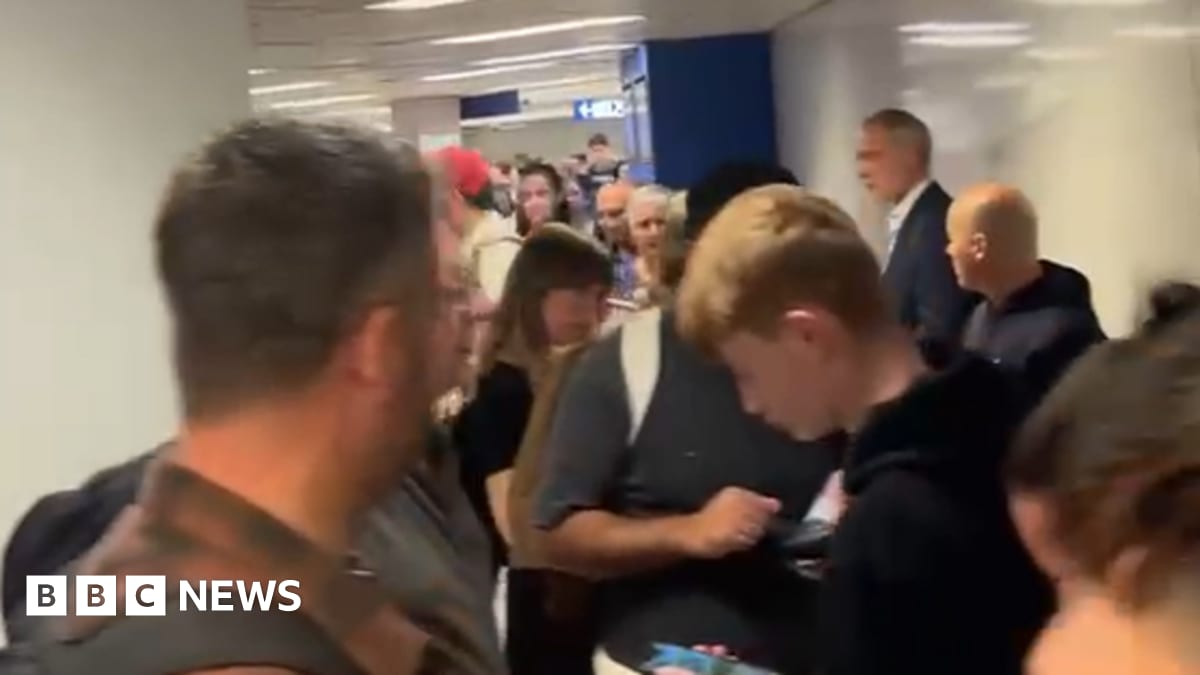
Hours long queues at border control in Milan have left EasyJet passengers stranded in recent days, drawing renewed attention to how tighter checks and rising demand are straining Europe’s already crowded airport infrastructure.
Get the latest news straight to your inbox!
Border Bottlenecks Leave Travelers Stuck in Terminals
Reports from recent departures in Milan describe passengers facing severe congestion at border control, with some travelers missing EasyJet flights despite arriving at the airport well ahead of departure time. Social media posts and traveller forums indicate that queues for passport checks at Milan’s main gateways have at times stretched across terminal halls, with processing moving so slowly that departure boards filled with last calls and gate closures while passengers were still in line.
The disruption appears most acute for flights between Italy and the United Kingdom, where all passengers must clear third country checks before boarding. Travellers describe a pattern where check in and security are completed relatively smoothly, only for crowds to build sharply at the final passport control point. Once queues reach a certain length, some EasyJet services have departed with empty seats while ticketed passengers remained stuck on the wrong side of the border desks.
Accounts from Milan Bergamo and Milan Malpensa suggest that these issues are not confined to a single airport or terminal. Passengers report unusually long lines at both departure and arrival controls, with some saying they spent more time in border queues than in the air. The result for many has been missed flights, unscheduled overnight stays in Milan, and last minute rebookings on later services.
The difficulties have coincided with a period of broader disruption across Italy’s air network. Earlier this year, hundreds of flights were delayed or cancelled nationwide due to strikes and operational issues, and EasyJet was among the carriers affected. In Milan, those wider problems appear to have intersected with understaffed or overloaded border facilities, creating a perfect storm for outbound travellers.
New EU Systems and Post Brexit Rules Add Complexity
Border congestion in Milan is unfolding against a backdrop of significant changes to how Europe processes passengers. The European Union is preparing to introduce the Entry Exit System, a new biometric border regime that will record arrivals and departures of non EU nationals. Aviation industry leaders, including EasyJet’s chief executive, have previously warned that if these new checks are not carefully managed, terminals could quickly become saturated with passengers waiting to be processed.
Post Brexit travel rules mean UK passengers are now treated as third country nationals in the Schengen area. This requires full passport stamping and closer checks compared with pre Brexit travel, increasing the time each traveller spends at the desk. While the new system has not yet been fully rolled out, early adjustments and trial procedures in some airports have already lengthened processing times, particularly at peak hours and on busy leisure routes.
In Milan, these structural changes appear to be colliding with seasonal demand and staffing constraints. Publicly available information on airport performance across Europe shows spikes in delay minutes attributable to air traffic control, staffing shortages, and airport facilities. When those factors converge on a busy weekend or holiday period, even modest slowdowns at border control can trigger cascading queues that overwhelm the area reserved for exit checks.
Travel advocates note that queues for government run passport control fall outside airline operational control, which can limit compensation in some cases. Nonetheless, to stranded passengers in Milan, the distinction between border authority responsibility and airline responsibility has offered little comfort as they queue for hours only to watch their flight depart.
EasyJet Operations Under Scrutiny as Disruption Mounts
The situation in Milan has intensified focus on EasyJet’s ability to manage journeys that depend heavily on smooth airport processes. The carrier is a major player in Italy and across Europe, operating dense schedules that leave limited slack when something goes wrong. Recent analyses of European disruptions have frequently listed EasyJet among airlines with large numbers of delayed services, reflecting how exposed high frequency low cost operations can be to bottlenecks at airports.
Passenger accounts from Milan suggest that gate procedures have sometimes continued on schedule even as large portions of the manifest remained trapped in border queues. In several cases, travellers reported arriving at the gate only minutes after the posted closing time to find boarding completed and doors shut, despite being able to see long lines still snaking through passport control behind them.
Consumer groups and travel commentators argue that while border checks are not an airline function, carriers can play a bigger role in coordinating with airport operators when queues threaten to strand large numbers of passengers for a single departure. That may include delaying gate closure where possible, repositioning staff to guide affected travellers, or proactively rebooking those unlikely to make it through in time.
EasyJet has previously introduced mobile ground handling tools and streamlined boarding processes intended to cut down queues inside terminals. Yet the current issues in Milan indicate that even efficient airline side operations cannot fully mitigate the impact of state run border controls operating above capacity.
What Stranded Passengers in Milan Are Entitled To
For travellers caught in Milan’s border control queues, the question of rights and recourse is complex. European air passenger regulations can provide compensation for certain delays and cancellations, but missed flights caused purely by long passport control lines are often treated differently from disruptions originating with the airline itself.
Specialist claims services and legal commentators note that queues controlled by border police or airport authorities are typically classified as extraordinary circumstances. In those instances, compensation under European rules may not apply, especially if the flight departed on time and the airline had no direct influence over the border process. However, if broader operational issues, schedule changes, or miscommunication contributed to passengers being stranded, individual cases may still be contested.
Travellers who miss departures out of Milan because of border queues are generally advised to speak with the airline as soon as it becomes clear they are unlikely to make the flight. Some passengers report being rebooked on later EasyJet services, occasionally with change fees waived as a gesture of goodwill, though practices can vary by route, timing, and staff discretion at the airport.
For those forced to stay overnight, travel organizations recommend keeping detailed records of expenses for hotels, meals, and onward connections. Even where statutory compensation is unavailable, evidence may help in seeking partial reimbursement from travel insurance providers or in presenting a case to customer service teams.
Practical Advice for Upcoming Flights Through Milan
In light of the recent scenes at Milan airports, experienced travellers are adjusting their routines when flying with EasyJet and other carriers on routes requiring passport checks. Many are now arriving significantly earlier than airline minimums, particularly for UK bound departures and peak time flights at weekends or during holiday periods.
Travel experts suggest building extra time specifically for border control, rather than assuming that clearing security means the worst of the queues are over. Passengers are also urged to complete online check in as soon as it opens, travel with cabin baggage only where possible, and monitor airport specific updates that may signal unusual congestion or industrial action.
Those transiting through Milan, or connecting from rail and bus services directly to the airport, are being cautioned to leave larger buffers between arrival and scheduled departure than they might have pre Brexit or before the current wave of disruptions. Even small delays on the way to the terminal can prove critical when passport queues are unpredictable.
For EasyJet, Milan’s border check chaos underlines the challenge of operating high volume, low margin flights through hubs where infrastructure and state run processes are running close to their limits. Unless staffing levels and border technology keep pace with demand, passengers on some of Europe’s busiest short haul routes may continue to face the risk of being stranded just a few metres from their departing aircraft.