


More news on this day
Egypt is moving into the front line of African efforts to shield tourism and aviation from potential digital shocks, as regional governments and travel operators brace for the possibility that any future attacks on critical undersea cable routes in the Red Sea and surrounding waters could trigger a new wave of booking failures, price spikes and itinerary chaos across the continent.
Get the latest news straight to your inbox!
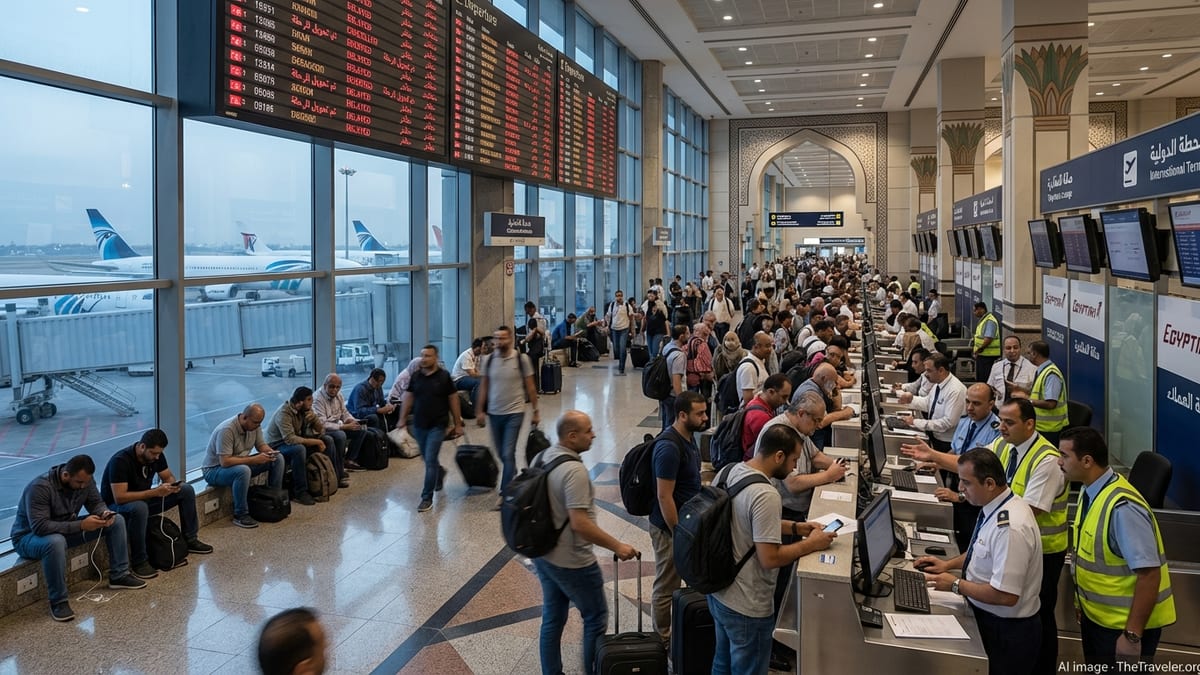
Red Sea Tensions Turn Digital Infrastructure Into Tourism Risk
The Red Sea and Suez Canal corridor has become one of the world’s most fragile trade and data arteries, carrying a substantial share of global container traffic and internet connectivity between Europe, Asia and Africa. Since late 2023, repeated attacks on commercial shipping near the Bab el‑Mandeb strait have already forced many carriers to sail around the Cape of Good Hope, lengthening voyages and driving up freight costs for African economies that rely heavily on imported goods and outbound exports.
Parallel to the maritime security crisis, a series of undersea cable faults in 2024 exposed how quickly disruptions beneath the surface can ripple across African societies. Multiple breaks affecting systems such as SEACOM, EASSy and other regional networks led to widespread slowdowns and outages in both West and East Africa, with internet traffic degraded in countries including South Africa, Kenya, Tanzania, Mozambique, Ghana and Nigeria. Aviation and tourism operators reported difficulties processing online bookings, customer queries and digital payments while routing bottlenecks were resolved.
Security analysts now warn that any deliberate targeting of cables in or near the Red Sea by Iranian forces or aligned groups would hit a route that already carries a large portion of Europe‑Asia internet traffic and feeds key landing stations around the African coastline. Publicly available mapping shows that many of Egypt’s and East Africa’s main tourism gateways depend on this mesh of cables, leaving airports, hotel groups and travel agencies vulnerable to sudden connectivity shocks even if physical infrastructure on land remains untouched.
The concern for the travel sector is not only the loss of bandwidth, but the unpredictability of outages. Cloud providers and telecom operators can reroute traffic, yet the resulting spikes in latency and congestion can break real‑time booking sessions, timed payment windows and passport data checks. For leisure travelers planning safaris, Nile cruises or beach holidays, even a short‑lived digital breakdown can translate into cancelled reservations, extended call‑center waits and rising costs as airlines and hotels adjust their revenue strategies to cope with uncertainty.
Egypt’s Dual Exposure: Suez Canal Revenues And Red Sea Resorts
Egypt faces a double layer of risk from any escalation involving undersea cables. The country’s Suez Canal receipts have already been hit by the diversion of container ships away from the Red Sea route, reducing a vital source of foreign currency just as tourism has been recovering. Resorts along the Red Sea coast, from Sharm el‑Sheikh to Hurghada and Marsa Alam, depend on reliable airlift and seamless online sales to maintain occupancy. Any prolonged disruption to data flows through regional cables could complicate flight scheduling, tour‑operator allocations and last‑minute discounts that help fill planes and hotels.
Tourism businesses that market Egypt to European and Gulf travelers are particularly exposed because many rely on global distribution systems hosted in data centers connected via the same vulnerable corridors. Industry data from early 2024 cable outages in other parts of Africa showed that when connectivity slows, some online travel agencies temporarily remove affected destinations from their featured lists, while consumers gravitate to locations where search results and confirmation emails load more quickly. That trend, if repeated during a Red Sea‑linked outage, could temporarily erode Egypt’s visibility in a competitive marketplace.
Cairo has been promoting digital transformation across aviation and border management, rolling out e‑visa platforms and biometric systems at major airports. These initiatives have improved processing times and traveler experience, but they also increase dependence on uninterrupted connectivity. Analysts note that contingency plans are being refined to ensure that core security checks and passenger handling can continue in a degraded network environment, yet discretionary travel services such as dynamic pricing, online check‑in and ancillary sales would still be vulnerable to degradation.
At the same time, Egypt’s role as a cable landing hub could become a strategic asset. Investments in alternative routes across the Mediterranean and terrestrial links through the Sinai and North Africa are gradually diversifying the pathways data can take into and out of the country. For the tourism sector, the speed with which these redundancy projects are completed may prove critical to limiting the fallout from any future incident involving cables in contested waters.
East And Southern African Gateways Grapple With Past Outages
Further south, the experience of recent cable disruptions has already reshaped how destinations such as South Africa, Kenya, Mozambique and Tanzania think about tourism resilience. Reports on the East Africa outages of May 2024 describe how connectivity in several countries dropped sharply after damage near the South African coast hit both SEACOM and EASSy. Airlines, safari operators and coastal resorts struggled with slow systems, while some regional carriers reported challenges refreshing schedules and fare data across their networks.
In Kenya and Tanzania, where beach tourism and wildlife safaris rely heavily on international online bookings, the outages highlighted a dependence on a small number of subsea routes. Travel businesses increasingly use cloud‑based booking engines, customer‑relationship platforms and digital marketing tools hosted outside the continent. When cables fail, manual workarounds become necessary, often involving phone calls, messaging apps and offline vouchers, which add time and cost for both agencies and travelers.
South Africa, a major aviation and tourism hub for the continent, has also felt the knock‑on effects of broader Red Sea instability. With some long‑haul airlines choosing to reroute flights to avoid perceived risks along traditional corridors, networks have become more complex and fuel‑intensive, putting upward pressure on fares. When internet connectivity has been degraded, South African online travel retailers and airline websites have recorded higher abandonment rates at the payment stage, suggesting that even minor slowdowns can translate into lost tourism revenue.
Mozambique, which has been investing in coastal resorts and island tourism, sits between major landing points on the East African cable systems. Industry observers say that the country’s emerging tourism sector could be particularly sensitive to any renewed digital disruption if visitors face repeated booking failures or struggle to obtain timely information about visas, health requirements and security conditions.
West African Tourism Markets Fear A Repeat Of 2024 Failures
On the opposite side of the continent, the March 2024 undersea cable failures that affected much of West and Central Africa remain a cautionary tale for tourism planners in Ghana, Nigeria and neighboring states. Public reports from that episode describe outages that left several countries with severely degraded internet access for days, disrupting financial transactions, digital services and everyday communications. For airports and airlines, the incident underscored how vulnerable passenger processing systems and ticketing platforms can be when multiple cables fail at once.
Ghana and Nigeria have been positioning themselves as regional aviation and conference hubs, marketing city‑breaks, cultural festivals and business tourism to travelers from Europe and North America. The 2024 cable disruptions forced some event organizers to adjust registration timelines and payment methods, while frequent flyers reported difficulties accessing airline apps to rebook or check in. Should a future cable incident coincide with peak travel seasons, analysts warn that these same weaknesses could translate into larger‑scale cancellations and revenue losses.
In coastal West African destinations where tourism remains relatively small but is considered a priority growth sector, the memory of the outages has already influenced infrastructure planning. Governments and telecom operators are backing additional landing points and cross‑border terrestrial fiber links to reduce reliance on any single subsea route. For tourism, the aim is to ensure that booking engines, hotel management systems and mobile payment platforms can switch to alternative paths if a key cable fails near the entrance to the Mediterranean or along the west coast.
However, redundancy projects take time, and in the near term, airlines serving West Africa are still exposed to the higher operating costs created by Red Sea shipping disruptions. Longer maritime routes can raise the price of aviation fuel and imported spare parts, contributing indirectly to higher ticket prices for visitors heading to coastal resorts, cultural sites and emerging eco‑tourism destinations from Senegal to Nigeria.
Airlines And Hotels Race To Build Digital Contingency Plans
Across Africa, airlines, hotel groups and online travel agencies are now revisiting their risk models in light of the cable incidents and ongoing tensions in waters where many systems converge. According to industry briefings, carriers that serve multiple African gateways are investing in additional data center connections and alternative communication channels to protect core operations such as flight planning, crew rostering and check‑in. While global reservation platforms typically operate with significant redundancy, regional access constraints can still undermine their reliability for local passengers.
Hotel chains in Egypt, South Africa, Kenya, Tanzania, Ghana and Nigeria are also working on contingency measures that allow front‑office staff to check guests in and out, issue room keys and process basic payments even if external connectivity is impaired. In some cases, this involves synchronizing key data at regular intervals so that local servers can function autonomously for limited periods. Independent lodges and guesthouses, which often rely on a single cloud‑based booking calendar, are exploring backup arrangements with local tour operators or domestic payment providers.
Travel technology firms serving African markets are promoting solutions designed to reduce the impact of short‑term outages, including offline‑capable apps and tools that can queue transactions until connections stabilize. However, these mitigations may not fully offset the systemic shock that could result from a deliberate, prolonged attack on critical undersea infrastructure in the Red Sea or adjacent waters. If multiple cables were cut and repairs delayed, even the best‑prepared tourism businesses could face days of degraded service.
For now, the combination of past outages and heightened geopolitical tension has pushed connectivity to the top of the risk agenda for African tourism boards. As Egypt joins South Africa, Kenya, Mozambique, Tanzania, Ghana and Nigeria in advocating for more resilient digital corridors and diversified cable routes, the continent’s ability to keep flights operating and holidays bookable in a crisis may increasingly depend on decisions taken far below the surface of surrounding seas.