

More news on this day
Bangladesh is facing severe disruption to post-Eid travel as overcrowded trains, a lingering fuel shortage and widespread delays combine to derail both domestic journeys and international tourism plans.
Get the latest news straight to your inbox!
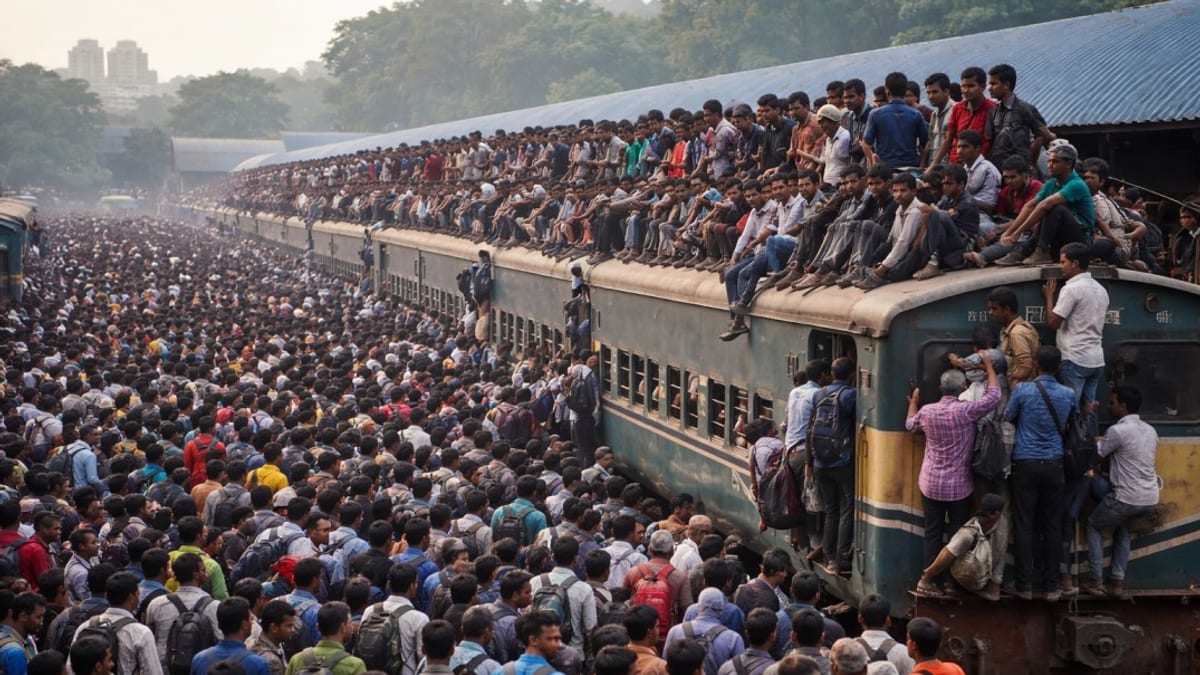
Image by Global Travel Alerts, Advisories, International Travel Alerts
Overloaded Rail Network Struggles After Eid Rush
The country’s rail network has come under intense pressure in the days following the March 2026 Eid-ul-Fitr holidays, with images from multiple intercity services showing passengers clinging to carriage doors, sitting on rooftops and crowding locomotive fronts. Reports from northern routes describe trains leaving key junctions several times above their designed capacity as millions of people attempt to return to Dhaka and other major cities at the same time.
Recent derailments and safety scares have heightened concern. Coverage of the Nilsagar Express accident near Bogura on March 18 highlighted how pre-Eid overcrowding contributed to injuries when coaches left the tracks. Subsequent social media footage from recovery operations showed passing trains still carrying passengers on their roofs, underlining how quickly capacity constraints re-emerged during the peak travel window.
On Dhaka-bound services such as the Padma Express and Kurigram Express, reports indicate that enforcement efforts to keep passengers inside carriages were often overwhelmed by sheer demand. Station staff and security teams have struggled to manage surging crowds without causing further delays, while long-distance tourists heading for popular destinations such as Rajshahi, Sylhet and Cox’s Bazar have faced uncertainty over whether reserved tickets would translate into safe and timely journeys.
Travel industry observers note that chronic underinvestment, maintenance backlogs and staffing shortages at Bangladesh Railway have left the system vulnerable to exactly this kind of shock. With tracks in some corridors already under strain, the combination of exceptional holiday demand and long trains loaded beyond recommended limits has raised fresh questions about the resilience of the country’s rail backbone.
Fuel Shortage Deepens Road Travel Disruption
At the same time, a nationwide fuel crunch linked to wider energy supply tensions has begun to reshape how people move around the country. Publicly available information shows that Bangladesh introduced fuel rationing earlier in March, and media coverage has documented guards posted at some petrol stations in Dhaka as authorities attempted to manage queues and prevent panic buying.
Even after an official easing of rationing measures ahead of Eid, filling stations in the capital and several regional cities have reported long lines and intermittent closures. Local accounts describe motorists waiting hours for partial refills, with many unable to secure a full tank. Ride-hailing drivers and tour operators have warned that inconsistent fuel supply is forcing them to cut back on services or accept last-minute cancellations.
The knock-on effect for tourism has been significant. Holidaymakers planning self-drive trips to beaches, hill districts and heritage towns have been forced to scale back itineraries or postpone excursions. Some inbound visitors who booked private vehicles as part of organized tours have reported revised routes and adjusted timetables as operators try to prioritize essential transfers over optional side trips.
While major intercity bus and domestic flight operations have broadly continued, uncertainty over fuel availability has introduced a new element of risk into trip planning. Travel agents note that customers are increasingly asking whether airport transfers, day trips and long-distance road legs can be guaranteed, particularly where itineraries depend on tight connections between different modes.
Highways and Urban Traffic Under Added Strain
Bangladesh’s main highways were already expected to face heavy congestion this Eid season due to ongoing construction and long-standing bottlenecks. Coverage by local outlets ahead of the holiday warned that incomplete four-lane expansion near the Jamuna Bridge, slow manual toll collection and uneven surfaces on sections of the Dhaka-Sylhet and Dhaka-Chattogram corridors could delay journeys for homebound travelers.
Those forecasts have largely been borne out in the post-Eid return wave. Reports from highways around Narayanganj and other key choke points describe traffic moving at a crawl in peak periods, with buses and private cars queuing for extended stretches near toll plazas and construction sites. For tourists attempting to combine city stays with short getaways, such delays have reduced already limited sightseeing windows.
Inside Dhaka, the fuel shortage has produced a more complex picture. Some residents note that reduced car usage and fewer non-essential trips have eased typical gridlock on major arteries, leading to slightly faster journey times than in past holiday periods. Yet for travelers and tourism workers who depend on reliable mobility, this partial traffic improvement has come at the cost of uncertainty over whether vehicles can be refueled at all.
Urban transport alternatives, including the capital’s growing metro system and local rail services, have carried a larger share of passenger loads where available. However, coverage indicates that these options are not yet extensive enough to absorb the full impact of constrained road transport, particularly for visitors staying in neighborhoods far from rail lines.
Impact on Domestic and International Tourism Plans
The combined effect of rail overcrowding, fuel scarcity and highway bottlenecks has disrupted both domestic leisure trips and the country’s efforts to attract more international visitors. Tour operators report that some Dhaka-based residents have shortened or cancelled post-Eid breaks, choosing to stay in the capital rather than risk being stranded by fuel shortages or transport delays in more remote areas.
International tourists, especially those on tight schedules, have been among the most exposed. Itineraries built around multiple domestic legs by train, bus and private car have proved vulnerable when even one segment runs late or is curtailed. Missed connections to Cox’s Bazar, Sylhet’s tea estates or the Sundarbans have required expensive last-minute rebooking of flights and hotels, while some travelers have opted to drop inland excursions in favor of staying closer to Dhaka.
Industry analysts point out that the disruption comes at a sensitive moment for Bangladesh’s tourism sector, which has been trying to position itself as a more accessible addition to South Asia’s travel circuit. Repeated images of passengers perched on train roofs, snaking queues for petrol and reports of derailments risk deterring risk-averse visitors who might otherwise combine Bangladesh with neighboring destinations.
Nonetheless, some businesses see opportunity in the crisis. A number of hotels and guesthouses in Dhaka and nearby attractions have begun marketing extended-stay offers aimed at visitors willing to remain flexible and base themselves in a single location while day-to-day transport conditions evolve. Travel advisers are also encouraging tourists to build more buffer time into itineraries and to prioritize confirmed, centrally located accommodation over ambitious multi-stop journeys.
What Travelers Need to Know Before Heading to Bangladesh
For those with upcoming trips, recent developments suggest that careful planning and realistic expectations are essential. Prospective visitors are being urged by travel commentators to monitor transport news closely in the weeks before departure and to remain alert to any changes in fuel policy or rail operations that could affect movement within the country.
Booking intercity trains well in advance, favoring services with reserved seating and planning travel on off-peak days where possible can help reduce exposure to extreme crowding. However, travelers should be prepared for last-minute timetable changes and consider alternative routes or modes, especially on corridors that have recently experienced accidents or significant delays.
On the road, opting for reputable bus companies and established tour operators may provide a greater margin of reliability than purely informal arrangements. Visitors who intend to rely on private cars or ride-hailing services should factor in the possibility of longer waits and higher costs if fuel supplies tighten again, and avoid scheduling critical flights or visa appointments immediately after long highway journeys.
Travel specialists also recommend building additional rest days or flexible periods into itineraries to absorb potential disruptions. Rather than attempting to see the entire country in a short stay, focusing on one or two regions, using centrally located bases and leaning on rail or metro options where they are functioning smoothly can make trips more resilient during a period of unusual strain on Bangladesh’s transport network.