

More news on this day
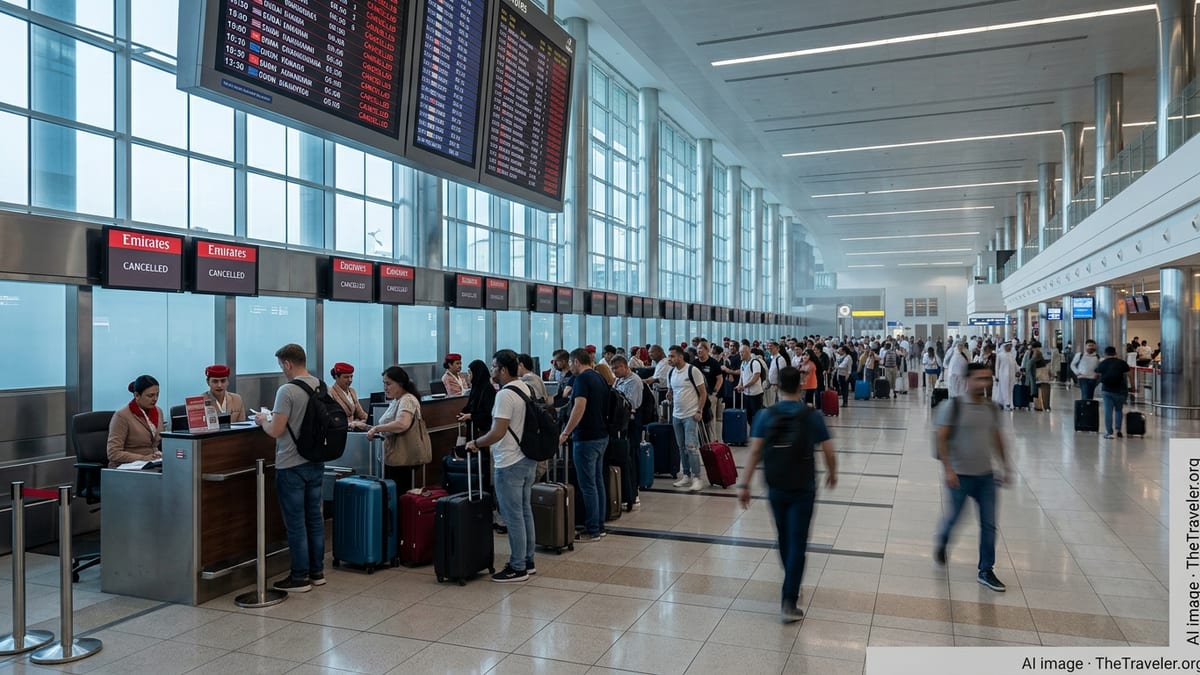
Thousands of Emirates passengers worldwide are facing sudden cancellations and marathon delays this week as regional airspace closures force Dubai’s flagship carrier to suspend most flights to and from its global hub.
Airspace Closures Ripple Through Dubai’s Aviation Hub
Emirates has suspended the bulk of its flight schedule to and from Dubai after widespread airspace closures across the Gulf region, triggered by the escalating conflict involving Iran and its neighbors. The move has abruptly disrupted one of the world’s busiest long haul networks, leaving travelers unsure when they will be able to reach or leave the United Arab Emirates.
According to operational updates issued this week, all scheduled Emirates flights to and from Dubai are suspended until 23:59 UAE time on March 7, with only a limited number of services operating under special permissions. The carrier has described the disruption as a direct consequence of multiple regional airspace shutdowns, which have severely restricted safe routing options for commercial jets.
Dubai International Airport, typically a 24-hour global transit hub, is now handling only a fraction of its usual traffic. While some airlines have begun operating select flights where airspace corridors have reopened, the overall picture remains one of sharply reduced capacity, complex detours and rolling schedule changes that can shift from hour to hour.
Emirates has stressed that safety and regulatory compliance are driving the cancellations and reduced schedule. With neighboring countries’ skies intermittently closed or heavily restricted, many of the carrier’s long haul routes simply cannot be flown safely or economically until authorities ease the constraints.
Who Is Affected and How Bad Is the Disruption?
The impact on passengers is global. Emirates, as the world’s largest international airline by international passenger traffic, feeds millions of travelers through Dubai each month, connecting cities across Europe, Asia, Africa, Oceania and the Americas. With the network largely on pause, both origin-and-destination passengers and those merely transiting through Dubai are caught up in the disruption.
Travelers with imminent departures from Dubai have found their flights cancelled outright or shifted onto a very small number of operating services, often with little advance notice as schedules are redrawn around evolving airspace permissions. Those already in transit have in many cases become stranded at intermediate points, or face lengthy reroutings via alternative hubs as airlines try to move people home.
Airports far from the Gulf have also felt the shock. Major departure points in India and Europe have reported clusters of cancelled or heavily delayed Emirates flights, contributing to congestion at check in counters, rebooking desks and call centers. Other Gulf carriers such as Etihad and Qatar Airways are grappling with similar constraints, limiting alternative options for disrupted Emirates passengers.
While exact passenger numbers are still being tallied, regional aviation analysts say the combination of near-total suspensions earlier in the week and continued restrictions through March 7 suggests hundreds of thousands of travelers have had their plans altered, with knock-on effects likely to continue even after the formal suspension period ends.
What Emirates Is Offering Stranded Passengers
Emirates is encouraging customers not to travel to the airport unless they have been directly notified that their flight is operating or hold a confirmed booking on one of the limited services currently in the schedule. The airline’s website and mobile channels are being used as the primary source of real time information on which flights are operating and which remain cancelled.
For affected customers, Emirates has introduced flexible rebooking and refund options. Passengers whose flights have been cancelled can typically rebook onto a later date without additional change fees, subject to seat availability once services scale back up, or request refunds in line with fare conditions. Travel agents are being asked to work through airline channels to adjust itineraries, though high call volumes mean long waits are common.
The carrier has also been working to prioritise vulnerable travelers, including those with urgent medical needs or tight onward connections, for the limited number of seats available on operating flights. However, reports from passengers suggest that real world experiences vary widely, with some travelers successfully rebooked relatively quickly while others endure repeated cancellations and lengthy delays in receiving confirmation of new arrangements.
Accommodation and meal support for those stranded in Dubai or at outstations appear to depend on local capacity and the specific circumstances of each booking. With hotel space tight in some cities and staff stretched, passengers are being urged to keep all receipts and documentation in case they need to seek reimbursement later under airline or regulatory policies.
Key Advice for Travelers With Upcoming Emirates Flights
For anyone scheduled to fly with Emirates through at least March 7, travel experts are advising a cautious, proactive approach. The single most important step is to repeatedly check flight status on the airline’s official channels rather than relying on third party apps, as last minute changes are frequent and only the carrier’s own systems will reflect confirmed operational plans.
Passengers are also being urged to look closely at their full itinerary, especially if it involves multiple legs or other airlines. If a long haul Emirates segment to or from Dubai is suspended, it may automatically invalidate onward connections booked on separate tickets. Coordinating with hotels, tour operators and car rental firms as early as possible can reduce financial losses from missed stays or nonrefundable arrangements.
Travelers who have not yet departed for the region but are booked to connect through Dubai in the coming days may wish to explore rerouting options via alternative hubs, such as European or Asian gateways that remain fully open. However, capacity on such routes is limited and fares may be significantly higher than usual, particularly for last minute changes.
Insurance can also play a role, but coverage depends heavily on policy wording. Some travel insurance products treat large scale airspace closures or conflict related disruptions differently from routine airline delays, so passengers should check whether they are entitled to claim for additional accommodation, meals or alternative transportation.
What to Watch in the Days Ahead
While limited flights have begun to operate, the broader picture for Emirates and Dubai remains highly uncertain. The carrier’s ability to restore a normal schedule hinges on how quickly regional governments reopen airspace corridors and whether security assessments allow for the resumption of dense long haul traffic across contested areas.
A gradual ramp up is more likely than an overnight return to normality. Aviation specialists expect Emirates to phase back capacity by route and region, focusing first on high demand trunk routes and key connecting markets, while some secondary destinations may see reduced frequencies for an extended period. Aircraft and crew positioning, along with maintenance and safety checks following the disruption, will also shape the pace of recovery.
Travelers should anticipate that even after March 7, schedules may remain fluid, with amended departure times, alternative routings and occasional short notice cancellations as the airline fine tunes its network. Longer flight times on certain routes are also probable as aircraft continue to skirt any remaining restricted zones, adding extra fuel, crew and operational complexity.
For now, Emirates passengers are being advised to build flexibility into their plans, stay closely attuned to official communications from the airline and consider backup arrangements where travel is time critical. As one of the world’s most important transit hubs works to emerge from an unprecedented aviation shock, patience and preparation will be essential for anyone with Dubai on their itinerary in the coming days.