

More news on this day
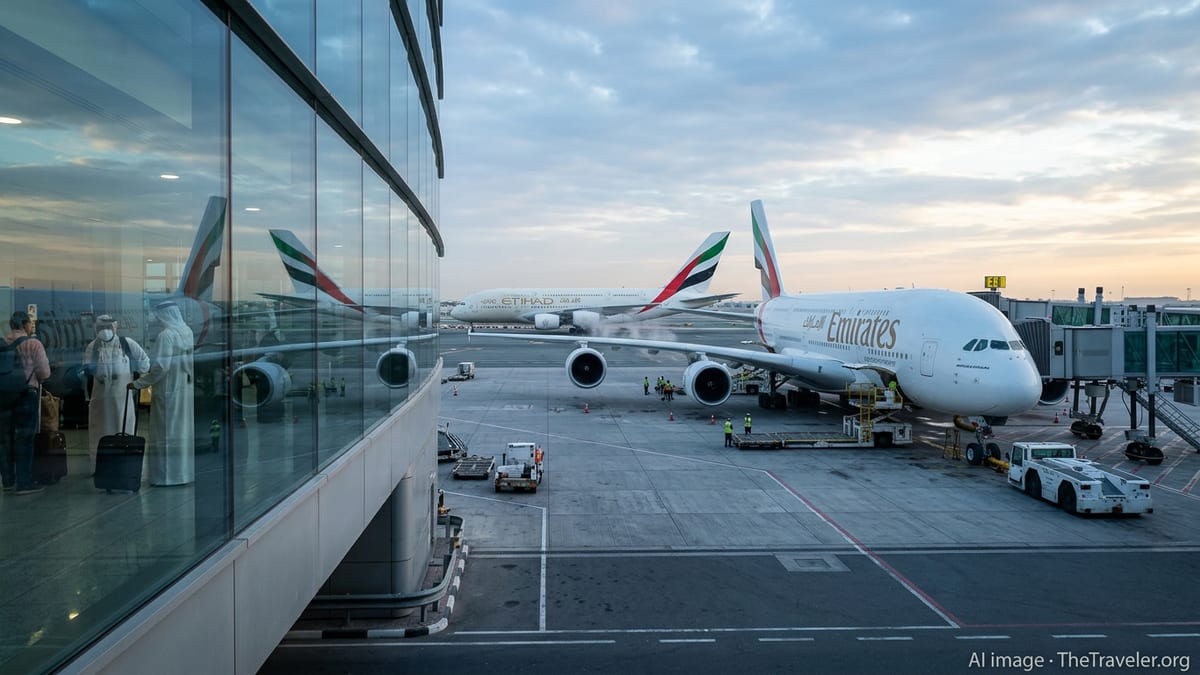
Emirates and Etihad Airways have begun restoring a limited number of flights between the United Arab Emirates and the United Kingdom, offering a lifeline to stranded passengers as Middle East airspace gradually reopens following days of war-related closures and mass cancellations.
Slow Reboot of Gulf–UK Connectivity
The partial restart marks the first significant move toward normalising long-haul traffic between the Gulf hubs and Europe since coordinated US-Israeli strikes on Iran on February 28 triggered sweeping airspace closures across at least 11 countries and effectively shut down Dubai and Abu Dhabi as global transit gateways. Emirates and Etihad grounded the bulk of their networks as authorities in the UAE, Iran, Iraq, Qatar, Bahrain and others restricted overflights for safety reasons, stranding hundreds of thousands of travellers worldwide.
Over the past 48 hours, both carriers have shifted from pure shutdown to controlled reopening. Etihad has confirmed a restricted commercial schedule out of Abu Dhabi from March 6, prioritising a handful of key international routes, including services to major European capitals. Emirates, which began operating limited relief flights from March 5, is steadily expanding its reach as more air corridors reopen and operational constraints ease.
For UK-bound travellers, that means a growing but still fragile web of options. Aviation tracking data and airline advisories indicate that Emirates is ramping up flights to London and other British airports, while Etihad is reintroducing select UK services from Abu Dhabi on alternative routings that avoid the most sensitive airspace. Schedules remain heavily trimmed compared with pre-crisis levels, and short-notice changes are common.
Industry analysts say the Gulf–UK link is a bellwether for broader recovery, given Dubai and Abu Dhabi’s role as key connectors between Britain, Asia, Africa and Australasia. The cautious resumption underscores both the strategic importance of these routes and the continuing volatility of the security situation over parts of West Asia.
What the New UK Schedules Look Like
Emirates is restoring capacity more quickly than many rivals thanks to Dubai’s status as its primary hub and the gradual reopening of airspace over Saudi Arabia and Oman, which allows Europe-bound flights to skirt the most heavily restricted zones. Operational updates from the airline and airport officials indicate that by March 7 Emirates expects to be operating more than 100 daily return services worldwide, with a growing share allocated to core markets such as the United Kingdom.
Travel industry briefings suggest that Emirates is now operating multiple daily frequencies to London Heathrow and Gatwick, alongside a reduced number of services to Manchester, Birmingham and Glasgow. However, the pattern is uneven: some rotations remain cancelled or combined, and timings may shift as new routings are tested and regulatory approvals are granted. Passengers are being re-accommodated in waves as seats open up on these flights.
Etihad’s relaunch is more conservative. The Abu Dhabi-based carrier has announced a restricted commercial schedule from March 6 through at least March 19, with a smaller number of long-haul departures compared with Emirates. UK services are part of this skeleton network, but frequencies are limited and seats are heavily constrained as the airline focuses first on clearing a backlog of passengers whose journeys were disrupted at the height of the shutdown.
Crucially, both airlines are relying on longer, more circuitous routings into Europe to avoid closed or high-risk airspace, adding significant block time to some UK flights. Travellers can expect extended flight durations, potential fuel stops on certain rotations and knock-on delays across the network as aircraft and crew are repositioned.
Advice for Stranded and Upcoming Travelers
For travellers already stranded in the UAE or transiting through the Gulf, the shift from total suspension to limited operations is welcome but does not guarantee immediate passage to the UK. Emirates and Etihad have both stated that they are giving priority to customers with existing disrupted bookings, automatically rebooking them onto the first available flights. New ticket sales on many UK routes remain restricted or dynamically priced as inventory is managed day by day.
Airports and airline advisories are unanimous on one point: passengers should not go to the airport unless they have received direct confirmation that their flight is operating. Dubai and Abu Dhabi are still operating under crowd-control measures, with access to terminal check-in areas often limited to travellers holding same-day bookings on confirmed flights. Turning up without verification risks being turned away at the door.
Instead, travellers are urged to monitor their booking via the airline’s app or manage-booking tools, where reissued itineraries and schedule changes are posted, sometimes only hours before departure. Customer-service centres and social media teams remain under intense pressure, and call wait times are long, making digital self-service the fastest route to updates for most passengers.
Those with travel planned over the next two weeks who have not yet departed should closely watch for schedule advisories. Both Emirates and Etihad are offering flexible rebooking options or refunds for tickets issued before the crisis with travel dates into mid-March, particularly on itineraries touching the Middle East, UK and wider Europe. For some travellers, deferring journeys by several days may offer a smoother, more predictable experience than attempting to fly during the current transition period.
How Safe Are the New Routes?
The resumption of UK flights does not mean that the underlying regional tensions have eased. The current air travel pattern is the product of complex risk assessments by airlines, insurers, and national aviation regulators, who are weighing the threat of missile and drone activity, electronic interference and rapidly shifting military operations. Certain airspace blocks over Iran, Iraq, Israel and parts of the Gulf remain closed or heavily restricted to civilian traffic.
To operate, carriers are threading aircraft through approved corridors that minimise exposure to conflict zones. That often means routing over the Arabian Sea and Arabian Peninsula rather than taking the most direct great-circle paths. Flight plans are being adjusted in real time to avoid newly designated no-fly areas, while crews receive enhanced briefings on potential hazards, including GPS jamming and the need for contingency navigation procedures.
Aviation safety experts emphasise that commercial airlines are generally prohibited from entering active conflict airspace and that no UK-bound service would be cleared to operate if regulators deemed the route unsafe. The multi-layer oversight from the UAE’s civil aviation authority, European regulators and British authorities creates a conservative framework in which risk tolerance is low and route approvals can be revoked quickly if conditions deteriorate.
However, passengers should be prepared for longer flight times, higher-than-usual turbulence avoidance manoeuvres and last-minute re-routings that may add hours to their journey. None of these measures are signs of danger in themselves. Rather, they reflect the aviation industry’s practice of building in wide safety margins when operating anywhere near an active conflict.
What This Means for Fares and Future Travel
The constrained capacity between the Gulf and the UK, combined with longer routings and higher fuel burn, is already feeding through to pricing. With aircraft seats at a premium and travellers from Asia, Africa and Australasia all competing for limited transit options through Dubai and Abu Dhabi, fares on many UK routes have risen sharply compared with pre-crisis levels. Discount inventory is scarce, and last-minute seats are particularly expensive.
Travel agents report that some passengers are re-routing via alternative hubs such as Riyadh, Jeddah or Muscat, where airspace has reopened more quickly and local carriers are increasing Europe services. Others are opting to postpone trips or use multi-leg itineraries through Southern Europe, adding connections but sometimes reducing exposure to the most congested Gulf corridors.
Looking ahead, Emirates has signalled that it aims to restore close to its full pre-crisis network within days if security conditions allow, including a robust schedule to multiple UK airports. Etihad is expected to scale up more gradually, rebuilding its European timetable in phases through March. Even with a swift restoration of nominal schedules, though, operational knock-on effects such as crew repositioning, aircraft maintenance backlogs and altered routings could keep punctuality under pressure for some time.
For travellers planning UK trips via the Gulf later in March or April, the key message from airlines and regulators is to stay flexible. Booking changeable fares, allowing generous connection times, and keeping close tabs on advisories from both carriers may make the difference between a smooth journey and an extended unplanned stopover as the Middle East’s crucial air bridges are rebuilt step by step.