


More news on this day
Germany’s Cologne Cathedral will begin charging tourists for entry in the second half of 2026, adding one of Europe’s most visited churches to a fast-expanding list of destinations introducing new fees to cope with overcrowding and spiralling maintenance costs.
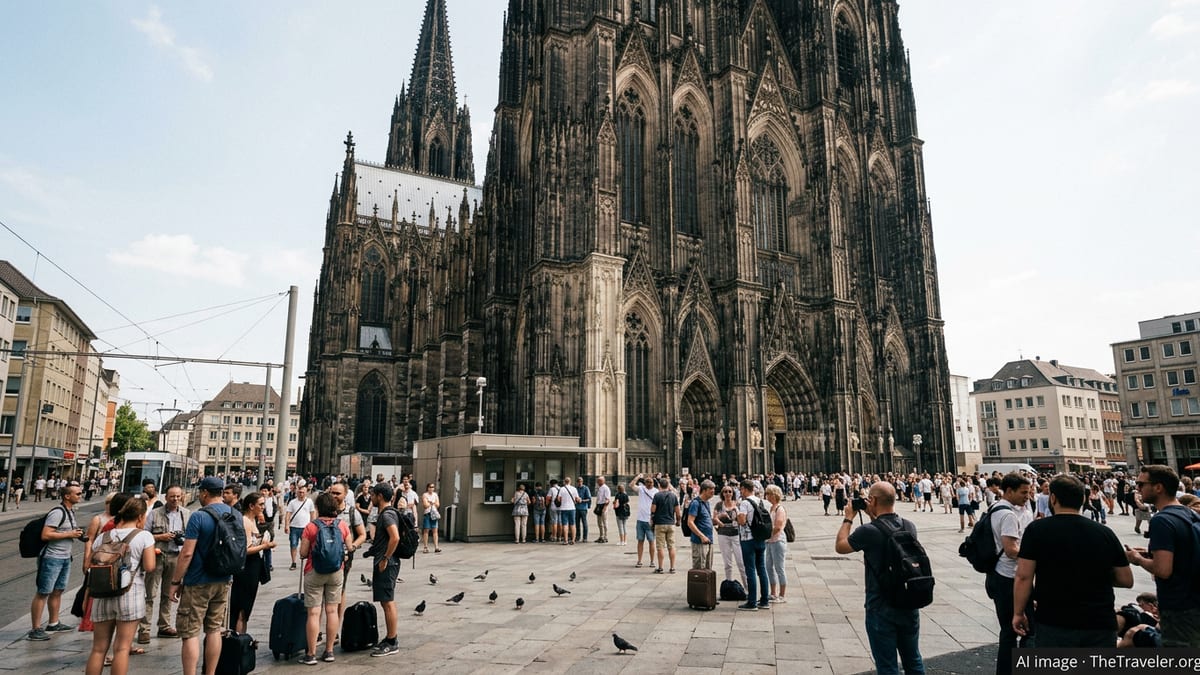
Iconic German Landmark Ends Era of Free Entry
The chapter of Cologne Cathedral announced this week that it will introduce an admission charge for sightseeing visitors, ending decades in which the Gothic landmark could be entered free of charge. Church officials have not yet confirmed the exact ticket price, but said the fee will apply to tourists while preserving free access for worshippers and those entering designated areas for prayer.
The cathedral, whose twin spires dominate Cologne’s skyline beside the Rhine and the city’s main rail station, welcomes around six million visitors each year. Leaders say that with tourists making up the overwhelming majority of footfall, a dedicated admission fee is now essential to secure long term funding without relying solely on public funds, donations and dwindling reserves.
Maintenance costs at the World Heritage listed site are projected at about 16 million euros for 2026, driven higher by inflation, personnel costs and complex restoration work on the centuries old stonework and stained glass. Income from existing paid attractions, such as access to the towers and treasury, has not been enough to close the gap, especially after extended closures during the pandemic.
Cathedral officials stress that the building’s role as a living church will be protected under the new regime. Visitors attending mass or entering specific side chapels to pray will continue to do so without charge, while tourist entry will be channelled and controlled through a ticketed system designed to reduce crowding in the nave and protect sensitive areas of the structure.
Switzerland and Neighbours Tighten the Screws on Mass Tourism
The move in Cologne comes as Switzerland and several other European countries quietly ratchet up travel related charges, reshaping the cost of a European holiday. In the central Swiss canton of Lucerne, authorities have already approved a plan to double the local tourist tax from 2026 for overnight guests, arguing that additional revenue is needed to finance infrastructure and manage crowd pressures in highly visited lakeside towns.
Across Switzerland’s major alpine resorts, visitors are also contending with substantial increases in ski pass prices compared with pre pandemic levels, as lift operators pass on higher energy and maintenance bills. Industry analyses suggest prices at some Swiss and neighbouring Austrian and Italian resorts have risen by up to 40 percent since 2021, making winter sports a notably more expensive proposition.
These measures come on top of existing municipal levies that many international visitors barely notice because they are bundled into hotel bills. However, as destinations from Zurich to Zermatt debate raising nightly fees or adding seasonal supplements, tourism bodies are warning travellers to expect more visible line items on invoices in the coming years.
For Switzerland, which has long balanced high prices with a reputation for pristine landscapes and meticulous infrastructure, the new and higher charges form part of a broader effort to ensure that tourism remains financially and environmentally sustainable in the face of record global travel demand.
Italy, Spain, France and the UK Roll Out New Levies
Beyond Switzerland and Germany, a patchwork of new or increased visitor taxes is emerging across Europe’s most popular destinations. Italy has been at the forefront of this trend, with Venice continuing to refine its day tripper fee for short stay visitors and cities such as Milan planning rises in nightly tourist taxes to support local services strained by visitor numbers.
Spain, grappling with high profile anti tourism protests in regions including Catalonia and the Balearic Islands, has leaned on existing sustainable tourism taxes and is allowing local authorities to raise rates in peak summer months. The aim is to channel revenue into environmental protection and housing initiatives while signalling that low cost, high impact party tourism is less welcome.
France has introduced higher tourist taxes in key urban centres, including Paris, where accommodation levies were increased in 2025 in part to help fund large scale transport and infrastructure improvements. Other French destinations have focused on behavioural rules and enforcement, pairing charges with stricter codes of conduct on beaches and in nightlife districts.
In the United Kingdom, where international visitors have already begun navigating new electronic travel authorisations, the Scottish capital Edinburgh is preparing to become the first UK city to implement a formal visitor levy. From July 2026, guests staying in hotels, hostels and short term rentals will pay a percentage based charge on overnight stays, with officials arguing that the measure is necessary to support city services in a historic centre heavily dependent on tourism.
Norway, Poland and Brussels Join the Cost Reset
Northern and Central European destinations are also moving to capture more revenue from booming visitor numbers. Norway has approved a framework that will allow municipalities in areas particularly affected by tourism to charge a three percent levy on accommodation bills, including for cruise passengers. Local governments in fjord regions and popular hiking areas are expected to be among the first to implement the new “visitor contribution.”
In Poland, tourism authorities have highlighted rising local taxes in cities such as Kraków and Gdańsk, where modest existing levies on overnight stays are being reviewed in light of post pandemic visitor growth. While individual increases remain small in absolute terms, officials say they collectively reflect a shift toward expecting tourists to shoulder a greater share of the costs of maintaining historic centres and public spaces.
Elsewhere, Brussels raised its own long running tourist tax at the start of 2026, adding an extra euro per night to hotel and homestay bills. The Belgian capital, which has seen a resurgence in city break travel and conference business, argues that the higher fee will support public transport, cultural institutions and urban maintenance that benefit both residents and visitors.
These developments add to a wider catalogue of European measures, from new cruise passenger fees on Greek islands to higher camping levies in Nordic countries, that are gradually lifting the baseline cost of a continental itinerary even before airfares and general inflation are taken into account.
What the New Fees Mean for Future Trips
For travellers planning European holidays in late 2026 and beyond, the changing landscape of visitor fees will require closer attention to fine print. Admission charges at once free attractions, increased hotel levies and seasonal surcharges are likely to appear more frequently, sometimes only revealed in the final booking stages or in local regulations at the destination.
Travel planners advise building an extra buffer into budgets for city breaks and multi country rail trips, particularly when visiting marquee sites such as Cologne Cathedral that now rely on ticketed entry to manage crowds. While individual fees can appear modest, their cumulative effect across several destinations and nights can be significant for families and long haul visitors.
Industry experts note that the new charges also reflect a philosophical shift in how European destinations view tourism. Rather than maximising arrivals at any cost, authorities are increasingly focused on visitor quality, environmental impact and the financial contributions travellers make to the places they enjoy. That recalibration is reshaping both the economics and expectations of international travel.
As Cologne Cathedral prepares its new ticketing system and Switzerland, Italy, Spain, the United Kingdom, Poland, Norway, France and others bed in their own levies, the message to global travellers is clear: Europe remains open, but it is becoming less willing to subsidise mass tourism without asking visitors to pay more of the true price of preservation.