

More news on this day
Passengers flying with Emirates from Dubai in April 2026 are being urged to review updated travel waivers and disruption policies, as regional tensions and recent weather issues continue to trigger schedule changes, cancellations and diversions across key routes.
Get the latest news straight to your inbox!
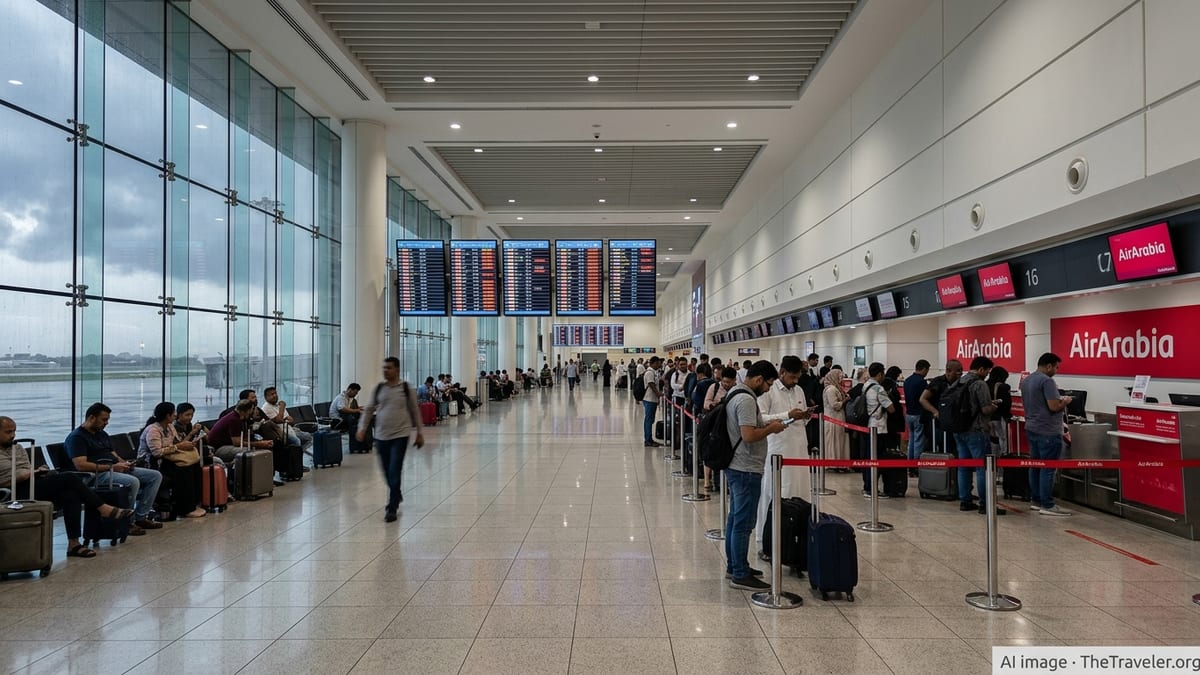
Ongoing disruption extends into April 2026
Publicly available travel alerts indicate that Emirates operations through Dubai have been affected since late February 2026 by a combination of regional airspace restrictions and intermittent adverse weather, leading to flight suspensions, limited schedules and last minute rerouting. While core services at Dubai International Airport remain open, reports suggest that airlines, including Emirates, are still managing a rolling backlog of affected passengers and aircraft.
Coverage from aviation trackers and consumer travel sites shows that initial disruption windows focused on late February and March departures, with reduced schedules and temporary suspensions on selected routes. Over recent days, advisories and waiver policies have been updated again, extending flexibility into April 2026 for some bookings as the situation in surrounding airspace and regional hubs remains fluid.
Travel industry commentary notes that conditions today differ from previous disruption events linked to the April 2024 UAE floods, when heavy rain and flooding at Dubai International Airport caused large scale cancellations and diversions. In the current situation, a mix of security related airspace constraints and weather related knock on effects is shaping schedules, meaning that disruption may be uneven across dates and destinations.
As a result, passengers planning to depart from Dubai in April 2026 are being advised by multiple outlets to treat schedules as subject to change at short notice and to monitor airline channels closely in the days before travel.
Refund windows and who qualifies
According to recent travel industry summaries, Emirates has introduced time limited waivers that allow some passengers to request full refunds, even when flights are technically still operating. Reports of the most recent policy changes indicate that full refund eligibility has been tied to specific booking or travel windows that initially ran through March and were later extended to mid April 2026 for certain itineraries.
Specialist frequent flyer and aviation blogs report that under the current phase of the disruption, tickets booked for travel within a defined period, often starting around 28 February, may qualify for a refund if the passenger chooses not to travel. Some coverage notes that refund windows have been extended more than once, with references to cutoff dates such as 31 March and later 15 April appearing in public discussions of Emirates advisories and online help text.
Travel rights commentators emphasise that eligibility can depend on whether at least one flight in a multi segment itinerary falls within the disruption window. In practice, this means that a booking that includes a Dubai sector dated inside the waiver period, even if the return leg falls later in April, may still qualify for a refund assessment under the disruption policy, subject to the exact ticket conditions.
Consumer reports from recent days also highlight that refund treatment can differ depending on whether a ticket was purchased directly from Emirates or via a travel agent or online intermediary. In several cases, passengers have been directed to submit refund requests through the original point of sale, with processing times varying as agents apply the airline’s waiver rules to individual bookings.
Flexible rebooking and extended travel windows
Alongside refunds, Emirates has also been associated with expanded rebooking options for affected customers. Recent coverage on travel blogs and airline policy trackers indicates that passengers holding tickets within the disruption period can often rebook for new travel dates beyond their original itinerary, with change fees waived in many cases.
Reports summarising the latest waivers suggest that Emirates has permitted rebooking into later spring 2026, with some sources pointing to extensions that allow travel up to late May. Earlier advisories tied to March disruptions already mentioned rebooking windows running into April, and later updates appear to have broadened these options as conditions remained unsettled.
Guidance shared via aviation forums stresses that Emirates is prioritising passengers whose flights have been cancelled or significantly changed, rebooking them onto the next available Emirates services from Dubai. In some instances, when no suitable Emirates-operated options exist, coverage indicates that limited rerouting on partner airlines may be possible, typically when an original flight has been cancelled rather than when a passenger elects not to travel.
Travel planners note that inventory constraints remain a challenge in peak periods, especially on high demand routes between Dubai and major European, Asia Pacific and African gateways. Passengers who accept alternative dates or nearby airports reportedly have a better chance of securing seats within the extended rebooking window.
Practical steps for Dubai based passengers in April
For passengers currently booked to depart Dubai with Emirates in April 2026, publicly available guidance from airports, travel insurers and consumer advocates converges on several practical steps. First, travellers are encouraged to confirm whether their booking falls inside the airline’s defined disruption window, paying attention to both the date of travel and the date the ticket was issued, as some waivers reference one or both criteria.
Second, travellers are advised to check the status of every flight segment rather than assuming that a single confirmation covers the entire itinerary. Where one leg has been cancelled, reports show that Emirates may offer automatic rebooking onto a different connection, which passengers can either accept or decline in favour of a different option within the published waiver rules.
Third, commentators recommend documenting all itinerary details, including screenshots of booking confirmations and any disruption messages, before submitting rebooking or refund requests. This evidence can be useful if passengers need to escalate issues with a travel agent, insurer or card provider at a later stage.
Finally, multiple airport advisories in the UAE over March 2026 have urged travellers to allow extra time to reach Dubai International Airport and to avoid heading to the terminal without a confirmed, operating flight. Given that schedule changes can occur on the day of travel, passengers are widely encouraged to recheck flight status shortly before leaving home and to be prepared for longer queues at check in and security during peak disruption periods.
Key differences between disruption and voluntary changes
Travel law commentators underline an important distinction between disruption related changes and normal voluntary itinerary changes. Under Emirates’ disrupted travel guidance, passengers whose flights are cancelled or significantly altered by the airline are often entitled to more flexible options than those who simply decide not to travel.
Publicly available information on Emirates disruption policies notes that, where a flight is disrupted, the airline aims to rebook customers on the first available connection. In addition, many of the current waivers allow a choice between accepting a new itinerary, shifting travel to later dates within a specified window, or requesting a refund, all with reduced or waived penalties compared with standard fare rules.
By contrast, passengers whose flights remain scheduled and who choose to change plans for personal reasons outside any disruption window may face standard change fees or fare differences. Consumer advice sites therefore urge travellers to wait for official confirmation of cancellation or schedule change before cancelling on their own, where feasible, to preserve eligibility for more favourable treatment.
Analysts also point out that rights and options may differ depending on the country of departure, the type of ticket and any applicable local regulations. As April 2026 approaches, passengers departing from Dubai with Emirates are being encouraged to familiarise themselves with the latest published advisories and to act promptly once their flight status is clear, in order to secure the most suitable rebooking or refund arrangement available.