

More news on this day
Emirates is reshaping its flagship Airbus A380 network, withdrawing the double decker from 15 major routes as it redirects capacity to more flexible, fuel efficient twin engine aircraft and prepares for the arrival of its new Airbus A350 fleet.
Get the latest news straight to your inbox!
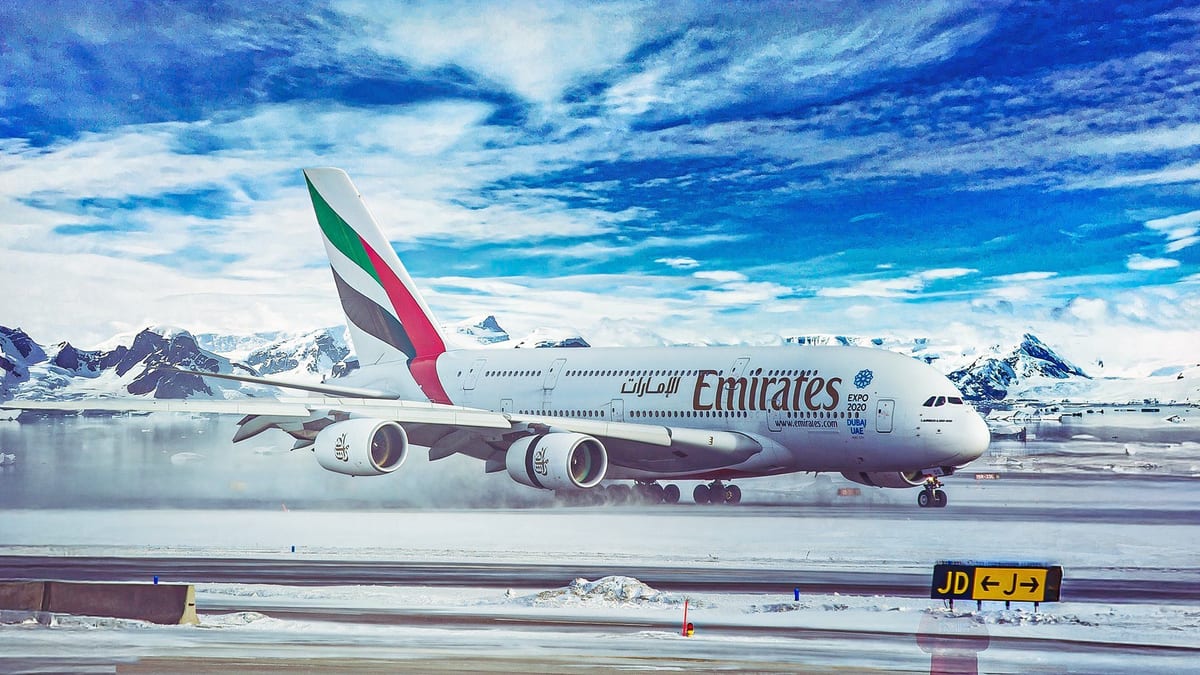
Image by Simple Flying
A Superjumbo Strategy Enters a New Phase
The Dubai based carrier has relied more heavily on the Airbus A380 than any other airline, building its long haul network around the 500 plus seat jet on high demand, slot constrained routes. Publicly available fleet data for 2026 shows Emirates still operating more than 110 A380s, far ahead of any rival, and committing significant investment to cabin refurbishments to keep the type in service into the next decade.
At the same time, schedule filings and industry coverage indicate a clear shift in how the airline deploys the superjumbo. On at least 15 routes, the A380 is being swapped out for Boeing 777s or, in the coming months, for newly delivered Airbus A350s. In some cases, daily A380 frequencies are being reduced and supplemented with smaller wide bodies; in others, the aircraft type is being removed completely from the route.
This does not represent a retreat from long haul capacity so much as a recalibration. Airbus A380s are remaining on trunk sectors where Emirates can fill hundreds of seats year round, while thinner or more seasonal markets are increasingly served by twin engine wide bodies that are cheaper to operate and easier to right size to demand.
Industry observers note that this kind of adjustment has been underway since before the pandemic, but the scale of the current reshuffle, affecting 15 major routes rather than just one or two at a time, marks one of the most significant redeployments of Emirates A380 capacity to date.
Fuel Costs, Emissions and Unit Economics
One of the most important drivers behind the changes is cost. The A380 was designed for hub to hub transfers at very high load factors, but the aircraft is heavy and uses four engines, which typically means higher fuel burn per flight than modern twin engine types. As fuel remains one of the largest expenses for long haul airlines, carriers face strong incentives to move capacity onto more efficient models wherever feasible.
Modern Boeing 777 variants already offer lower fuel consumption per seat on many missions when configured densely, while the new generation of Airbus A350s promises further gains in efficiency and range. By replacing A380s on 15 routes with these aircraft, Emirates can reduce fuel burn and maintenance costs without exiting any markets. The airline also gains more scheduling flexibility, as smaller jets make it easier to add or cut frequencies in response to demand swings.
The environmental dimension is increasingly relevant as well. Governments and regulators are focusing more closely on aviation emissions, and major airlines are setting public sustainability goals. Moving capacity from a four engine aircraft to newer twin engine jets allows Emirates to lower emissions per seat on affected routes, an outcome that aligns both with cost control and with broader climate commitments.
Analysts highlight that the A380 remains competitive on certain sectors where airports are constrained by runway slots and demand is consistently strong, such as some links between Dubai and major European or Asian hubs. However, on long thin routes where filling several hundred seats is less certain outside peak seasons, the economics tend to favor aircraft like the 777 or A350 instead.
New Aircraft Arrivals and Network Flexibility
Another key factor in withdrawing the A380 from 15 routes is the gradual arrival of new aircraft into the Emirates fleet. Publicly available order books show that the airline has committed to a substantial number of Airbus A350s and additional Boeing 777s, with deliveries scheduled through the latter half of the decade. As these aircraft are introduced, they need to be integrated into the network, prompting a review of which routes are best suited to each type.
Industry reports indicate that Emirates is initially assigning A350s to medium and long haul routes where demand is stable but not necessarily strong enough to justify the A380 year round. Some routes that were temporarily upgauged to the superjumbo during periods of post pandemic demand recovery are now being handed over to the A350 or back to the 777, allowing A380s to be concentrated on fewer, higher yielding city pairs.
This strategy gives Emirates more room to maneuver. Rather than relying on a single daily A380 service, the airline can operate multiple daily flights with smaller wide bodies, offering passengers more departure time options while keeping seat supply closer to actual demand. The adjustment on 15 routes reflects an effort to balance premium capacity, cargo space and connection banks at the Dubai hub with the realities of shifting travel patterns.
Network planners are also using the transition to simplify some of the very short haul A380 deployments within the region or to nearby markets. These sectors offered brand visibility for the superjumbo but did not always make full use of the aircraft’s size, so moving them to twin engine types helps optimize aircraft utilization across the fleet.
Impacts on Key Markets and Passenger Experience
For travelers, the most visible change is the aircraft swap itself. On the 15 routes losing A380 service, some passengers will no longer see the double decker at their local airport, particularly in secondary long haul markets where Emirates previously used the jet to showcase its onboard product. Instead, they are likely to encounter updated Boeing 777s or, over time, the new Airbus A350s featuring refreshed cabins and a different mix of seats.
In premium cabins, the change can cut both ways. Some passengers value the A380 for its quiet ride, spacious upper deck cabins and dedicated onboard bar areas. Others may welcome the newer interiors and improved window side privacy found on next generation wide bodies. In economy, seat pitch and layout depend on the specific configuration, but industry coverage suggests that Emirates is aiming to maintain a broadly comparable standard across aircraft types as it rolls out a unified retrofit program.
Airports on the affected routes may also see operational shifts. A380s require special boarding gates and airfield infrastructure, including dual level jet bridges and reinforced taxiways. When Emirates withdraws the superjumbo from a route and replaces it with smaller wide bodies, airport operators can reassign the A380 capable gates to other carriers or use them more flexibly for mixed fleets, potentially improving overall terminal efficiency.
In some major cities where A380 frequencies are being reduced rather than removed entirely, travelers are likely to see a mix of aircraft types on the schedule. Morning or overnight flights might retain the A380 to meet peak demand, while off peak services transition to the 777 or A350. This blended approach allows Emirates to keep its flagship aircraft visible on key routes while smoothing load factors throughout the day.
What the A380 Pullback Means for the Jet’s Future
The removal of the Airbus A380 from 15 Emirates routes does not signal an immediate end for the superjumbo within the airline. Publicly available statements and fleet planning documents indicate that Emirates intends to keep a large number of A380s in service into the 2030s, supported by an extensive cabin refresh program and ongoing maintenance investments.
However, the decision underscores how the role of the aircraft is changing. Rather than being a default choice for a wide swath of long haul flights, the A380 is becoming a specialist tool reserved for the densest, highest yielding corridors where its size can be fully exploited. This mirrors the broader industry trend in which many carriers have already retired the type or confined it to a handful of core routes.
For aviation watchers, the latest reshuffle serves as a reminder that even the largest A380 operator must respond to evolving economics, environmental pressures and network realities. Emirates is still deeply associated with the double decker, but as newer aircraft join the fleet and market conditions shift, the airline is using every opportunity to match capacity and cost more precisely to demand.
Travelers who still wish to experience the Emirates A380 will find it increasingly concentrated on major trunk routes and hub to hub links, while the 15 routes losing the aircraft illustrate how flexible, fuel efficient wide bodies are steadily reshaping the landscape of global long haul air travel.