

More news on this day
Emirates is undertaking one of the most significant reshuffles of its Airbus A380 network since the pandemic, pulling the double decker from 15 major routes as demand patterns shift, new aircraft arrive and its cabin-upgrade program accelerates.
Get the latest news straight to your inbox!
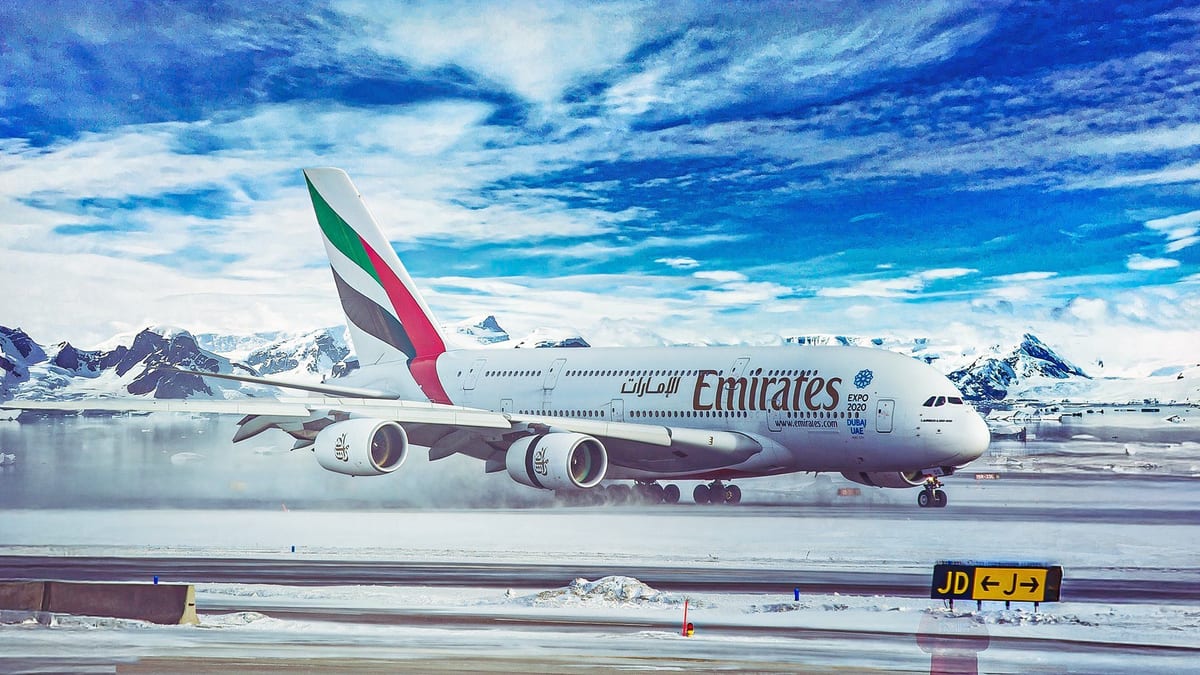
Image by Simple Flying - Aviation News
Network Shake-Up Sees A380 Withdrawn From Key Markets
Recent schedule filings and route analyses for 2026 indicate that Emirates has quietly removed the Airbus A380 from 15 previously regular routes, replacing the superjumbo with Boeing 777s and, increasingly, Airbus A350s. The adjustments affect a mix of long haul leisure destinations and high volume regional links rather than its very largest trunk routes such as London and New York, where the A380 remains central to the airline’s strategy.
Among the most notable changes are the withdrawal of A380s from Bali’s Denpasar airport, where the type had been heavily promoted as a showcase for Emirates’ premium cabins, and reductions on services such as Dubai to Auckland, where flight tracking and schedule data show a cut from daily to three weekly A380 operations in March 2026. In several other markets, the A380 is being swapped out entirely in favor of high density 777 300ERs, preserving seat count while freeing the superjumbo for other missions.
Industry route trackers and regional media coverage describe the changes as part of a rolling update to Emirates’ northern summer 2026 schedule rather than a one off cut. The pattern suggests a more flexible deployment model for the A380, shifting the aircraft away from marginal or highly seasonal routes and concentrating it instead on consistently strong premium and connecting traffic flows through Dubai.
Capacity, Demand and Geopolitics Behind the Pullback
Publicly available traffic data and local reporting point to a combination of softer demand on some city pairs, shifting regional dynamics and operational risk management as reasons for the A380 withdrawals. On several routes in Asia and the South Pacific, demand has normalized after the post pandemic travel surge, making it harder to fill more than 500 seats day after day outside peak holiday periods.
Analysts note that the A380’s economics depend heavily on very high load factors and strong premium cabin sales. Where those conditions are not reliably met, the more versatile 777 300ER, with its smaller capacity and lower trip cost, can offer better margins. In some markets, especially where connecting flows have been disrupted by geopolitical tensions or airspace restrictions, consolidating capacity onto smaller widebodies allows Emirates to maintain frequency without exposing itself to chronic overcapacity.
Operational resilience is another factor. The A380 requires specific airport infrastructure, from dual level boarding gates to reinforced taxiways. By reassigning the aircraft away from airports where it operates only a small number of weekly flights, Emirates reduces the complexity and cost of maintaining A380 support in locations that no longer justify it year round.
Fleet Strategy: A380 Still Central but Less Ubiquitous
Despite the cuts, Emirates continues to operate the world’s largest A380 fleet, with more than 100 aircraft in service and plans, according to fleet disclosures, to keep the type flying into the late 2030s. The airline has repeatedly framed the superjumbo as a long term pillar of its product, particularly on capacity constrained routes where demand for premium travel is strong.
At the same time, the carrier is deep into a multiyear fleet renewal. Orders for Boeing 777 9s and a growing Airbus A350 fleet are gradually giving Emirates more flexibility to match aircraft size to route demand. Industry reports show that the airline expects its active A380 fleet to peak around the middle of the decade as retrofits are completed, before gradually declining as next generation twinjets take over more long haul flying.
The current removal of A380s from 15 routes fits within that broader strategy. Rather than signaling an abrupt retreat from the superjumbo, it reflects a shift away from using the aircraft as a default choice on long haul routes toward a more targeted deployment on sectors where its scale and on board product can be fully monetized.
Retrofit Program and Product Consistency Drive Reallocations
Emirates is also in the midst of an ambitious cabin retrofit program covering dozens of A380s and Boeing 777s, adding its Premium Economy cabin and refreshing business and first class interiors. Airline statements and industry coverage show that the program is being phased in across the network, with newly refurbished aircraft progressively assigned to routes where demand for higher yielding cabins is strongest.
As retrofitted A380s enter service, Emirates has been reallocating them to cities such as London, Paris and select North American and Asian gateways, where the upgraded product can command higher fares and support strong corporate and connecting traffic. Pulling the aircraft from 15 lower yielding or primarily leisure routes creates the slack needed to concentrate the refreshed fleet on these profitable markets.
This process also helps improve product consistency. By slimming down the number of destinations served by the A380, Emirates can better align customer expectations with what is actually available on board, reducing the risk that travelers book specifically for an A380 experience only to encounter a last minute downgrade to a 777.
What the Changes Mean for Travelers
For passengers booked on affected routes, the most immediate change is aircraft type rather than schedule. In most cases, Dubai flights continue to operate at similar frequencies, but on Boeing 777s or, increasingly, Airbus A350s instead of the double decker A380. That means a different cabin layout, often without the upper deck lounge or shower suites that became synonymous with Emirates’ flagship.
In economy class, the impact is more nuanced. Some travelers may welcome slightly smaller cabins and potentially easier boarding on twinjets, while others will miss the sense of space and quiet many associate with the A380, particularly on its upper deck. Premium travelers on routes losing the A380 may see changes in seat design and layout, although Emirates continues to promote a high level of service consistency across its widebody fleet.
For now, the airline is signaling through its schedule choices that the A380 is moving from being the backbone of its long haul network to a more selective flagship role. The withdrawal from 15 major routes is a visible sign of that shift, and further fine tuning of where the superjumbo flies appears likely as new aircraft arrive and global travel patterns continue to evolve.