

More news on this day
Emirates is cautiously restoring a limited number of flights across Dubai, Sharjah, Abu Dhabi, Ras Al Khaimah, and Al-Fujairah as the United Arab Emirates begins reopening airspace following unprecedented regional tensions linked to the latest conflict involving Iran, Israel, and the United States.
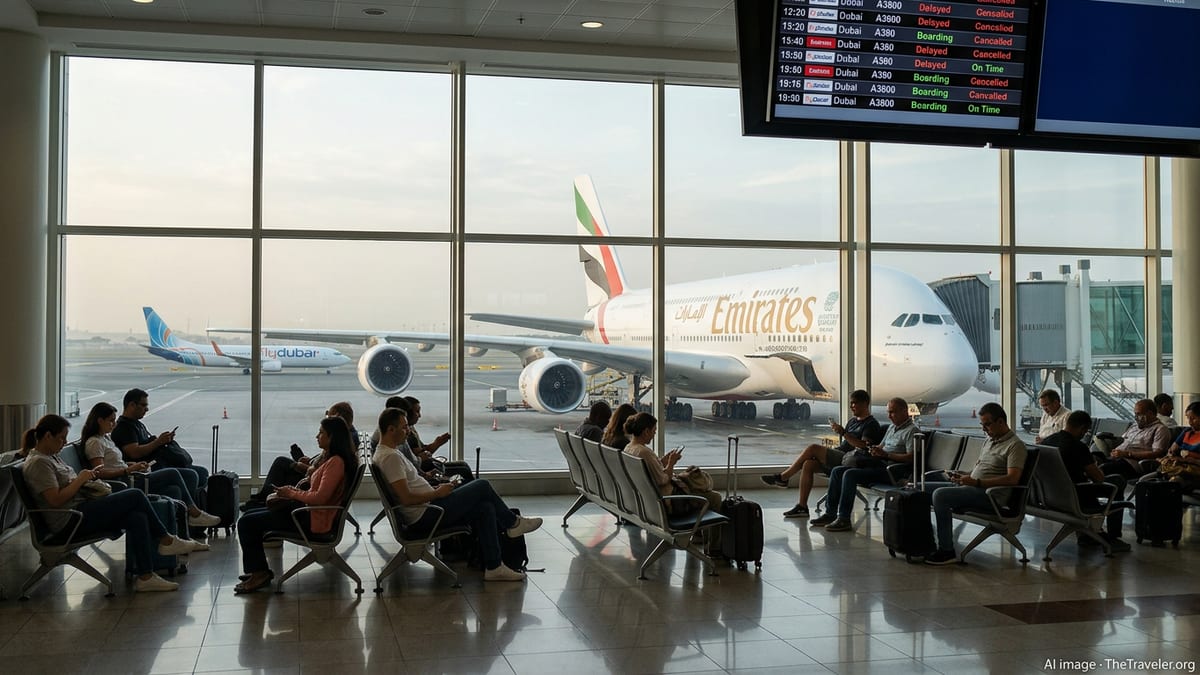
Phased Reopening After Unprecedented Airspace Shutdown
From February 28 to early March 2026, the UAE’s normally busy skies fell nearly silent after authorities moved to close national airspace in response to escalating military action across the Middle East. Dubai International, Abu Dhabi’s Zayed International, Sharjah, Ras Al Khaimah, Al-Fujairah and other regional airports saw thousands of cancellations as carriers halted operations or diverted long-haul flights away from Gulf hubs.
Emirates, the largest carrier based in the UAE, suspended most scheduled flights into and out of Dubai for several days while safety assessments were carried out and airspace restrictions remained in effect. Limited operations restarted at Dubai and Abu Dhabi in the first days of March, initially focused on repatriation, cargo, and repositioning flights designed to move stranded travelers and aircraft.
As of March 5 and 6, authorities have moved into a phased reopening model, allowing airlines to gradually build back services while retaining strict constraints on routing and timing. Emirates is now operating a growing but still reduced roster of flights from Dubai, with additional movements coordinated at Sharjah, Ras Al Khaimah and Al-Fujairah to relieve pressure on the main hubs and to provide alternative departure points for residents and tourists.
Despite this progress, aviation and government officials continue to stress that the situation remains fluid. Flight approvals are being handled on a rolling basis, with airspace management and security agencies monitoring regional developments hour by hour and reserving the right to tighten restrictions if threats increase.
Where Emirates Is Flying Again, and Which Routes Remain Restricted
Travelers are beginning to see a slow return of Emirates departures from Dubai to key long-haul markets in Europe and Asia, including a handful of flagship A380 services to major cities such as London, Paris and Frankfurt. These early flights are operating with extended turnaround times and carefully controlled routings to avoid sensitive airspace corridors still affected by military activity or temporary closures.
In Abu Dhabi and Sharjah, a limited number of services from Emirates’ partner and codeshare networks are also returning, providing onward options for passengers rebooked from cancelled flights earlier in the week. Regional low-cost carriers based in Sharjah and Ras Al Khaimah have begun operating select services to South Asia and parts of the Gulf, although many routes into neighboring conflict-adjacent states remain temporarily suspended.
Flights that traverse or approach airspace over Iran, Iraq, Syria, Lebanon and parts of Jordan continue to face the tightest constraints. Many of these routes either remain on hold or are being significantly rerouted, adding time and complexity to journeys. Some European and North American airlines are still suspending services into the UAE altogether, which limits connection options even as Emirates resumes its own flights.
In the northern emirates, smaller airports such as Ras Al Khaimah and Al-Fujairah are playing a growing role in outbound travel. Charter and ad hoc services, some operated in cooperation with regional partners, are being used to clear backlogs of stranded holidaymakers and expatriate workers. Seats on these flights are often prioritized for passengers with earlier cancellations, meaning last-minute availability is limited and subject to change.
What Passengers Should Expect at UAE Airports This Week
For travelers heading to or through Dubai, Sharjah, Abu Dhabi, Ras Al Khaimah or Al-Fujairah in the coming days, the experience will look very different from the usual smooth hub operations for which the UAE is known. Terminals are still dealing with days of disruption, including passengers who have slept in airport seating areas, long lines at transfer desks, and a backlog of bags that could not be loaded during the shutdown period.
Check-in cut-off times are being strictly enforced, and in some cases brought forward, as airlines manage complex rebooking tasks and decide which passengers can be accommodated on the limited flights now operating. Security and immigration processes remain tight, with additional screening possible as authorities maintain an elevated security posture in response to regional tensions.
Inside the terminals, not all retail and hospitality outlets are open, and operating hours may fluctuate according to the pattern of departures and arrivals. Airport operators in Dubai and Abu Dhabi have urged passengers not to arrive far earlier than instructed, warning that overcrowding in departure halls can slow down processing and make it harder to prioritize those with imminent flights.
Across all UAE airports, officials are urging travelers to rely on official airline and airport channels for updates rather than social media rumors. With schedules being adjusted multiple times a day, printed boarding passes and even confirmations issued hours earlier may no longer reflect real-time operational decisions, especially for connecting passengers whose onward sectors depend on aircraft and crew availability.
Rebooking, Refunds and Flexibility for Disrupted Itineraries
Emirates and other UAE-based carriers have introduced short-term flexibility policies to deal with the scale of disruption caused since February 28. Passengers holding tickets for travel in the first half of March are generally being offered fee-free rebooking onto later dates, subject to seat availability, or the option to convert unused tickets into travel credits that can be applied over an extended period.
Travelers whose flights were cancelled outright are being prioritized for the earliest departing services, but the sheer number of disrupted itineraries means some passengers may have to accept alternative routings or connecting points that differ significantly from their original plans. In some cases, airlines are rebooking customers onto partner carriers that still have capacity, particularly on routes linking the Gulf with Europe and South Asia.
Refund processing times are expected to be longer than usual as call centers and ticket offices contend with unprecedented call volumes. Airlines are encouraging customers to use self-service tools where available, including online change forms and mobile apps, to request new travel dates or credits without waiting on hold. However, travelers report that some digital tools struggle to reflect the constantly changing status of flights, leaving human agents to resolve complex multi-sector tickets.
Travel insurers are closely watching developments, and coverage will vary depending on policy wording and the timing of purchases. Some policies may treat the airspace closure and subsequent disruptions as a security-related or force majeure event, which can limit payouts for cancellation and delay. Passengers are advised to keep documentation of airline notifications, new itineraries, and any additional accommodation costs incurred while stranded.
Regional Travel Outlook and Safety Considerations
The measured return of Emirates flights across Dubai and the wider UAE underscores a broader reality for travelers in the region: while commercial aviation is restarting, the underlying geopolitical tensions that led to the airspace closures have not yet been resolved. Military activity and diplomatic negotiations continue to shape risk assessments, leaving airlines and regulators wary of returning too quickly to normal levels of traffic.
Industry analysts say that Middle Eastern hubs, including those in the UAE, Qatar and Saudi Arabia, will likely operate with a heightened focus on contingency planning in the weeks ahead. That includes maintaining the ability to rapidly suspend or reroute flights, as well as closer coordination with international aviation bodies and neighboring states on the management of busy regional airways.
For individual travelers, this environment translates into a need for greater flexibility and preparedness. Experts recommend allowing longer minimum connection times when itineraries route through Dubai, Abu Dhabi or Sharjah, and avoiding non-essential same-day commitments at arrival destinations, such as important business meetings or onward domestic travel that cannot easily be rescheduled.
While the resumption of Emirates flights is a welcome sign for the many passengers stranded across the Gulf and beyond, officials warn that schedules are likely to remain volatile for at least several days. Travelers planning trips through the UAE in early to mid-March should stay prepared for last-minute gate changes, re-timings or temporary suspensions on specific routes, even as the country’s airports work to restore their role as key global transit points.