


More news on this day
More than 200 people who bought long-term stays on the Villa Vie Odyssey, marketed as an "endless" or "cruise for life" voyage, have been left on shore in Cambodia after the ship abruptly disembarked all passengers and then departed without them, reportedly sailing toward Singapore under the control of creditors.
Get the latest news straight to your inbox!
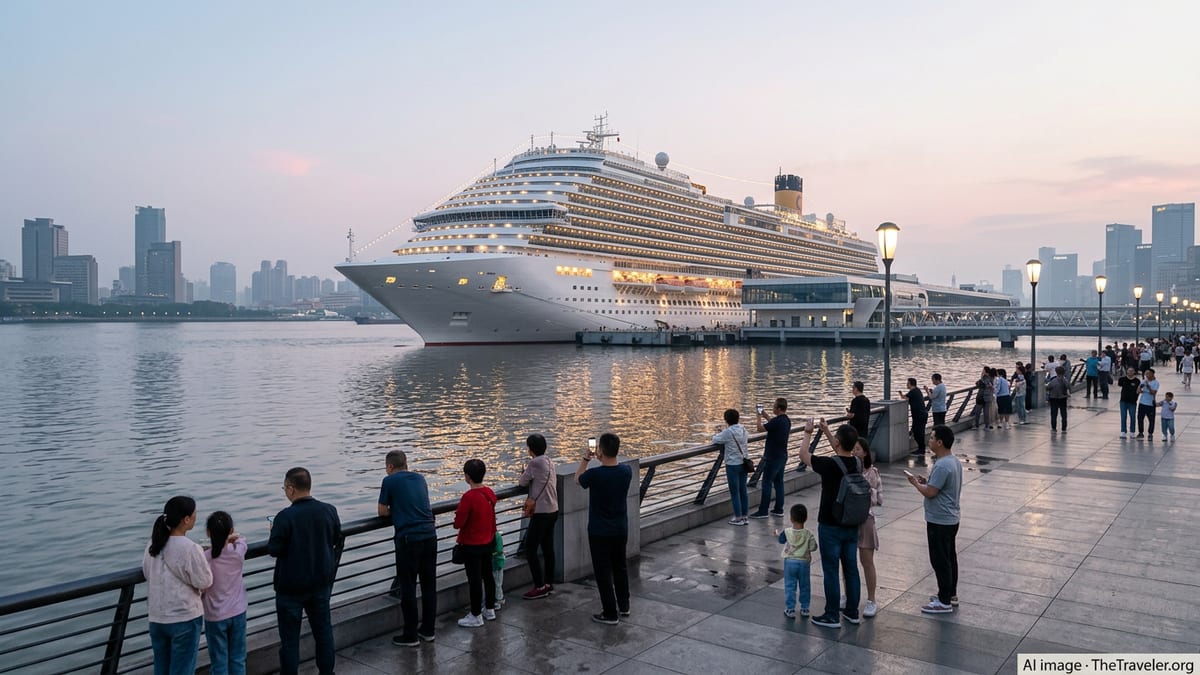
From ‘cruise for life’ dream to sudden disembarkation
The Villa Vie Odyssey, operated by Florida-based Villa Vie Residences, had been promoted as a residential cruise offering multi-year or even lifetime stays at sea. Public information indicates that some residents committed hundreds of thousands of dollars, and in a few cases around one million dollars, for cabins and long-term packages covering accommodation, food and global itineraries over more than a decade.
The voyage began in 2024 and had been at sea for roughly two years, completing hundreds of days of continuous travel. Passengers could buy or lease cabins and treat the ship as a floating home, an emerging niche in the cruise industry that targets retirees, digital nomads and long-term travelers.
That vision came to an abrupt halt in late October 2026 when the ship arrived at Sihanoukville, a port city on Cambodia’s southern coast. Villa Vie Residences announced the suspension of operations and ordered everyone off the vessel with their belongings. Reports indicate that residents were given limited notice to pack up their cabins and were then transported into town with little centralized onward assistance.
Local tourism officials in Sihanoukville reported that just over 200 passengers had been on board when the ship reached Cambodia. Many had expected only a short stop before continuing toward Vietnam and further world ports, not the end of a multi-year journey sold as effectively open-ended.
Financial troubles, fuel costs and a creditor takeover
Publicly available statements from Villa Vie Residences cited an extraordinary rise in fuel prices linked to wider conflict in the Middle East, including war involving Iran, as a major factor behind the suspension. Operating a 650-passenger-capacity ship on long-distance itineraries requires significant fuel outlays, and the company said these costs had become unsustainable.
Investigative coverage in recent days has also outlined a longer-running cash crunch behind the scenes. Reports describe months of efforts to secure fresh funding, pay for bunker fuel and cover port charges, including episodes where passengers themselves reportedly contributed large sums directly to fuel suppliers in earlier ports to keep the voyage going.
Despite those efforts, internal financial pressures appear to have culminated in the decision to halt operations in Cambodia. Subsequent reporting from international news outlets indicates that at least one creditor has now taken control of the vessel. Tracking data from maritime monitoring websites and images from Sihanoukville’s port show the ship departing without passengers, with a reduced crew complement tasked with repositioning the vessel.
While the operator has not provided a detailed public breakdown of outstanding debts, the repossession and repositioning of cruise ships to major maritime hubs is a well-established pattern when lenders act to secure assets. In this case, reports indicate that the Villa Vie Odyssey is now sailing toward Singapore, a regional center for ship repair, lay-up and sale.
Ship departs Sihanoukville as passengers remain on shore
On 4 November 2026, the Villa Vie Odyssey finally left Sihanoukville’s deep-water port with only crew aboard. Cambodian tourism officials said around 100 passengers were still in Cambodia at that point, while others had already flown on to destinations elsewhere in Southeast Asia and beyond.
Images from the port show crew preparing the ship for departure and passengers making final trips to collect remaining personal items from cabins before the gangway was removed. Some residents reported that furniture, decor and other possessions they had customized over months on board were left behind in their cabins as the ship pulled away.
Public reports agree that the vessel’s exact destination has not been officially confirmed. However, ship-tracking platforms and multiple media outlets describe a plotted course toward Singapore. The city-state is a common location for cruise ship dry-docking, inspection and potential sale, and is frequently used when a vessel changes management or awaits a new operator.
For the passengers, the ship’s departure has heightened uncertainty. Villa Vie Residences has yet to publish a comprehensive plan outlining refunds, future accommodation or alternative sailings. Residents who believed they had secured years of continuous travel aboard now face complex questions over contracts, insurance and the status of their long-term agreements.
Stranded in Cambodia: logistics, visas and unexpected costs
In the days since the disembarkation order, Cambodia has become an unplanned base for many of the former residents. Reports from Sihanoukville describe travelers from North America, Europe and other regions seeking short-notice hotel rooms, arranging flights through Phnom Penh and nearby international hubs, and navigating visa extensions after their shipboard plans collapsed.
Cambodian tourism officials have stated publicly that local authorities and service providers are assisting with practical issues such as accommodation information and onward travel logistics. However, former passengers have expressed frustration in media interviews about the lack of centralized support from the cruise operator itself, noting that many had expected robust contingency plans in return for their substantial financial commitments.
The abrupt halt has also imposed new costs. Instead of having housing, meals and transport bundled into a single long-term package, stranded residents now face regular hotel rates, restaurant expenses and last-minute airfares. Several have indicated that they are drawing on savings intended to support life at sea or retirement, while they wait for clarity on any potential reimbursement or legal recourse.
Travel insurers may play a role in how much individual passengers ultimately recover. Policy terms for long-duration cruises and residential voyages vary widely, and consumer advocates note that coverage for operator insolvency or suspension of services can be limited unless explicitly included.
What the saga means for residential cruising and long voyages
The Villa Vie Odyssey incident has raised broader questions about the viability and regulation of residential cruising, an emerging market that blends elements of real estate, hospitality and traditional cruising. Unlike conventional voyages booked per sailing, many residents on board committed to multi-year contracts, effectively prepaying significant sums for housing and travel on a single ship.
Analysts following the sector point out that these arrangements expose travelers to concentrated operational and financial risk. If a single operator faces a fuel price shock, credit problems or management failures, residents can find themselves simultaneously out of a home and out of pocket, often in foreign jurisdictions where legal remedies may be complex and slow.
There is currently no unified global framework tailored specifically to residential cruise products. Instead, passengers typically rely on a patchwork of maritime law, consumer protection rules in the company’s home country, and contract law governing their individual agreements. The situation in Cambodia is likely to attract attention from regulators and consumer groups who have been monitoring the growth of ultra-long cruises and floating residence schemes.
For travelers considering similar offerings, specialists recommend scrutinizing contract terms on refunds, insolvency, and itinerary changes, and checking whether payments are held in escrow or protected by third-party guarantees. The experience of the Villa Vie Odyssey’s residents illustrates how quickly an “endless” voyage can end, leaving passengers to navigate real-world logistics while the ship itself sails on without them.