


More news on this day
More than 170 passengers aboard a popular tourist train were trapped for hours in a dark mountain tunnel after the locomotive suffered an engine failure, according to early reports from regional rail and local media outlets.
Get the latest news straight to your inbox!
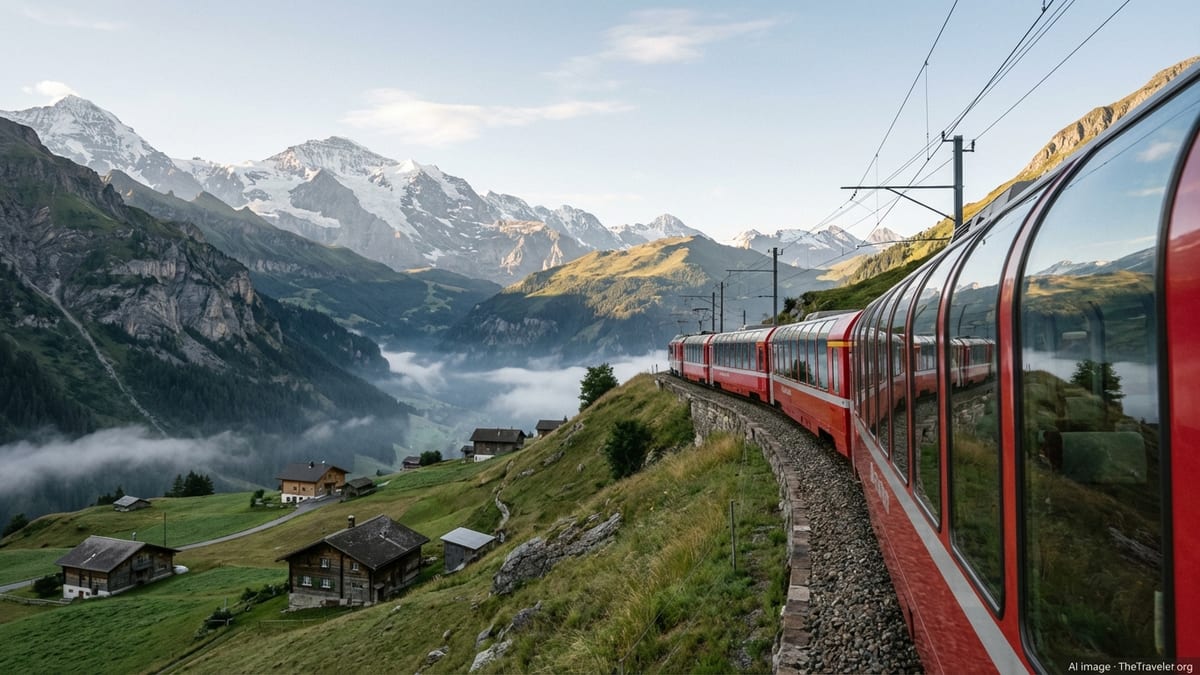
Breakdown turns scenic journey into hours-long ordeal
Initial reports indicate that the incident occurred on a scheduled tourist service operating through a long mountain tunnel on a well-known scenic line. The train, which was carrying more than 170 passengers, came to an abrupt halt after a technical fault disabled the engine deep inside the tunnel, leaving carriages in near total darkness once emergency power was depleted.
Passengers were reportedly en route between two established resort areas when the breakdown occurred. Publicly available information suggests the train had already entered the tunnel and travelled a significant distance underground before losing power, making an immediate return to the portal impossible and complicating access for railway technicians and emergency responders.
While full timelines are still being clarified, regional news coverage describes an extended delay inside the tunnel, with passengers experiencing rising heat, poor air circulation and limited lighting. Accounts from similar tunnel incidents in recent years show that temperatures can increase rapidly in confined rail spaces when ventilation systems and onboard air conditioning are inactive, adding to discomfort and anxiety for those on board.
There have been no confirmed reports of deaths associated with this latest breakdown, and early coverage suggests that any injuries have been minor, linked largely to distress, heat and mobility difficulties during the prolonged wait and eventual evacuation.
Complex evacuation through narrow tunnel environment
Evacuating a full tourist train in a mountain tunnel is a logistically demanding process. Rail safety guidance for long tunnels typically calls for a combination of options, including transferring passengers to a rescue train, guiding them on foot along walkways to a portal or cross passage, or using specialized vehicles where service tunnels exist. The choice depends on tunnel layout, remaining power, smoke conditions and access points.
In this case, regional media reports describe a staged evacuation in which groups of passengers were escorted along the track bed and side walkways toward a safer section of tunnel and, ultimately, to the nearest exit or connecting train. Operational rules for modern tunnels generally limit train movements while passengers are on foot, so any evacuation on the track usually requires traffic on the affected bore to be halted, adding to the duration of the incident but reducing collision risk.
Published information on recent rail tunnel events in Europe and North America highlights common challenges that appear to have been present again: low or intermittent lighting once emergency batteries are depleted, uneven walking surfaces near drainage channels and cables, and anxiety among less mobile travellers. In several previous mountain and base-tunnel breakdowns, passengers reported difficulty accessing toilets, concerns about air quality and uncertainty about how long they would remain underground.
Rail operators increasingly rely on pre-planned tunnel evacuation scenarios, drills with local fire and rescue services, and dedicated communication protocols to move large groups safely in these environments. Early accounts from this tourist train incident suggest that similar procedures were activated, with staff coordinating movement within the confined space and organizing onward transfers once passengers reached open air or a service area.
Rail operator reviews cause of engine failure
Attention is now turning to the technical cause of the breakdown. Tourist and scenic trains in mountain regions often rely on powerful diesel or electric locomotives working near their performance limits on steep gradients and in long tunnels, where ventilation and cooling are tightly managed. Publicly available information on comparable events shows that failures can stem from traction system faults, overheating, software issues or problems with power collection in electrified tunnels.
Reports indicate that the operator has begun an internal review to determine why the engine failed and whether any early warning indicators were present before the train entered the tunnel. In past cases on other lines, operators have introduced new rules requiring additional checks before long tunnel entries, such as monitoring coolant temperatures, verifying redundant power systems and, in some cases, assigning locomotives with higher power margins for heavily loaded tourist departures.
Mechanical incidents inside tunnels are of particular concern for rail companies because they remove many of the options available on open track, such as quickly attaching a rescue locomotive from a siding or allowing passengers to disembark at a nearby level crossing. Any findings from the current investigation are therefore expected to focus not only on the immediate technical fault but also on procedures governing where and when heavily loaded tourist trains enter extended underground sections.
Insurers and regulators frequently review such breakdowns for potential lessons on maintenance intervals, real-time diagnostics and the resilience of emergency power for lighting and ventilation. A key question in this case is likely to be how long critical systems remained online after the engine failed and whether additional backup capacity could have reduced passenger discomfort during the hours spent underground.
Renewed scrutiny of tunnel safety standards for tourist services
The incident is adding to an ongoing discussion about safety in long rail tunnels, particularly on lines that carry large numbers of leisure travellers unfamiliar with underground evacuation procedures. Major tunnel events in Europe and Asia over recent decades, including fires and extended breakdowns, have led to significant redesign of many new structures, with cross passages, smoke-resistant refuges and dedicated service tunnels becoming standard on high-profile routes.
Modern tunnel safety frameworks generally require detailed emergency plans that account for maximum passenger loads, the presence of older adults and children, and the constraints of narrow walkways alongside live tracks. Tourist trains, which can carry large groups visiting mountains, ski resorts or heritage regions in a single departure, are often used as reference scenarios when planners calculate worst-case evacuation times and ventilation requirements.
Available guidance from international transport and tunneling bodies emphasizes clear onboard safety announcements, visible signage toward exits, and staff training focused on crowd management in low light or smoky conditions. While the latest mountain tunnel breakdown appears to have ended without major casualties, it is likely to feature in industry discussions about whether current requirements for tourist operations are sufficient, particularly as passenger numbers continue to rise in many scenic regions.
Rail advocates and passenger associations often point out that high-profile tunnel incidents tend to prompt targeted investments, such as upgrades to emergency lighting, improved public address systems and increased joint exercises with local emergency services. Observers will be watching closely to see whether the operator of the affected tourist line announces any new measures once preliminary findings are released.
Impact on tourism and upcoming services
The breakdown occurred at a time when many mountain rail routes are reporting strong seasonal demand, with trains often running close to capacity on peak days. Disruption to a single tourist departure can ripple through timetables, as equipment and crews are displaced and sections of track or tunnel are temporarily closed for inspection after an incident.
Reports from regional media indicate that services on the affected line were suspended or curtailed following the evacuation while engineers inspected the tunnel structure, track and overhead or power systems for any damage caused by the stalled train or the recovery effort. Similar events on other mountain lines have prompted operators to run shortened services that turn back before the longest tunnels, or to substitute buses between key stations until full inspections and any required repairs are completed.
Tourism boards in comparable regions typically work closely with rail operators after such disruptions to provide updated information on timetables, alternative transport options and any refund or rebooking arrangements. Publicly available information from previous incidents shows that operators often waive change fees, prioritize affected passengers on subsequent departures and, in some cases, charter additional trains once infrastructure managers clear the route.
The latest breakdown is expected to prompt travellers planning scenic rail journeys through mountain tunnels to pay closer attention to service updates, seasonal weather conditions and any operational notices from train companies. While serious tunnel emergencies remain rare relative to the large number of tourist trains operating worldwide, the experience of more than 170 passengers trapped in the dark for hours underscores the importance of robust maintenance, resilient backup systems and clear communication on some of the world’s most spectacular rail routes.