


More news on this day
British travellers heading to Spain this week are being urged to plan for disruption, after updated UK government guidance highlighted a nationwide strike on 11 November alongside ongoing rail problems and tighter border checks at key entry points.
Get the latest news straight to your inbox!
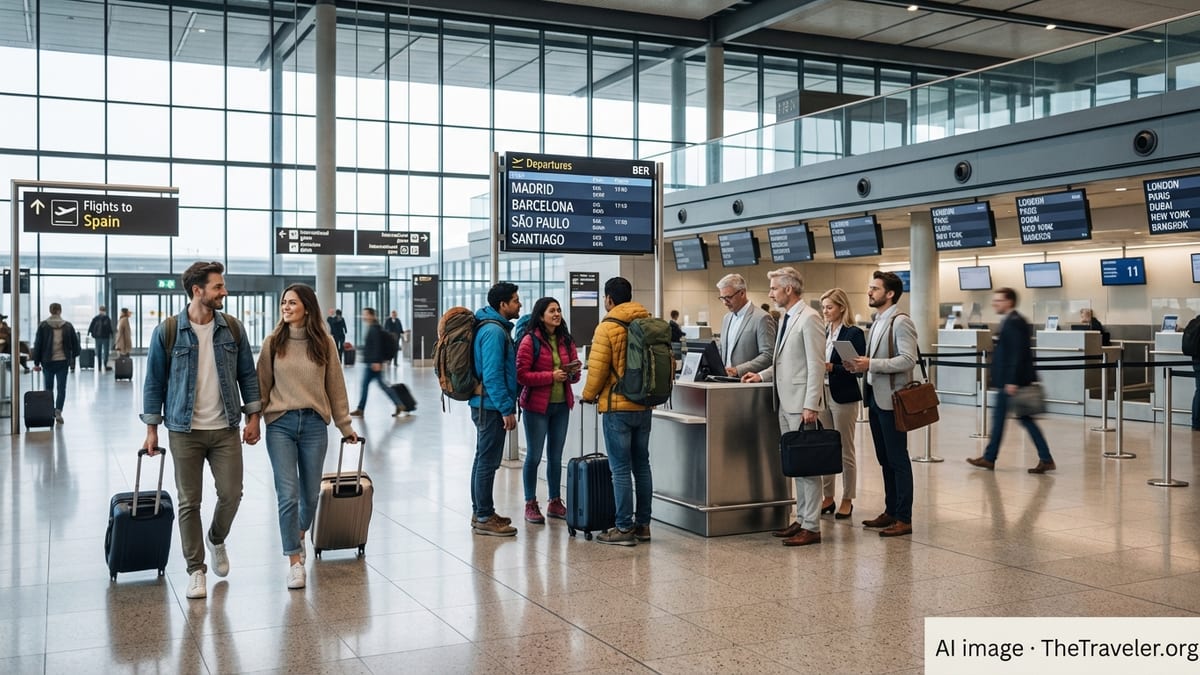
National strike on 11 November set to hit transport
Publicly available information on the UK government’s Spain travel advice shows that the guidance was updated on 10 November 2026 to flag a 24 hour national strike planned for Thursday 11 November. The notice sits within the warnings and insurance section and highlights the likelihood of disruption across transport networks used by visitors.
The advisory states that the strike is expected to affect transport systems, with rail services singled out for potentially significant disruption. Travellers are being directed to check with their airline, tour operator or rail provider before setting out, and to allow extra time for journeys to and from airports and major train stations.
Coverage in Spanish and UK media indicates that participation in the strike is expected from workers in rail, urban public transport, aviation support services, ports and parts of the public sector. The precise impact will vary by region and operator, but passengers travelling on or around 11 November have been warned that cancellations, reduced timetables and last minute changes are possible.
Travel industry reporting notes that some airlines serving Spanish destinations have activated disruption plans, including flexible rebooking policies and the consolidation of lightly loaded flights. Passengers are being advised to monitor airline apps and text alerts closely on the day of travel, as changes may be confirmed only a few hours before departure.
Rail disruption after high speed train collision
The updated UK guidance also references ongoing disruption following a recent high speed rail collision in the province of Toledo. According to publicly available information from Spain’s state operator Renfe and international travel advisories, services on some high speed routes have been curtailed while investigations and repairs continue.
Australian government travel advice, which tracks transport issues for its own citizens, notes that trains between Madrid, Ciudad Real and Andalucía, as well as through services from Barcelona and Valencia to Andalucía, remain suspended. It recommends that passengers check the status of their service with their rail operator before travelling and consider alternative transport if their train is affected.
Britons planning to use Spain’s high speed rail network in the coming days are therefore facing a double layer of uncertainty. Even where services are not formally cancelled, both the earlier accident and the general strike increase the risk of crowding, delays and missed connections on popular routes between Madrid, Barcelona, Seville, Valencia and Málaga.
Travel planners and rail booking platforms are advising customers to build longer transfer windows into multi leg journeys, particularly where a Spanish domestic service feeds into or out of an international flight. Where possible, some operators suggest moving non essential travel away from 11 November to avoid the peak of disruption.
New digital border checks extend waiting times
The warning for British travellers comes as Spain continues rolling out enhanced digital border controls for non EU nationals at major airports and some ferry ports. Reports from European travel outlets describe longer queues at busy arrival points as biometric checks and electronic registration systems are applied more consistently to UK passport holders.
Coverage in Spanish regional media and English language newspapers in Spain points to Madrid Barajas, Barcelona El Prat and key Canary and Balearic gateways as particular pinch points at peak times. While local authorities have adjusted staffing levels during busy periods, the combination of new checks, strong demand and strike related disruption is expected to increase the risk of bottlenecks.
British visitors are being encouraged to ensure their passports are in good condition and valid for the duration of their stay, to have accommodation details readily available, and to keep boarding passes or booking confirmations to hand for inspection. Families and groups are advised to stay together in queues to avoid further delays at the control desks.
Some consumer travel organisations also highlight that separate queues for EU and non EU passports can amplify the impact of staff shortages or technical issues on non EU travellers. On a day affected by a national strike or severe weather, this may translate into extended waits both on arrival and at departure security checkpoints.
Weather and wider European disruption adding to delays
The strike in Spain coincides with broader disruption across parts of Europe, including severe autumn storms that have recently affected the Iberian Peninsula. Weather agencies have issued a series of warnings for heavy rain, strong winds and hazardous coastal conditions, particularly in neighbouring Portugal, with airlines already adjusting some schedules as a result.
Recent reporting on the 2026 European windstorm season notes that intense storms affecting Spain and Portugal have triggered red and orange weather alerts in some regions, leading to localised flooding, road closures and flight diversions. Travellers heading to or transiting through Spanish airports could therefore encounter delays that are only partly attributable to industrial action.
In addition, aviation data collated across Europe this month highlights a spike in air traffic disruption linked to airspace congestion, reroutings and a series of security related incidents. Flights connecting the United Kingdom with Spain have been among those affected by periodic delays, missed slots and aircraft rotations running late from earlier sectors.
Given the interaction between strikes, severe weather and wider air traffic issues, transport commentators suggest that travellers should treat schedules on 11 November as provisional rather than guaranteed. Reconfirming departure times before leaving for the airport or station and keeping plans flexible is being presented as a practical response to a fluid situation.
Practical steps for Britons travelling this week
Publicly available guidance from the UK government and overseas travel agencies emphasises preparation rather than cancellation for most trips. For British travellers whose plans cannot be shifted away from 11 November, a series of practical measures can help reduce the impact of disruption.
Passengers are encouraged to register for airline, rail and tour operator alerts so they receive immediate updates on delays, gate changes or cancellations. Allowing additional time to reach departure points, carrying basic refreshments and medication in hand luggage, and having a backup route in mind for transfers within Spain are also advised.
Travel insurance remains a key consideration. Official advice stresses the importance of policies that cover missed departures, travel delay and additional accommodation costs where disruption is outside the traveller’s control. Policy terms vary, and travellers are being reminded to check whether strike action is included and what documentation is required to support any claim.
Finally, those planning to transit Spain by land en route to or from other European destinations are urged to monitor the travel advice for neighbouring countries such as France and Gibraltar. With the situation around the national strike and weather related disruption evolving from day to day, keeping up to date with official advisories and local news reports is being presented as the best way for British visitors to stay informed while continuing with their plans.