

Georgia blends big-city energy with small-town charm, from the skyscrapers of Atlanta to the cobblestone streets of Savannah and the beaches of the Atlantic coast. Whether you are coming for a weekend layover or a long road trip, understanding local logistics, weather patterns, and regional etiquette will dramatically improve your experience. This guide walks you through the essential travel tips for visiting Georgia so you can make the most of your time in the Peach State.
Understanding Georgia’s Regions and Best Times to Visit
Georgia covers everything from Appalachian peaks to subtropical coastline, and your travel strategy should change with the region. North Georgia, anchored by the Blue Ridge and Appalachian foothills, is cooler, more mountainous, and popular in spring and fall for hiking, waterfalls, and cabin getaways. Central Georgia includes Atlanta and a string of historic towns, where you will find museums, sports, and civil rights landmarks. Coastal Georgia, including Savannah and barrier islands such as Tybee, offers beaches, marshes, and maritime history with a distinctly slower pace.
The best time to visit generally aligns with shoulder seasons. March through May brings mild temperatures and blooming azaleas, especially striking in Savannah and the coastal islands. October and early November usually mean comfortable days, lower humidity, and vibrant fall foliage in the mountains. These windows help you avoid the heaviest crowds and most intense heat, while still enjoying outdoor activities across the state.
Summers in Georgia are long, hot, and humid, particularly from June through early September. In cities like Atlanta and Macon, afternoon heat and thunderstorms are common, while the coast can feel sticky but breezy. If you travel in summer, plan indoor sightseeing during midday and save walking tours, hikes, and beach time for mornings and late afternoons. Winters are generally mild in most of the state, with occasional cold snaps and rare snow or ice further north, making it a decent time for budget-friendly city trips and quiet coastal escapes.
When choosing your travel dates, also consider major events. Atlanta hosts conventions, major sports games, and concerts that can strain hotels and traffic. Savannah’s spring festival season, college graduations, and coastal spring break weekends can also push up prices. Book lodging and key transport well ahead of peak dates, and check local tourism calendars if you prefer a quieter experience.
Navigating Atlanta and Hartsfield-Jackson Airport
Most visitors enter Georgia through Hartsfield-Jackson Atlanta International Airport, consistently ranked among the world’s busiest. To reduce stress, plan to arrive at the airport at least two hours before domestic flights and up to three hours before international departures, especially around holidays and peak travel seasons. Security lines can fluctuate, so monitoring wait times on airline apps or official airport channels before you leave your hotel is wise.
The airport’s layout centers on a main terminal with concourses connected by an underground automated train called the Plane Train. Study your boarding pass for your concourse letter and gate, then follow overhead signs directly to the train. Riding the Plane Train between concourses is usually faster than walking, particularly if you are carrying luggage or have a short connection. Allow generous connection times, as walking distances plus security rechecks on some itineraries can take longer than expected.
If you plan to park at the airport, be aware that parking rates have increased in recent years, especially at decks closest to the terminals. Long-term travelers may find that economy or off-site park-and-ride lots offer better value, despite the added shuttle time. To avoid parking altogether, consider taking Atlanta’s MARTA rail system from downtown or Midtown directly to the airport station underneath the domestic terminal, which can sidestep freeway congestion.
Within the city, Atlanta’s traffic can be intense during rush hours, roughly 7 to 9 in the morning and 4 to 7 in the evening on weekdays. Factor this into your plans if you are driving in from the suburbs or heading to a game or concert. Rideshare services and taxis are widely available, but surge pricing is common around large events. If you stay in central neighborhoods such as Downtown, Midtown, or around Centennial Olympic Park, you can often walk or take MARTA to many attractions and reduce your reliance on a car.
Getting Around the State: Driving, Transit, and Small Airports
Outside the Atlanta metro area, a car remains the most flexible way to explore Georgia. Interstates like I-75, I-85, and I-16 connect major cities, while smaller state highways lead to mountain towns, lakeside communities, and coastal islands. Driving conditions are generally straightforward, but summer thunderstorms can reduce visibility and bring sudden downpours, and occasional winter storms in the north can create slick roads. Always check the forecast, especially if you are planning a mountain drive or traveling late at night.
When renting a car, document its condition with photos or a short video before leaving the lot, and review your contract closely. Georgia has a mix of toll-free highways and a few pay lanes around Atlanta, but most visitors can avoid special toll devices by staying on general lanes. Gas stations are common along interstates, but if you are heading into more rural areas, top off your tank in larger towns; distances between services can be longer than you expect, especially late at night.
Public transportation options vary across the state. Atlanta’s MARTA rail and bus system covers the airport, downtown, and some suburbs, but many smaller cities rely chiefly on local buses, rideshares, and taxis. Savannah has a compact, walkable historic district with a network of local buses and tourist trolleys, so parking your car once you arrive and exploring on foot is often the easiest approach. On the coast and in the mountains, expect limited transit; plan ahead for rides or rental cars if you do not drive.
If you prefer to avoid driving altogether, consider pairing flights into Atlanta or Savannah with guided tours or organized excursions. Several companies offer day trips from Savannah to nearby islands or from Atlanta to the North Georgia mountains and wineries. These tours can be more expensive than self-driving but remove the stress of navigation and parking, particularly in unfamiliar urban areas or narrow mountain roads.
City Highlights: Atlanta, Savannah, and Beyond
Atlanta is Georgia’s urban heart, blending cultural institutions with neighborhoods full of restaurants, music venues, and green spaces. First-time visitors often focus on Downtown and Midtown, home to major attractions such as museums, sports venues, and family-friendly aquariums. The Atlanta BeltLine, a former rail corridor turned multiuse trail, links several in-town neighborhoods and is ideal for walking or cycling between food halls, parks, and street art. When exploring, pay attention to neighborhood boundaries, as some areas can change in character within a few blocks; ask hotel staff or locals for up-to-date advice on where to walk at night.
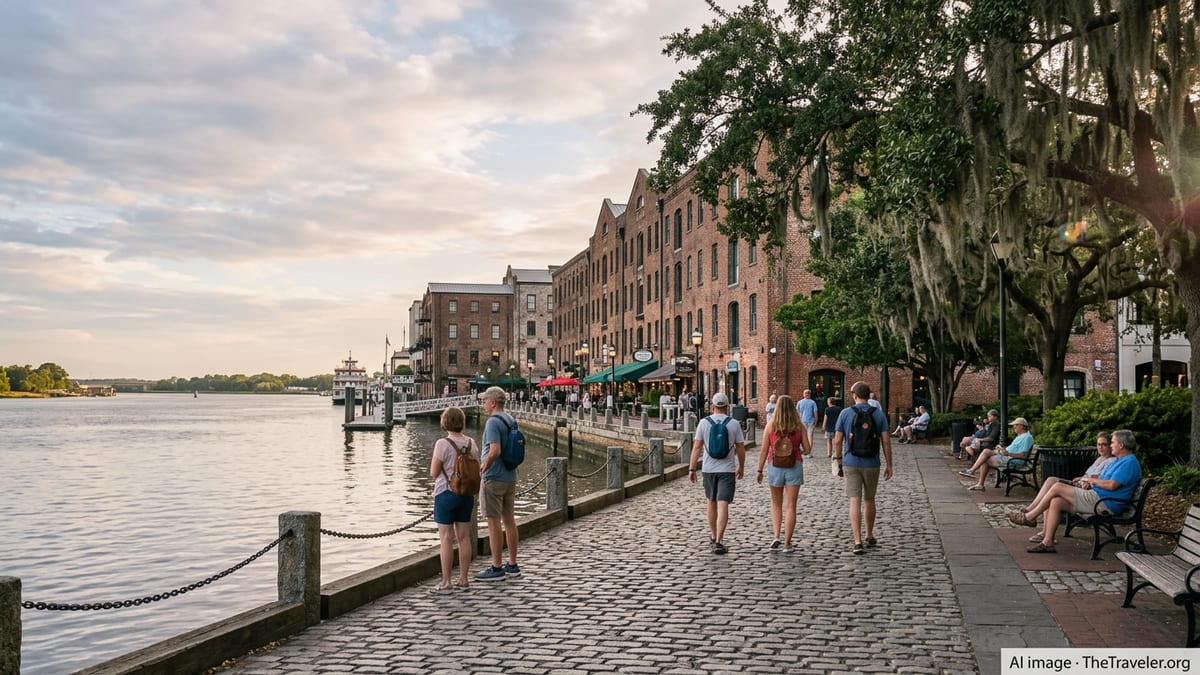
Savannah, about a four-hour drive from Atlanta, offers a very different experience, with moss-draped oaks, historic squares, and stately homes. The historic district is compact, making it ideal for walking tours focused on architecture, history, and the city’s role in the civil rights movement. Comfortable shoes are essential on the cobblestone streets, and in summer, carrying water and taking breaks in shaded squares can make the heat more manageable. Many visitors use Savannah as a base to visit nearby Tybee Island for beach time.
Beyond these two anchor cities, smaller destinations showcase Georgia’s variety. College towns such as Athens add live music and youthful energy, while Macon and Augusta highlight music heritage, historic homes, and riverfront attractions. In North Georgia, towns like Blue Ridge and Dahlonega offer access to hiking trails, waterfalls, and vineyards. On the southern coast, communities around the Golden Isles and barrier islands deliver quiet beaches and marshland vistas that feel far removed from Atlanta’s urban sprawl.
Wherever you travel in Georgia’s cities and towns, build in a mix of indoor and outdoor activities to adapt to changeable weather. Museums, galleries, and historic homes are useful backups when thunderstorms pass through or the afternoon heat peaks. Many attractions now recommend or require timed tickets, particularly during busy weekends, so reserving entry in advance can help you avoid waiting in long lines or missing out entirely.
Coastal and Outdoor Safety: Beaches, Heat, and Wildlife
Georgia’s coastline, including Tybee Island near Savannah and other barrier islands, is a major draw for visitors seeking sun and sand. Beach towns are compact and can feel crowded on peak summer weekends, so plan parking and arrival times carefully. On Tybee, for example, parking is generally paid and tightly enforced during the day, and spaces near the most popular stretches of sand can fill early. Consider arriving in the morning or late afternoon, carpooling, or using rideshare services where available to reduce parking stress.
Beach safety should be a priority. Many Georgia beaches post colored flags to indicate surf and swimming conditions; always read the signage as you enter and obey instructions from lifeguards where they are present. Currents and rip tides can be stronger than they look, particularly near inlets and sandbars. Swim within designated areas, remain close to shore, and supervise children closely even in shallow water. Be aware that some islands enforce rules such as staying off dunes, protecting nesting sea turtles, and prohibiting glass, littering, or fires directly on the sand.
Heat and sun exposure are two of the state’s most common hazards, not only at the beach but also in cities and mountain areas. From late spring through early fall, temperatures and humidity can rise quickly by midday. Wear breathable clothing, a wide-brimmed hat, and UV-protective sunglasses, and reapply broad-spectrum sunscreen throughout the day. Drink water regularly rather than waiting to feel thirsty, and seek shade or air-conditioned spaces during the hottest hours, usually midafternoon.
When exploring Georgia’s parks and wilderness areas, understand the local environment. Trails can become muddy or slippery after storms, and some waterfalls or riverbanks have steep drop-offs. Stay on marked paths, follow posted warnings, and let someone know your route and expected return time if you are hiking in remote terrain. Georgia’s forests and wetlands are home to snakes, insects, and occasional alligators in southern regions; give wildlife plenty of space, avoid feeding any animals, and check yourself for ticks after hikes in grassy or wooded areas.
Cultural Etiquette, Local Laws, and Responsible Tourism
Georgia is part of the broader American South, where hospitality and casual conversation are common, but norms can vary between urban and rural areas. Polite greetings, such as “good morning” or “how are you,” are generally well received in shops and neighborhoods. In Atlanta and other cities, dress codes range from casual in many neighborhoods to business-casual or dressier in upscale restaurants and bars, so check venue expectations before you go. Tipping is customary in restaurants, bars, taxis, and for hotel staff; leaving around 15 to 20 percent before tax is standard for good service in dining establishments.
Alcohol laws in Georgia can be complex and can differ among counties and municipalities. Many restaurants and bars in cities serve alcohol seven days a week, but you may still encounter restrictions on Sunday morning sales in some places, and some areas may be partially or fully dry. Carry a valid government-issued photo ID if you plan to drink, as establishments regularly card patrons who appear under 30. Open-container rules also vary, with certain entertainment districts permitting drinks in designated areas and others enforcing stricter limits, so look for posted signs and follow local guidance.
Georgia traffic laws are similar to those in many other U.S. states. Seat belts are required for drivers and passengers, and using a handheld mobile phone while driving is generally prohibited. Speed limits are enforced on highways and smaller roads, with fines for excessive speeding. If you are unfamiliar with four-way stops or turning rules at red lights, review basic U.S. driving etiquette before renting a car. In downtown districts, pedestrians should use crosswalks and obey signals, as jaywalking tickets are occasionally issued in busy areas.
Practicing responsible tourism is increasingly important in Georgia’s sensitive coastal and mountain environments. Dispose of trash properly, avoid disturbing wildlife, and do not collect shells, plants, or artifacts from protected areas. Stick to marked trails to reduce erosion, and respect quiet hours in campgrounds and residential neighborhoods. On the coast, follow guidance about beach advisories and wildlife protections, especially during sea turtle nesting season. Being mindful of local rules helps preserve the very landscapes and communities you have come to enjoy.
Budgeting, Lodging, and Booking Smart
Georgia can suit a wide range of budgets, but costs vary by region and season. Atlanta and Savannah tend to have higher hotel rates, especially during major events, holidays, and spring weekends. Coastal islands and mountain cabins often price higher in peak summer or fall foliage seasons. If you are traveling on a budget, consider visiting in winter outside of major holidays or booking weekdays instead of weekends. Look for hotels or vacation rentals a short drive from the most popular districts, where parking is easier and nightly rates are often lower.
Transportation can be a significant part of your budget. Plan for potential airport parking fees, rideshares, rental cars, and gas. In Atlanta, you may be able to reduce costs by using MARTA instead of renting a car for your entire stay, especially if most of your plans are within the central city. For longer trips that combine city and countryside, you might rent a car only for the days you leave the urban core, returning it before you spend time exploring neighborhoods where you mostly walk or use transit.
When booking lodging, review cancellation policies carefully, particularly during hurricane season on the coast, which typically peaks from late summer into early fall. While direct hits are not frequent, strong storms in the broader region can disrupt flights, cause heavy rain, or lead to precautionary evacuations on barrier islands. Travel insurance that covers trip interruption and weather-related issues may be worth considering if you are planning a high-cost, multi-stop itinerary.
Food costs can be managed with a strategic mix of experiences. Georgia’s cities have flourishing restaurant scenes that range from upscale tasting menus to casual diners, food halls, and farmers markets. Balance splurge meals with simpler options such as barbecue, meat-and-three cafeterias, or food trucks. In beach or mountain rentals with kitchens, cooking some meals at home can free up budget for experiences such as guided tours, museum admissions, or live music shows.
The Takeaway
Visiting Georgia offers a chance to experience a cross-section of American landscapes and cultures in a single trip. With thoughtful planning, you can move smoothly from the concourses of Atlanta’s massive airport to quiet sandy beaches or misty mountain overlooks. Understanding seasonal patterns, transport options, and local etiquette allows you to spend less time worrying about logistics and more time enjoying what you came to see.
Focus on matching your itinerary to your interests and comfort level. If you are a city traveler, give yourself time to explore Atlanta’s neighborhoods and Savannah’s squares at a relaxed pace. If you are an outdoor enthusiast, build in early-morning hikes, cool river paddles, and sunset strolls along the coast. Simple steps such as staying hydrated, respecting beach and trail rules, and learning a bit about regional customs will go a long way toward ensuring a positive experience.
Above all, stay flexible. Georgia’s weather can shift fast, traffic can be unpredictable, and local events can reshape neighborhoods from one weekend to the next. By bringing a spirit of patience and curiosity, you will be better prepared to adapt, discover unplanned highlights, and leave with a deeper appreciation for this diverse Southern state.
FAQ
Q1. What is the best month to visit Georgia for mild weather?
April, May, October, and early November usually provide the most comfortable mix of warm days, cooler nights, and manageable humidity across much of the state.
Q2. Do I need a car to explore Georgia, or can I rely on public transit?
In Atlanta’s core and Savannah’s historic district, you can get by with walking, transit, and rideshares, but a car is very helpful for mountains, small towns, and coastal islands.
Q3. How early should I arrive at Hartsfield-Jackson Atlanta International Airport?
Plan for at least two hours before domestic departures and up to three hours for international flights, especially during holidays and peak travel seasons.
Q4. Is Georgia safe for solo travelers?
Most visitors experience no serious issues, especially when they stay aware of their surroundings, avoid poorly lit areas late at night, and follow common urban safety practices.
Q5. What should I know about beach safety on Georgia’s coast?
Always read beach flags and signs, swim near lifeguards where available, stay inside designated areas, and be cautious of rip currents, changing tides, and protected dunes.
Q6. Are there any special rules about alcohol I should be aware of?
Alcohol laws vary by city and county, so you may see differences in Sunday sales and open-container rules. Carry valid ID and follow posted signs about where you can drink.
Q7. How hot does it really get in Georgia in summer?
Daytime highs often reach the upper 80s to mid-90s Fahrenheit, with high humidity that can make it feel hotter. Heat index values can climb higher on sunny afternoons.
Q8. Is tap water safe to drink across Georgia?
In most cities and towns, tap water meets safety standards and is commonly consumed by residents. If you have a sensitive stomach, you can use filtered or bottled water as a precaution.
Q9. What kind of clothing should I pack for a trip to Georgia?
Pack light, breathable layers for warm months, including sun protection, and add a light jacket or sweater for cooler evenings or heavily air-conditioned indoor spaces.
Q10. Do I need travel insurance for a trip to Georgia?
Travel insurance is optional but can be helpful, especially for complex itineraries or coastal trips during storm-prone months, in case of weather disruptions or unexpected cancellations.