

More news on this day
Etihad Airways and Qatar Airways are reshaping aspects of their loyalty programmes and commercial policies as airspace closures and security concerns linked to the latest Middle East conflict trigger mass flight cancellations, extended delays and complex rerouting for hundreds of thousands of passengers.
Get the latest news straight to your inbox!
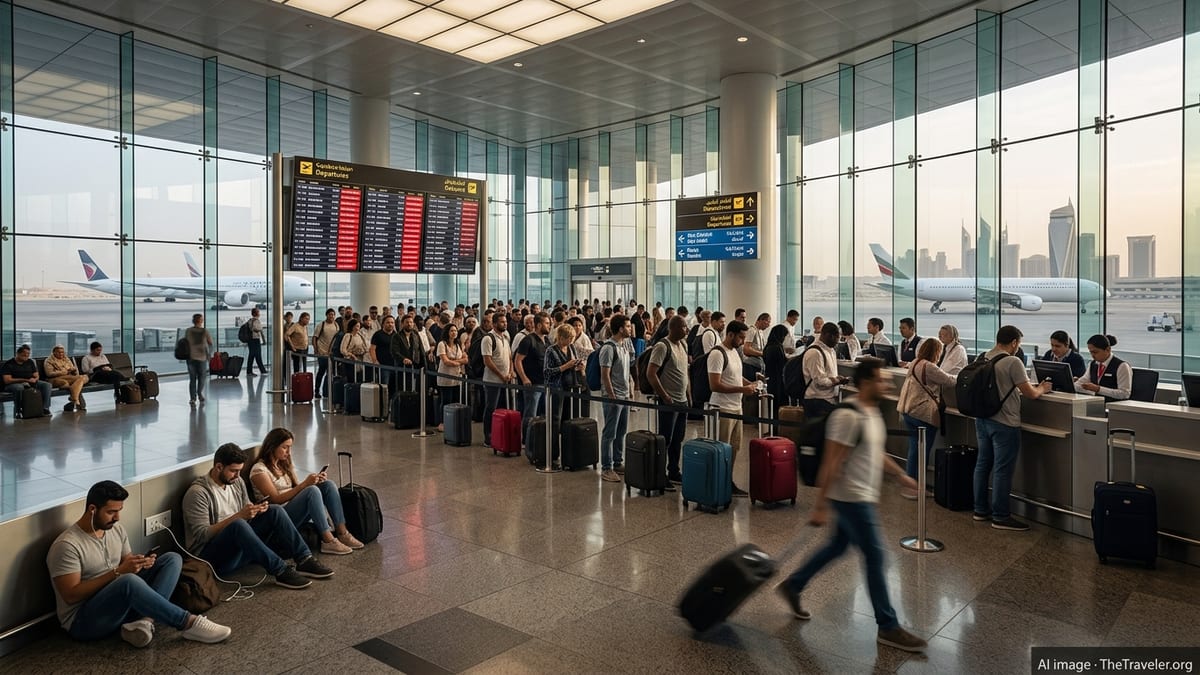
Middle East Conflict Sends Shockwaves Through Gulf Hubs
The latest round of hostilities involving Iran, Israel and the United States has led to widespread airspace closures across the Gulf and wider Middle East, forcing airlines to suspend or severely limit operations at key hubs in Abu Dhabi and Doha. Flight tracking data and aviation analytics cited in recent coverage indicate that airports in the United Arab Emirates and Qatar have seen large portions of scheduled traffic halted or diverted as states impose temporary restrictions for safety reasons.
Abu Dhabi based Etihad Airways and Doha based Qatar Airways sit at the centre of this disruption. Both carriers rely heavily on sixth freedom traffic that uses their hubs as transit points between Europe, Asia, Africa and Australasia. When airspace over parts of Iran, Iraq, Kuwait, Bahrain and other neighbours has been closed or constrained, long haul services are either cancelled outright or routed on longer, more fuel intensive paths, shrinking capacity and stranding passengers at intermediate points.
Industry reporting over the past fortnight has highlighted just how quickly the situation deteriorated, with several countries closing their skies and major Gulf airports temporarily suspending normal operations. Data from aviation analytics firms referenced in global travel and business media show that the combined daily passenger throughput for Emirates, Etihad and Qatar Airways normally exceeds 90,000 travellers, underscoring the scale of the current disruption.
As cancellations piled up, traditional customer service channels at both airlines have faced intense pressure. Call centres, social media support teams and airport ticketing desks have seen surging demand from travellers seeking rebooking, refunds or emergency accommodation while waiting for new routing options to open.
Flexible Rebooking, Waivers and Status Support for Loyal Flyers
In response to the evolving crisis, both Etihad and Qatar Airways have been refining a mix of commercial waivers and loyalty linked concessions aimed at offering more flexibility for disrupted customers. Publicly available policy documents, trade partner notices and traveller reports indicate that the carriers have been expanding eligibility for date and routing changes on affected tickets, sometimes without the usual fees or fare differences that would normally apply.
Qatar Airways, through updates circulated to travel trade partners and guidance shared with passengers, has introduced tiered rebooking options that allow customers on cancelled services to be moved to alternative flights within a defined time window. These frameworks typically prioritise keeping travellers in the same cabin and between the same or nearby cities, while also permitting transfers onto partner or interline airlines when Qatar Airways cannot operate a viable route due to closed airspace.
Within the Qatar Airways Privilege Club, elite members appear to be benefiting from enhanced flexibility. Information contained in recent explanatory materials and discussed in travel forums suggests that higher tier customers are being granted broader change options, including access to a wider pool of partner flights and more generous fee waivers than standard economy ticket holders. Some long standing members have reported temporary extensions of tier validity or Qpoints deadlines, reflecting the difficulty of maintaining status when travel through Doha is severely limited.
Etihad Guest, Etihad’s loyalty programme, has also come under focus as the airline navigates the crisis. While detailed changes have been less heavily publicised than some of Qatar’s structured rebooking tiers, guidance aimed at frequent flyers and training documents circulating online point to expanded use of “goodwill” gestures. These can include bonus miles, partial mileage refunds for disrupted award trips and case by case recognition for travellers who face significant delays or itinerary downgrades beyond their control.
Goodwill Miles and Award Flexibility Emerge as Key Tools
For both airlines, loyalty currencies have become a central tool for absorbing the shock of operational disruption. Travel education material and consumer oriented explainers published in recent months describe how Etihad Guest and Qatar Airways Privilege Club are being used to offer additional value when schedules fall apart, even when strict cash compensation is not mandated by local regulation.
In Etihad’s case, customer facing guidance about “goodwill” opportunities after a cancellation highlights scenarios where the airline may credit extra miles or make it easier to rebook award tickets on alternative dates. The intent, according to these materials, is to recognise the stress of missed connections, overnight delays or downsized aircraft while preserving the relationship with high value customers who frequently connect via Abu Dhabi on multi segment itineraries.
Qatar Airways is similarly leaning on its Privilege Club framework to retain loyalty at a time when many passengers may be wary of transiting Doha. Observers note that the airline has a track record of extending elite status and offering flexible Qpoints policies during previous periods of constrained travel, such as the early stages of the COVID 19 pandemic. Current discussions among frequent flyers suggest that the carrier is once again considering or implementing selective extensions and relaxed requalification thresholds in light of the 2026 conflict related closures.
Both airlines are also reported to be relaxing some usual restrictions on the use of miles for last minute award seats, particularly on partner carriers outside the most affected airspace. This allows stranded passengers to leverage their accumulated points to secure alternative routing via secondary hubs in Europe or Asia, reducing reliance on heavily disrupted Gulf corridors.
Passengers Navigate a Patchwork of Policies and Routes
Despite the expanded set of loyalty and commercial measures, passengers attempting to travel through the region continue to face a complex landscape of shifting rules and limited capacity. Travel forums and social media posts reveal highly varied experiences, with some Qatar Airways customers successfully rerouted onto partner airlines within one or two days, while others report long waits for call backs and uncertain timelines as airspace restrictions are updated.
For Etihad, anecdotal accounts indicate that outcomes can differ by booking channel, fare type and route. Travellers holding premium cabin tickets or higher Etihad Guest status often report more proactive assistance, such as alternative routings via alliance and codeshare partners, while those on lower cost fares sometimes receive more constrained options focused on the airline’s own network and a narrower rebooking window.
Travel industry commentators note that the pace at which policies are evolving adds another layer of difficulty. Commercial bulletins cited in trade media show that Qatar Airways has revised aspects of its disruption policy several times in recent weeks, adjusting refund eligibility dates and expanding the list of partner carriers that can carry rebooked passengers. Etihad is also periodically updating its guidance to agents and customers as the operational situation at Abu Dhabi International Airport changes with new security assessments.
Advisories from airports and national aviation regulators consistently urge travellers to monitor their bookings closely, stay alert to airline notifications and consider holding or using loyalty points with a degree of flexibility. For many frequent flyers, the value of elite status under these conditions is being tested in real time, as priority access to rebooking queues, lounge facilities and dedicated service channels can significantly influence how quickly a disrupted journey is put back on track.
Long Term Loyalty Stakes for Gulf Superconnectors
The current conflict driven shock is reviving questions about how resilient the Gulf hub model can be when regional geopolitics constrict vital air corridors. Analysts quoted in recent aviation industry coverage point out that carriers such as Etihad and Qatar Airways have invested heavily in premium products and loyalty ecosystems precisely to retain travellers even when external events cause temporary instability.
Revamping loyalty programmes and introducing targeted relief measures during crises may therefore serve a dual purpose. In the short term, expanded fee waivers, generous rebooking policies and goodwill miles can defuse frustration among passengers stuck far from home. Over the longer term, transparent and responsive handling of disruptions can strengthen brand perception and encourage travellers to continue routing complex itineraries through Abu Dhabi and Doha once conditions improve.
For now, the balance between operational constraints and customer expectations remains delicate. As airspace closures and security assessments evolve, Etihad and Qatar Airways are likely to keep refining loyalty and disruption policies, with further updates expected through internal bulletins, website advisories and trade partner communications. The way those changes are experienced by passengers on the ground will play a significant role in shaping future loyalty to the Gulf’s marquee airlines in an era of heightened geopolitical risk.