

More news on this day
Etihad Airways is deepening its engagement with Muslim travelers this Ramadan season, rolling out an expanded suite of inflight and on-the-ground services that blend authentic Emirati cuisine, faith-friendly amenities, and increasingly seamless connections for Umrah pilgrims bound for Saudi Arabia.
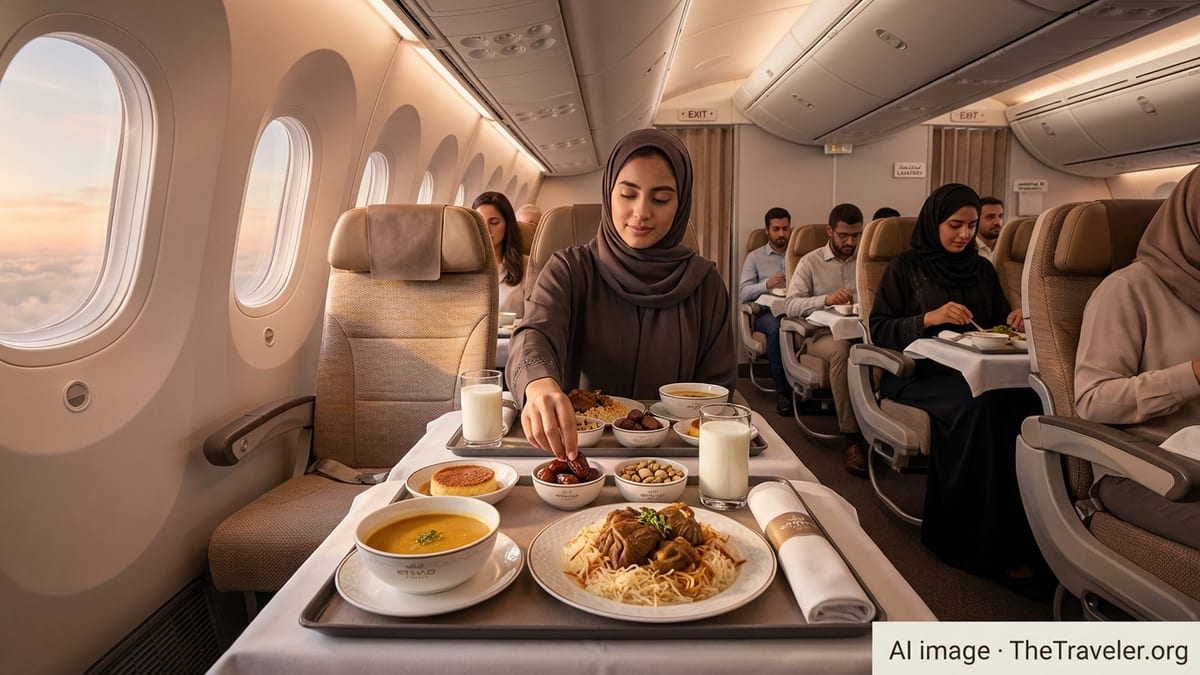
Ramadan Offerings Reflect Etihad’s Cultural Ambitions
As the holy month approaches, Etihad Airways is positioning its Ramadan program as a showcase of Emirati hospitality and a core pillar of its guest-experience strategy. Building on several years of seasonal activations, the Abu Dhabi-based carrier is using the 2025 and 2026 seasons to tighten the integration between dining, prayer support and onward religious travel, particularly to the holy cities of Makkah and Madinah.
Ramadan has long been a competitive arena for Gulf carriers, but Etihad’s latest initiatives stress authenticity and continuity rather than one-off gestures. The airline is expanding curated menus, charity partnerships and tailored services across cabins, lounges and inflight entertainment. Executives say the goal is to make observant Muslim travelers feel that their needs are understood at every stage of the journey, not only at the moment of breaking fast.
The strategy coincides with broader ambitions for Abu Dhabi as a cultural gateway and stopover hub. By anchoring its Ramadan operations in Emirati traditions and culinary heritage, Etihad is seeking to differentiate itself in a crowded regional market while reinforcing the United Arab Emirates’ identity as a hospitable, faith-conscious destination for visitors in transit to Saudi Arabia and beyond.
Authentic Emirati Menus Take Center Stage at Iftar and Suhoor
Culinary innovation is at the heart of Etihad’s Ramadan program, with the airline unveiling seasonal menus that spotlight regional ingredients and time-honored Emirati recipes. From the start of Ramadan, travelers across all cabins will find iftar and suhoor options incorporating lentil soups, spiced rice dishes and desserts built around dates, saffron and cardamom. Menus are crafted to be both familiar to Gulf residents and inviting to international passengers eager to experience local cuisine.
Premium cabins see the widest range of Emirati-inspired creations. First and Business travelers are being offered dishes such as rice-stuffed lamb shank with regional spices, chicken foga, braised lamb on vermicelli rice and a series of desserts that reinterpret classics for the sky, including warm date and olive oil cake with Vimto ice cream, pistachio kunafa cake and saffron-infused milk cakes. The focus is on comforting, slow-cooked flavors designed to be gentle on those who have been fasting while still delivering a sense of special occasion.
In Economy, Etihad is emphasizing accessible versions of the same flavor profile, with mains such as Arabic-braised lamb over vermicelli rice and a rotating selection of traditional sweets. The carrier has also introduced lighter, healthy iftar salads and options tailored for travelers who prefer a modest meal after sunset. Across cabins, chefs have been directed to prioritize regional sourcing and premium ingredients, positioning the menus as both an expression of national identity and an example of the airline’s broader hospitality standards.
Lounges in Abu Dhabi and Abroad Extend the Ramadan Experience
On the ground, Etihad is transforming its lounges into Ramadan gateways, particularly at Abu Dhabi’s Zayed International Airport. Business and First guests breaking their fast before departure can expect a full iftar buffet built around Emirati signatures and wider regional favorites. Hot dishes such as lemon and black lime marinated lobster, beef and okra saloona, and a range of grilled seafood and meats are being served alongside mezze, soups and freshly baked breads.
The dessert counters in Abu Dhabi have been curated to mirror the inflight experience, with kunafa and rose cake, Arabic coffee tiramisu and warm Umm Ali among the highlights. Beverage selections feature traditional Ramadan drinks including laban, karkade and fruit-based refreshments intended to rehydrate travelers ahead of overnight flights. The airline’s lounges in key outstations, including London Heathrow and select North American gateways, are also offering modified Ramadan menus and sunset snacks tailored to local supply chains but aligned with the core Abu Dhabi concept.
The lounge experience extends beyond food. Dedicated prayer rooms, clearly signposted ablution areas and staff trained to advise on prayer times and qibla orientation are intended to reduce travel stress for fasting passengers. For many Umrah-bound guests beginning their journey in Abu Dhabi, these facilities form a bridge between the rhythms of home and the spiritual focus of the pilgrimage that awaits in Saudi Arabia.
Iftar Bags, Prayer Support and E-Box Content for Fasting Travelers
Recognizing that many flights operate outside traditional meal windows, Etihad is supplementing its scheduled service with flexible iftar and suhoor solutions. Travelers whose flight times do not align neatly with sunset or pre-dawn hours can request takeaway bags prepared with dates, water, laban and light snacks. These can be collected before boarding or upon arrival, allowing guests to break their fast in line with religious guidelines even when they are in transit.
Onboard, cabin crew are briefed on fasting protocols and equipped to make announcements for local maghrib times on routes where passengers are likely to be observing Ramadan. Prayer mats are available on key services, and aircraft feature electronic qibla indicators to help travelers orient themselves correctly. These touches, while relatively low-tech, are frequently cited by passengers as crucial in preserving the spiritual integrity of their journey.
Etihad’s inflight entertainment platform, E-BOX, is also receiving a Ramadan-focused refresh. In addition to recordings of the Quran and religious lectures, the airline is programming documentaries and cultural segments that showcase Ramadan traditions across the Muslim world. For many non-Muslim travelers, this content offers a contextual window into the significance of the month, while fasting passengers can use quiet periods of the flight for reflection and learning that align with the season’s emphasis on introspection.
Seamless Umrah Connections via Abu Dhabi’s Expanding Saudi Network
While culinary and cultural experiences are central to Etihad’s Ramadan positioning, the airline is also sharpening its role as a transit bridge for Umrah pilgrims. Recent network decisions have strengthened point-to-point and connecting options from Abu Dhabi to Saudi Arabia, with a particular focus on Jeddah and Medina, the gateways to Makkah and Islam’s second-holiest city. New and increased frequencies are timed to feed East–West traffic, allowing travelers from Asia, Europe and North America to reach the Kingdom on a single coordinated itinerary.
A key development was the inauguration of non-stop Abu Dhabi–Medina services, which have added capacity for both religious and business traffic while easing pressure on Jeddah as the sole arrival point for many pilgrims. The flights are operated several times a week on narrowbody aircraft and are slated for further frequency increases. For observant passengers, the ability to arrive closer to the Prophet’s Mosque without a lengthy domestic transfer is a material improvement in both convenience and spiritual focus.
Etihad is also leveraging Abu Dhabi’s visa-on-arrival regime and its own stopover programs to position the city as a calm, structured staging point for Umrah journeys. Pilgrims can opt for short hotel stays, prayer time in local mosques and rest periods before continuing to Saudi Arabia. This layered approach, combining network breadth with ground support, underscores the airline’s view that religious travel is an end-to-end experience requiring more than simply adding seasonal flights.
Abu Dhabi as a Ramadan Stopover and Cultural Gateway
The strengthening of Umrah connectivity dovetails with Abu Dhabi’s ongoing efforts to market itself as a destination in its own right, particularly during Ramadan. For Etihad, this creates an opportunity to offer pilgrims and leisure travelers curated stopovers that blend religious observance with exposure to the emirate’s cultural and culinary landscape. Packages promoted around the Ramadan period often highlight access to local iftars, mosque visits and waterfront night markets that come alive after sunset.
Within this framework, Etihad acts as both carrier and curator, integrating its own lounge and inflight services with experiences available across the city. Travelers arriving a day or two before continuing to Saudi Arabia can break fast at renowned hotels, sample Emirati desserts in traditional settings or explore museums and galleries operating extended evening hours. The airline’s messaging stresses that such experiences are not meant to distract from the spiritual core of Umrah, but rather to complement it by showcasing the region’s broader Islamic heritage.
For Abu Dhabi’s tourism authorities, Etihad’s Ramadan and Umrah strategies offer a channel to engage visitors who might otherwise treat the city purely as a transfer point. The hope is that positive impressions formed during a carefully managed Ramadan stopover will translate into repeat visits at other times of the year, supporting the emirate’s long-term diversification away from oil and deepening its identity as a crossroads of cultures.
Competitive Landscape and Evolving Expectations for Ramadan Travel
Etihad’s renewed emphasis on Ramadan programming and Umrah connectivity comes amid growing competition across the Gulf for religious and culturally attuned travel. Regional rivals are also investing in seasonal menus, iftar boxes and enhanced services for fasting passengers. In this context, Etihad’s focus on Emirati authenticity and integrated pilgrimage logistics is designed to set it apart, particularly among travelers who value consistent service standards across cabins and touchpoints.
Industry observers note that passenger expectations have evolved in recent years. Fasting travelers now assume that full-service carriers will do more than supply dates and water at sunset; they increasingly look for prayer facilities, flexible meal timing, charitable initiatives and digital tools that support religious observance. Etihad’s offering, which couples traditional hospitality with modern conveniences such as electronic qibla pointers and curated streaming content, represents one answer to this shift.
Looking ahead, analysts expect Ramadan-specific services to become a year-on-year differentiator rather than a temporary add-on. For Etihad, that likely means continuing to refine menus, adjust schedules to better match iftar times on key corridors and deepen partnerships with charities and cultural institutions. The airline’s current efforts to elevate Ramadan travel through authentic Emirati dining, immersive cultural experiences and smoother Umrah connections suggest that the holy month will remain a central test of its broader hospitality strategy.