

More news on this day
Etihad Airways has extended the suspension of all scheduled commercial flights to and from Abu Dhabi until 06:00 UAE time on Friday, March 6, as regional airspace closures linked to ongoing geopolitical tensions continue to upend travel plans across the Middle East and beyond.
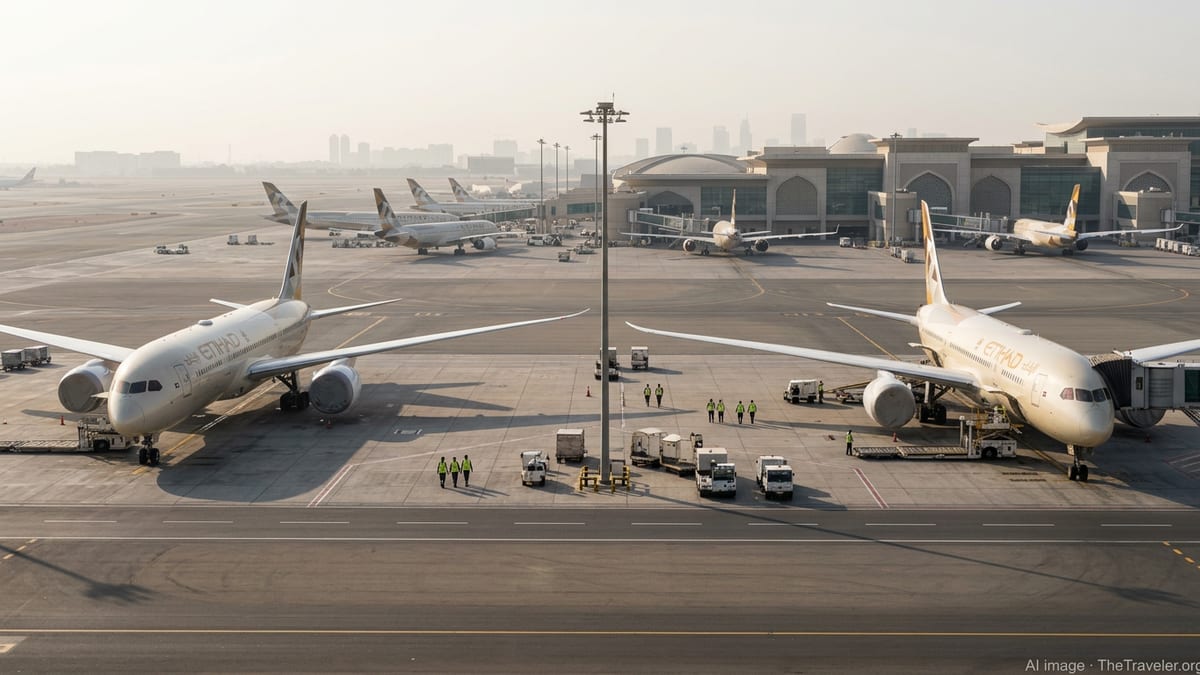
Extended Suspension Caps Days of Severe Travel Disruption
The Abu Dhabi based carrier confirmed that its regular flight schedule remains halted through the early hours of March 6, citing continued airspace restrictions affecting multiple corridors across the region. The move follows several days of rolling cancellations and partial resumptions, as authorities and airlines navigated fast changing safety assessments.
All previously scheduled commercial departures and arrivals at Abu Dhabi’s Zayed International Airport remain suspended under the extended advisory, though the airline has operated a limited number of special and repatriation flights on select routes. Aviation data providers estimate that thousands of passengers have been stranded or forced to reroute since the disruptions began over the weekend.
The extension places Etihad broadly in line with other Gulf carriers that have lengthened their own suspensions as key regional airspace remains either closed or heavily constrained. Industry analysts say the staggered return of services reflects an attempt to balance passenger demand with evolving risk assessments and the need to maintain flexible routing options.
While some long haul aircraft have been able to skirt affected areas using longer flight paths, airlines have warned that diversions come with significant operational costs and capacity limitations, further complicating efforts to restore normal schedules.
Limited Network to Resume After March 6 Cutoff
Etihad has indicated that, subject to regulatory approvals and the wider airspace situation, it plans to resume a limited commercial schedule from March 6, gradually reconnecting Abu Dhabi with a core set of international destinations. Early outlines of the network focus on major hubs in Europe, Asia and North America, with flights to cities including London, Frankfurt, New York and Toronto expected to operate within a restricted window.
The initial schedule, which runs through March 19, is designed to prioritise higher demand routes and provide options for guests stranded by earlier cancellations. Capacity will remain significantly below normal levels, and the airline has cautioned that all services are still subject to change at short notice if airspace conditions deteriorate or new restrictions are imposed.
Travel industry observers say the measured restart reflects both operational realities and the need to manage airport congestion. With many passengers awaiting rebooking and aircraft and crew out of position around the world, carriers must rebuild their networks in stages rather than attempting an immediate full scale return.
For Etihad, the gradual rollout also offers a way to reintroduce connectivity through Abu Dhabi’s hub while maintaining the flexibility to add or remove flights as the regional picture becomes clearer in the days ahead.
What Affected Passengers Are Being Told
Etihad has urged customers not to travel to the airport unless they have received direct confirmation from the airline or hold a newly confirmed booking on one of the resumed services. Travellers are being advised to monitor their flight status closely and ensure their contact details are correct in their bookings so that they can receive real time updates.
Guests booked on flights through at least March 21 are being offered flexible options, including complimentary rebooking onto alternative Etihad services once they become available, or refunds processed either directly through the airline or via travel agents. The carrier has said that priority will be given to passengers whose original travel dates fell during the peak disruption period.
Travel agents report a surge in calls from customers seeking clarity on whether to wait for an automatic rebooking, switch to other airlines that are operating on modified routings, or postpone trips entirely. Many passengers with long planned holidays or family visits have been forced to make last minute changes or absorb additional accommodation and transit costs while they wait for new itineraries.
Consumer advocates are encouraging affected travellers to document all expenses incurred as a result of the disruption and to familiarise themselves with the conditions of carriage and any applicable passenger rights regimes in the jurisdictions they are travelling through.
Knock On Effects Across the Gulf and Beyond
The extension of Etihad’s suspension through March 6 is part of a broader wave of operational changes rippling across Gulf aviation. Emirates, Qatar Airways and several regional low cost carriers have also curtailed services, either suspending flights entirely to certain destinations or operating a skeleton network on longer, more circuitous routings.
Airports in the United Arab Emirates have been operating well below normal capacity, with terminals at times crowded by stranded passengers awaiting updates yet far quieter than typical peak season days in terms of actual departures. Ground handling companies, retailers and airport service providers are feeling the impact of reduced traffic, even as they work extended hours to support rebooked and repatriation flights.
Beyond the Gulf, European and Asian carriers that typically overfly affected airspace have reconfigured routes, adding flight time and fuel burn on journeys between Europe, Asia and Africa. Some airlines have issued schedule changes for days ahead to allow for more predictable operations while the regional situation evolves.
Aviation experts note that while the industry has experience rerouting around conflict zones, the current cluster of closures affects multiple key corridors at once, magnifying the operational and financial strain. The result is a patchwork of temporary schedules that may shift rapidly as more data becomes available.
Advice for Travellers With Upcoming Itineraries
For travellers with imminent flights involving Abu Dhabi, experts recommend treating the March 6 suspension cutoff as a pivot point rather than a guarantee of immediate normality. Even as limited services resume, many itineraries involving connections or onward segments may remain disrupted for several days.
Passengers are being advised to monitor airline and airport communications closely, avoid speculative trips to the airport, and consider the potential risks of tight connections through the region in the near term. Those with flexibility are weighing whether to delay non essential travel until schedules stabilise, especially if journeys involve multiple stops or long layovers.
Travel planners say that for essential trips, booking fully refundable fares where possible, maintaining up to date contact details and allowing extra time for potential rerouting are prudent steps. Some travellers are opting for alternative routings via hubs that are less directly affected, even if journeys are longer or more expensive.
With Etihad and other Gulf carriers signalling that schedules will be rebuilt gradually following the March 6 milestone, industry watchers expect several more days of uncertainty before a clearer pattern of operations emerges across the region’s key air corridors.