

More news on this day
Etihad Airways will introduce its flagship Airbus A380 on the Abu Dhabi to Bangkok route from October 25, 2026, significantly increasing capacity on one of its most popular leisure corridors and bringing the airline’s ultra-premium Residence suite to Thailand for the first time.
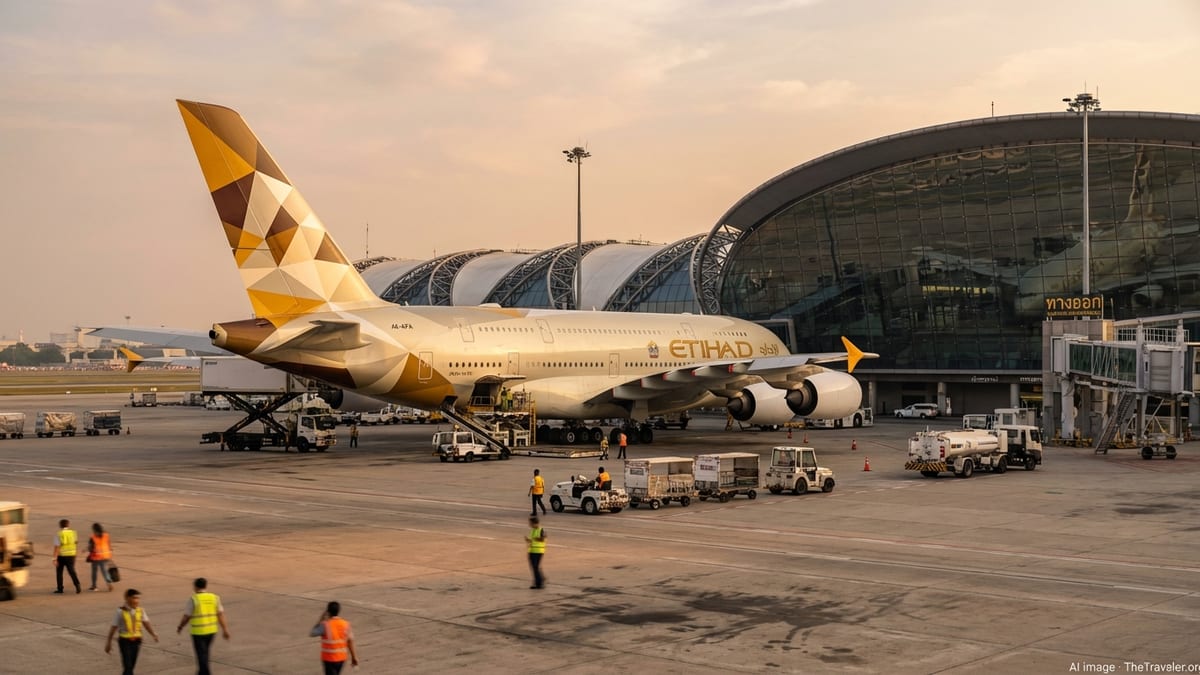
A380 Debut in Thailand Targets Soaring Demand
The move will see the double decker superjumbo take over Etihad’s evening daily service between Abu Dhabi’s Zayed International Airport and Bangkok’s Suvarnabhumi Airport, timed to capture both overnight traffic from the Gulf and onward connections to Europe and the Middle East. The deployment marks the A380’s debut in the Thai market and underscores Bangkok’s importance within Etihad’s rapidly growing Asian network.
Etihad describes Bangkok as one of its most popular leisure routes, fuelled by strong two-way tourism flows and robust connecting traffic from Europe and the Gulf into Thailand. By assigning its highest-capacity aircraft to the city, the carrier is positioning itself to ride a continued boom in Thai tourism while reinforcing Abu Dhabi’s role as a stopover and long-haul transfer hub.
The A380 introduction is scheduled for the start of the 2026–27 winter season, a period that typically brings peak holiday traffic into Thailand. The upgauge is designed to meet that seasonal surge while providing additional year-round seats on a market that has recovered strongly in the wake of global travel disruptions.
More Seats and Flagship Luxury in the Sky
Etihad’s four-class A380 layout represents one of the most distinctive cabin products in the industry, and its arrival on the Bangkok route will markedly increase both overall capacity and the share of premium seating. The aircraft features The Residence, a three-room suite with separate living room, bedroom and private ensuite shower, sold for up to two guests seeking a high level of privacy and service.
Beyond The Residence, the jet offers nine First Apartments with reclining lounge chairs and large lie-flat beds, as well as access to a dedicated shower room. The Business Class cabin provides 70 fully flat seats with direct aisle access, clustered around The Lobby, an inflight lounge and social space situated on the upper deck between First and Business.
In Economy, the aircraft carries 337 seats including 68 Economy Space seats with additional legroom, allowing Etihad to absorb more price-sensitive leisure demand while maintaining differentiated comfort options. Taken together, the mix of cabins gives the airline a flexible tool to serve a broad spectrum of passengers from backpackers to high-spend luxury travellers on the Abu Dhabi–Bangkok axis.
Strengthening Abu Dhabi’s Global Hub Strategy
The decision to assign an A380 to Bangkok comes as Etihad and Zayed International Airport pursue ambitious growth targets across both passenger volumes and connectivity. Etihad expanded its operating fleet to a record 127 aircraft in 2025, carried 22.4 million passengers and reported its strongest financial performance to date, signalling confidence to continue investing in high-capacity aircraft on core routes.
Bangkok’s new status as an A380 destination places it alongside cities such as London, Paris, New York and Singapore in Etihad’s portfolio of flagship routes. For Abu Dhabi, it further strengthens links to Southeast Asia, an increasingly important source market for both point-to-point tourism and long-haul transfer traffic heading to Europe, North America and the Middle East.
The added seats are expected to support Abu Dhabi’s tourism ambitions, with the emirate seeking to draw more visitors through stopover programs and short city breaks. Passengers travelling between Europe and Thailand can break their journey in the UAE capital, leveraging improved schedules and enhanced onboard products as part of a broader strategy to elevate Abu Dhabi’s profile as a global gateway city.
Competitive Pressure in a Crowded Thailand Market
Etihad’s A380 deployment also reflects intensifying competition for Thailand-bound traffic from Gulf and Asia-Pacific carriers. Rival airlines have steadily rebuilt and expanded capacity into Bangkok and Phuket, pairing attractive fares with premium cabin products aimed at long-haul travellers from Europe, the Middle East and the Americas.
By sending its largest and most recognisable aircraft to Bangkok, Etihad is signaling that it intends not only to defend but to grow its share of this lucrative market segment. The presence of The Residence and a generous First and Business Class footprint provides a clear differentiator for high-yield passengers, while the dense Economy cabin helps the airline compete on volume during peak periods such as year-end holidays and key regional festivals.
Industry analysts note that the superjumbo’s return to more leisure-heavy routes, including Bangkok, underscores a broader trend of airlines pairing their highest-capacity aircraft with destinations where demand patterns are both seasonal and consistently strong. For Etihad, the strategy dovetails with a multi-year fleet expansion and a focus on destinations where premium product investment can translate into higher yields and stronger brand visibility.
What Travelers Can Expect From October 2026
From October 25, 2026, Etihad’s evening departure from Abu Dhabi to Bangkok is set to be operated by the A380 on a daily basis, subject to regulatory approvals and operational planning. The schedule is designed to offer convenient overnight travel to Thailand and daylight connectivity back to Abu Dhabi, aligning with onward banks of flights across Europe, the Middle East and parts of Africa.
For passengers, the shift to the A380 will be immediately visible, from the double boarding bridges at the gate to the quieter, more spacious cabins typical of the type. Travellers in premium cabins will gain access to larger suites, enhanced privacy and additional inflight amenities, while Economy passengers benefit from a wider cabin cross-section and more overall seat availability on busy departure dates.
As booking systems reflect the aircraft change, Etihad is expected to promote the A380 service as a key selling point for both Thailand-bound holidaymakers and Abu Dhabi visitors planning multi-destination itineraries. With the move, Bangkok joins a select group of cities highlighted by the airline as showcase markets for its most distinctive aircraft, underlining the strategic importance of the Abu Dhabi–Bangkok route in the years ahead.