

More news on this day
Etihad Airways has begun restoring crucial long-haul links from Abu Dhabi, including services to Toronto and other major global hubs, as the Gulf carrier cautiously resumes a limited schedule from March 6 while navigating ongoing airspace disruptions across the Middle East.
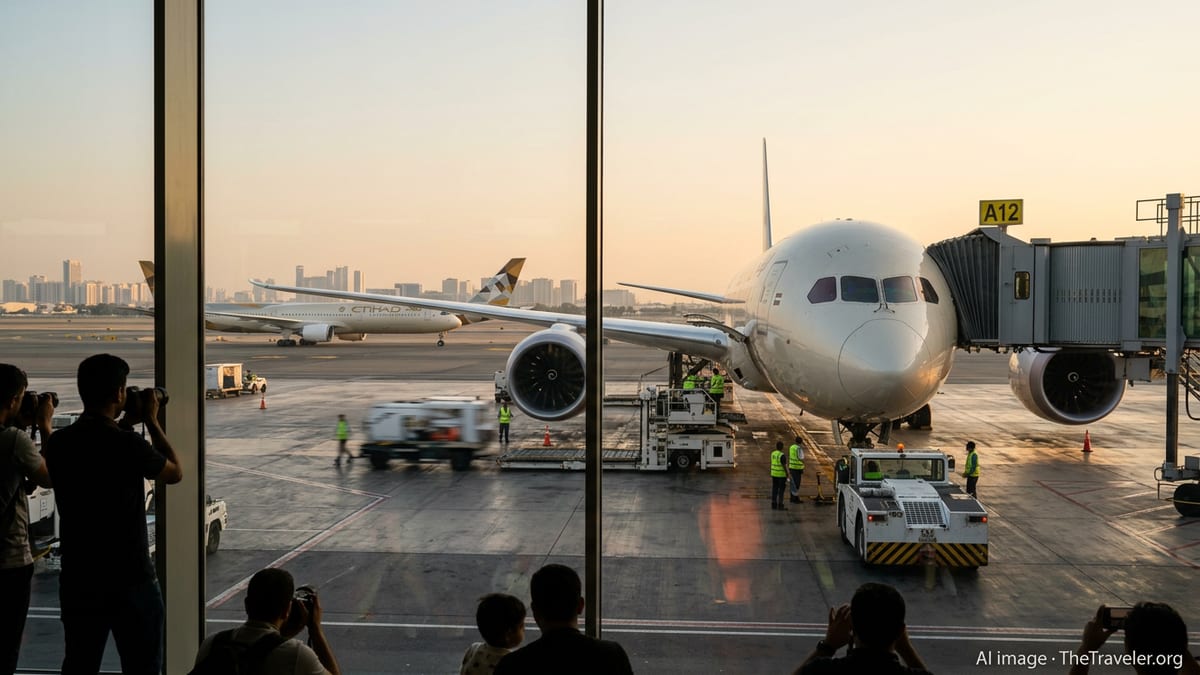
Limited Schedule Brings Toronto Back on the Map
Toronto has rejoined Etihad Airways’ global network as part of a restricted flight programme running from March 6 to March 19, re-establishing a vital transatlantic corridor between Abu Dhabi and Canada’s largest city. The route, operated from Zayed International Airport, is among a select group of long-haul services the airline has prioritised after days of widespread suspensions triggered by regional conflict and airspace closures.
The restart aligns Toronto with other key gateways including Frankfurt, Sydney, Bangkok, New York, London and Paris, which have all returned to the schedule on a limited basis. According to Etihad’s latest operational update, the carrier is focusing on reconnecting major business and diaspora markets where demand for essential travel has remained strong despite the turmoil.
For Toronto-bound passengers, the resumption offers a critical lifeline. Canadians, expatriate workers and students who had been stranded or forced into complex rerouting now have a more direct option back to North America via Abu Dhabi, even as the airline warns that schedules remain subject to change at short notice.
Travel agents in both Toronto and the Gulf report a surge of enquiries following confirmation that flights are operating again, but they caution that availability is tight and that flexible planning remains essential for anyone transiting through the region in the coming weeks.
From Grounding to Gradual Reopening
Etihad’s return to the skies follows an unprecedented shutdown of scheduled services as conflict involving the United States, Israel and Iran spilled across the Middle East, prompting sweeping airspace closures and thousands of flight cancellations. For several days, Abu Dhabi’s role as a major global hub was sharply curtailed, with only ad hoc or repatriation flights operating while safety and security assessments were carried out.
From March 6, the airline shifted to a cautiously expanded pattern, announcing a limited commercial schedule to around 70 destinations worldwide. Europe is again linked via cities such as London, Paris and Frankfurt, while North America is served through New York and Toronto. In Asia-Pacific, services have resumed to Bangkok, Sydney and other high-demand routes, with frequencies and timings trimmed to reflect operational constraints.
The carrier has stressed that this is not a full restoration of its pre-crisis timetable. Instead, flights are being added in phases as regional airspace is gradually reopened and as aviation authorities clear specific corridors. Industry trackers note that many aircraft and crews are still out of normal rotation, and that even operating flights may face rerouting or extended flight times to avoid sensitive areas.
Airports across the Gulf, which normally handle a substantial share of traffic between Europe, Asia and Australia, continue to operate under unusual conditions, with schedules for many airlines changing by the hour. Within this volatile environment, Etihad’s measured restart signals that at least some degree of long-haul connectivity is returning for global travellers.
Safety-First Strategy in a Volatile Region
Etihad has positioned the March 6 restart as the outcome of extensive coordination with regulators, air navigation providers and security agencies. The airline says it is only operating routes for which it has clear risk assessments and approved flight paths, and it continues to warn customers that services may be adjusted as the situation evolves.
To minimise crowding at Zayed International Airport, Etihad is asking passengers not to travel to the terminal unless they hold a confirmed booking on an operating flight or have been contacted directly by the airline. Travellers are being urged to check flight status repeatedly in the 24 hours before departure and to ensure their contact details are correct so that they can receive real-time updates.
The carrier has also extended flexible rebooking and refund policies for customers whose travel plans fall within the disruption window. Those with tickets issued before the end of February and travel dates through much of March are being offered options to change dates or reroute journeys without standard penalties, reflecting the extraordinary circumstances surrounding the regional crisis.
Aviation analysts say that such a safety-first but passenger-focused approach is critical to restoring confidence. With images of stranded travellers and diverted flights still dominating news coverage, clear communication and conservative scheduling are seen as essential steps toward rebuilding trust in the viability of Middle East transit hubs.
What the Restart Means for Global Travelers
For international passengers, Etihad’s move to bring back Toronto and a roster of other long-haul destinations offers both opportunity and complexity. On one hand, travellers now have more options to return home or continue previously postponed journeys. On the other, the patchwork nature of the recovery means itineraries may involve longer routings, last-minute changes or overnight layovers.
Travel specialists recommend that passengers using Abu Dhabi as a connecting point build in generous buffer times and avoid tight connections, particularly when linking between different airlines. They also advise booking directly with carriers where possible, as this can simplify rebooking if flights are later cancelled or rescheduled due to shifting airspace restrictions.
Corporate travel managers are closely watching the situation, especially for routes linking financial and commercial centres such as Toronto, New York, London and Frankfurt. Many companies had temporarily frozen trips through the Gulf or rerouted staff via alternative hubs, but the return of scheduled services is prompting a gradual thaw in policies for essential business travel.
Leisure travellers, particularly those heading to Southeast Asia and Australia, face a more complicated picture. While flights to Bangkok, Sydney and other holiday destinations are back on Etihad’s map, capacity remains constrained and prices on some dates have spiked. Industry observers expect a staggered recovery in tourism flows as airlines across the region slowly rebuild their networks.
Toronto’s Strategic Role in Etihad’s Network
Within Etihad’s revived schedule, Toronto stands out as a strategically important North American destination. The route connects Abu Dhabi not only with Canada’s largest urban and financial centre but also with extensive onward domestic and transborder networks operated by local carriers, giving passengers a single-stop option between the Gulf, South Asia, Southeast Asia and cities across Canada and the United States.
The reinstated service is particularly significant for Canada’s sizeable Middle Eastern and South Asian communities, many of whom rely on Gulf carriers for family visits, education and work-related travel. With Etihad flights once again linking Abu Dhabi to Toronto, these passengers regain a key bridge that had been abruptly cut during the height of the disruption.
Tourism bodies in both Canada and the United Arab Emirates are also watching the restart closely. While immediate demand is driven largely by necessity rather than leisure, the reappearance of Toronto on Etihad’s route map is seen as a positive sign that long-haul visitor flows between the two countries can be rebuilt once regional conditions stabilise.
For now, Etihad’s message to Toronto passengers and global travellers alike is one of cautious optimism. Seats are back on sale, aircraft are returning to the skies and familiar city pairs are reappearing on departure boards, even as the airline continues to navigate a fragile and fast-changing Middle East airspace environment.