

More news on this day
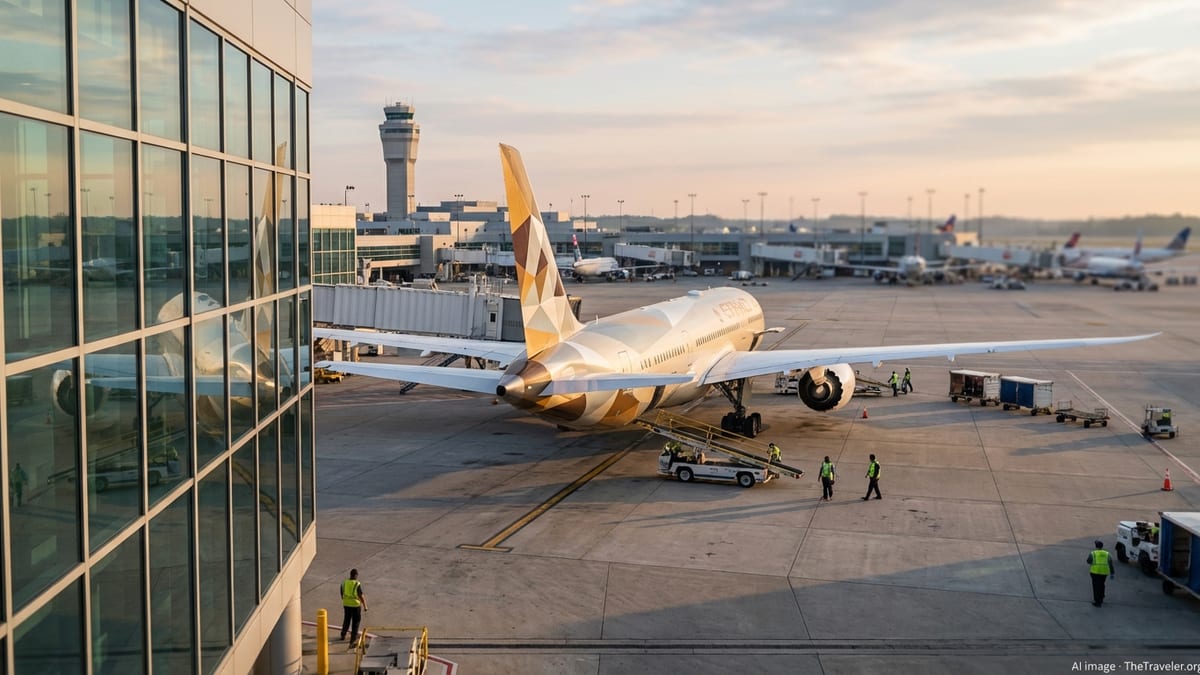
Etihad Airways is set to launch a new ultra-long-haul route between Charlotte and Abu Dhabi in March 2026, establishing the longest nonstop flight from Charlotte Douglas International Airport and marking a major expansion of Middle East connectivity for the U.S. Southeast.
Earlier Launch Solidifies Etihad’s U.S. Expansion Strategy
Etihad Airways will now begin flying between Charlotte Douglas International Airport and Abu Dhabi’s Zayed International Airport on March 20, 2026, several weeks earlier than originally planned. The carrier initially earmarked early May 2026 for the launch before advancing the start date, underscoring its confidence in demand from one of America’s fastest-growing metropolitan areas.
The four-times-weekly service will make Charlotte the newest U.S. destination in Etihad’s growing transatlantic network and its first route linking the United Arab Emirates with North Carolina. With the addition, Charlotte joins New York, Chicago, Washington, Boston and Atlanta as part of the Abu Dhabi-based airline’s North American portfolio, strengthening two-way traffic for both business and leisure travelers.
The decision to bring the launch date forward follows strong interest from corporate partners, tourism bodies and the local diaspora traveling to the Middle East, Indian Subcontinent and broader Asia-Pacific region. Industry observers say the route is also a strategic move in the ongoing competition among Gulf carriers and U.S. hubs to capture long-haul connecting traffic.
Etihad’s move aligns with broader growth at Zayed International Airport, which is positioning itself as a major global transfer point. The Charlotte route is part of a wider 2026 network build-out that includes new services to Calgary and several European destinations, signaling an aggressive push to expand the airline’s global footprint.
Charlotte’s Longest Nonstop Flight and a New Middle East Gateway
The new Abu Dhabi service will instantly become Charlotte Douglas International Airport’s longest nonstop route by flight time and distance. The journey between the two cities covers roughly 7,400 miles and is scheduled at close to 15 hours westbound, placing it firmly in the ultra-long-haul category.
For Charlotte, the route marks a milestone: its first direct connection to the Middle East and a significant expansion of its role as an international gateway. The airport, which has seen record passenger volumes in recent years, has long been dominated by North American and transatlantic services. The Abu Dhabi link will open one-stop access to dozens of destinations across the Gulf, India, Africa and Asia.
Local officials say the flight will help diversify the airport’s global reach beyond its traditional European and Latin American strongholds. For travelers in the Carolinas and surrounding states, the route offers new options not only to Abu Dhabi but also to onward cities such as Mumbai, Delhi, Bangkok and Manila via Etihad’s hub.
The service is expected to attract a mix of corporate and leisure demand, from financial-sector travelers and motorsport professionals to tourists drawn by Abu Dhabi’s cultural landmarks, beaches and desert landscapes. The new long-haul link is also likely to appeal to the sizeable South Asian and Middle Eastern communities in the broader Southeast region who currently rely on connections via other U.S. gateways.
Route Details: Schedule, Aircraft and Onboard Experience
Etihad plans to operate the Charlotte route four times per week, with flights typically scheduled on Mondays, Wednesdays, Fridays and Sundays in each direction. Eastbound and westbound timings are designed to support same-day connections at Zayed International Airport as well as convenient departure and arrival windows for local passengers in both cities.
The flight from Abu Dhabi is slated to leave in the early morning and arrive in Charlotte late morning, giving inbound travelers a full afternoon to connect onward within the United States or continue their journey by road. The return service from Charlotte is scheduled for mid-afternoon, reaching Abu Dhabi around midday the following day, an arrival bank that dovetails with a wide range of onward Etihad departures across its network.
Etihad will deploy its Boeing 787-9 Dreamliner on the Charlotte route, featuring a two-class configuration with Business and Economy cabins. The aircraft is known for improved fuel efficiency, lower cabin noise and larger windows, attributes that are particularly important on flights stretching toward 15 hours.
Business-class passengers can expect fully flat beds, direct aisle access on most seats and curated dining with multi-course meals, while Economy travelers will have access to personal entertainment screens, USB charging and ergonomically designed seats. The airline is also promoting its inflight connectivity, upgraded menus and wellness-focused touches intended to ease the effects of ultra-long-haul travel.
US Preclearance and Seamless Connections via Abu Dhabi
One of Etihad’s key selling points for the new route is the presence of a U.S. Customs and Border Protection Preclearance facility at Zayed International Airport in Abu Dhabi. Passengers traveling from Abu Dhabi to Charlotte will have the option to complete U.S. immigration and customs formalities before boarding, enabling them to arrive in North Carolina as domestic passengers.
This arrangement can significantly shorten arrival times and reduce congestion at Charlotte Douglas International Airport for inbound travelers. Instead of queuing at immigration upon landing, precleared passengers can proceed directly to baggage claim or onward domestic connections. The setup provides a tangible competitive advantage for Etihad compared with carriers operating from hubs without such facilities.
On the return journey, travelers originating in Charlotte will be able to connect in Abu Dhabi to destinations across the Middle East, Africa and Asia with protected connection times and coordinated schedules. The airline is positioning the new service as a gateway not only to the United Arab Emirates but also to secondary cities that can be reached in a single stop, reducing total travel time compared with traditional routings via Europe.
Etihad’s Abu Dhabi hub has been undergoing a broader upgrade, with a new terminal complex and investments in digital infrastructure, lounge experiences and security processes. These improvements are intended to support smoother transfers for passengers arriving on long-haul services like the Charlotte flight, where connectivity and comfort in the connecting hub can be a decisive factor in route choice.
Economic and Tourism Impact for Charlotte and the Carolinas
Local leaders in Charlotte and across North Carolina view the new Abu Dhabi connection as a catalyst for economic growth and tourism. By offering a direct link to the capital of the United Arab Emirates, the route is expected to stimulate business travel, investment flows and trade between the U.S. Southeast and the Gulf region.
Charlotte has emerged as a major banking and financial center, home to the headquarters and regional hubs of several large institutions. For those firms, the new flight provides a faster and more predictable pathway to Abu Dhabi and onward to markets in the Middle East and South Asia, where financial services, infrastructure and energy projects are expanding.
Tourism bodies anticipate that the route will also encourage inbound travel from the Gulf and Asia to the Carolinas. Visitors will gain easier access to Charlotte’s cultural attractions, sports events and convention facilities, as well as to regional destinations such as the Blue Ridge Mountains and the Carolina coast. Travel officials note that travelers from emerging markets are increasingly seeking new U.S. destinations beyond the traditional coastal gateways.
Air cargo and belly freight are expected to benefit as well. The Boeing 787-9’s cargo capacity will support exports such as high-value manufacturing goods, automotive components and specialized electronics, while facilitating imports from the Middle East and Asia. Over time, the additional freight capacity could strengthen North Carolina’s position in global supply chains, particularly for time-sensitive and high-margin products.
Strategic Role Within Etihad’s North American Network
The Charlotte route plays a distinctive role within Etihad’s North American strategy. While cities like New York and Chicago serve as large origin-and-destination markets with substantial point-to-point demand, Charlotte functions primarily as a connecting hub for domestic traffic. By tapping into that network, Etihad aims to draw passengers from across the southeastern and mid-Atlantic United States.
The airline’s partnerships and codeshare agreements with American carriers, including a close relationship with American Airlines at Charlotte, are expected to be central to the route’s success. Through coordinated schedules and through-ticketing, travelers from secondary cities such as Raleigh, Nashville or Charleston will be able to connect via Charlotte to Abu Dhabi on a single itinerary.
Industry analysts say that this model mirrors Etihad’s approach in other U.S. hubs, where the carrier has leveraged alliances to feed its long-haul flights with domestic traffic. By building a presence in a major hub dominated by a large U.S. airline, Etihad can access a broad catchment area without operating numerous separate U.S. routes.
The new service also strengthens competitive dynamics among Middle Eastern carriers serving the United States. By adding Charlotte, Etihad differentiates its network with a Southeast-focused gateway that is not currently served nonstop to the Gulf by other major Middle Eastern airlines, potentially capturing premium and connecting traffic that might otherwise travel via Europe or other U.S. ports of entry.
Implications for Travelers Across the U.S. Southeast
For travelers throughout the U.S. Southeast, the Charlotte to Abu Dhabi route offers a new option that could reshape long-haul trip planning. Instead of routing via northeastern gateways or European hubs, passengers in cities around the region will be able to connect through Charlotte and then travel directly to the Gulf and beyond.
This may prove particularly attractive for travelers heading to destinations in the Indian Subcontinent, where one-stop connections via Abu Dhabi can be time-competitive or even faster than existing routings. Fewer connections also reduce the risk of missed flights and lost baggage, issues that have become increasingly important considerations for international travelers.
The presence of a single-carrier journey from many Southeast cities to Abu Dhabi, with coordinated schedules and customer support, adds an element of predictability that is often valued by corporate travel managers. Travel experts note that companies may revisit their preferred carrier agreements and route guidelines to take advantage of the new option, especially for traffic flows involving the Middle East and South Asia.
For leisure travelers, the route’s launch in March 2026 positions it to capture spring and summer holiday traffic almost immediately. Etihad and local tourism bodies are expected to roll out co-branded marketing campaigns and fare promotions closer to the start date, targeting both outbound Americans and inbound visitors from the Gulf and Asia.
Ultra-Long-Haul Comfort and Evolving Passenger Expectations
The Charlotte to Abu Dhabi link highlights a broader industry trend: the steady rise of ultra-long-haul routes that push aircraft and passenger endurance to new limits. With block times near 15 hours, the flight will rank among the longest to operate from the U.S. East Coast, making onboard comfort and service a key differentiator.
Etihad has been promoting enhancements in seating, inflight entertainment and wellness-focused offerings to address passenger expectations on such long sectors. Features such as improved cabin pressurization, higher humidity levels and dynamic lighting on the Boeing 787-9 are designed to reduce fatigue and jet lag, while curated menus and upgraded amenity kits aim to improve the overall travel experience.
Airlines and airports alike are increasingly aware that ultra-long-haul passengers evaluate not just the time spent in the air, but also the quality and ease of ground experience at both ends of the journey. In this context, Charlotte’s ongoing terminal improvements and Abu Dhabi’s upgraded facilities form part of the value proposition presented to prospective customers.
As March 2026 approaches, the Charlotte to Abu Dhabi route will be closely watched by aviation analysts as a test of whether secondary U.S. hubs can sustain ultra-long-haul services to the Gulf. Early bookings, corporate uptake and connecting traffic flows will all help determine whether the route becomes a long-term fixture in Etihad’s network or a bellwether for further expansion into similar markets.