

More news on this day
New performance data from industry analysts and aviation bodies for 2025 and the opening months of 2026 indicate that Frankfurt and London’s airports have emerged as Europe’s most disruption prone hubs, concentrating some of the continent’s longest delays and highest cancellation totals even as overall punctuality across the network shows gradual improvement.
Get the latest news straight to your inbox!
Data Puts Frankfurt in Europe’s Delay Spotlight
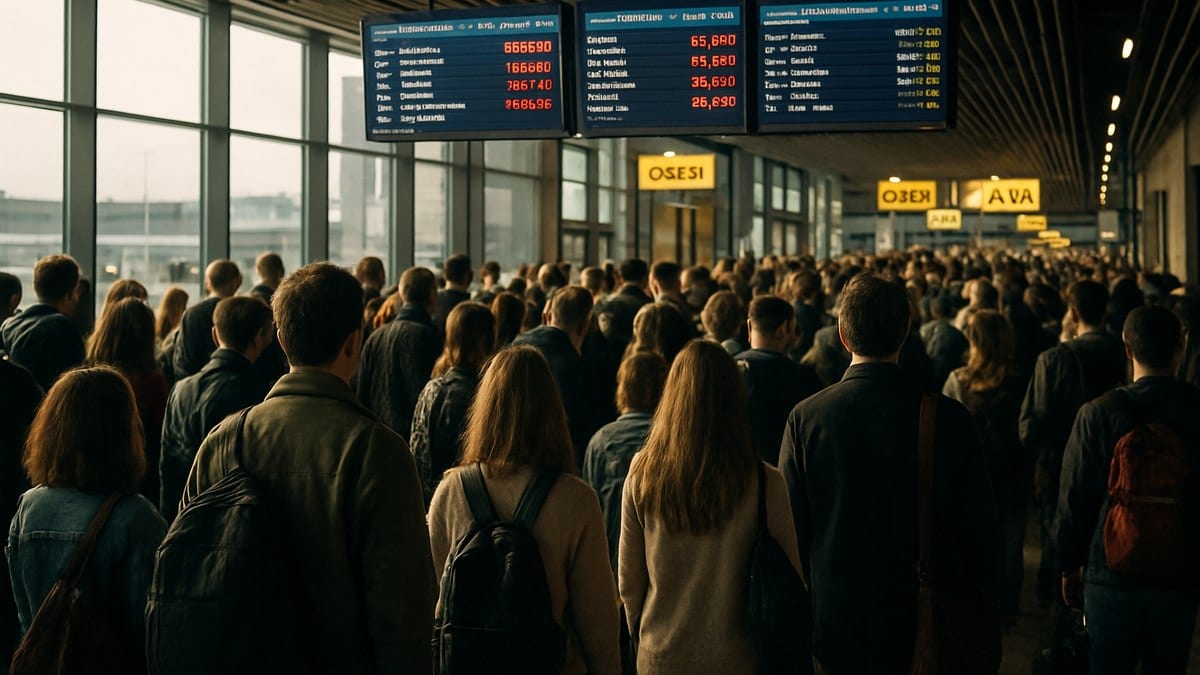
Recent analysis of more than nine million flights across Europe for the full year 2025 highlights Frankfurt Airport as the continent’s slowest major hub in terms of average delay duration. One study of 60 minute plus disruptions ranks Frankfurt as the European airport with the longest average delay, at more than 220 minutes per severely delayed flight, even though the share of flights crossing the one hour threshold is lower than at some competitors. The figures suggest that when operations in Frankfurt do unravel, passengers are exposed to some of the most protracted hold ups in the region.
Historical data from earlier travel seasons already pointed to structural strain at Germany’s primary hub. Comparative research on German airports published in 2024 indicated that Frankfurt had recorded the highest combination of delays and cancellations in the country in recent years, reinforcing its reputation among travelers as a challenging gateway during peak periods. Those findings align with broader Eurocontrol reporting, which shows that airport related causes, including capacity constraints and adverse weather, remain a persistent component of overall delay minutes in central Europe.
More granular snapshots from March 2026 underline how quickly disruption can escalate at the hub. Monitoring by passenger rights platforms and travel advisories has repeatedly flagged Frankfurt in daily lists of airports with elevated numbers of delayed and cancelled flights, particularly on days affected by adverse winter weather or air traffic flow restrictions. These incidents add to long running concerns among frequent flyers who describe tight connection windows at Frankfurt as especially vulnerable when queues lengthen at security or passport control.
London’s Multi Airport System Concentrates Cancellations
While Frankfurt dominates European rankings for delay duration, the London system led by Heathrow and Gatwick is drawing attention for the sheer volume of disrupted flights. A nationwide review of cancellation rates at UK airports across 2025 shows that Heathrow recorded the highest absolute number of cancelled commercial movements, with just under 400 flights grounded over the year. Although that represents a cancellation rate below 1 percent of total traffic, the scale of Heathrow’s operation means that each day of irregular operations can affect tens of thousands of passengers.
Additional performance analysis covering UK airports highlights London Gatwick as one of the poorest performers on punctuality. Official data compiled for regional transport authorities show Gatwick posting the longest average departure delay among a group of more than twenty airports, reflecting a pattern of congestion on busy leisure routes. Independent delay rankings for Europe echo this picture, placing Gatwick high on lists of hubs where passengers face an elevated likelihood of hour long setbacks, particularly during peak holiday weekends.
These weaknesses have been on display in specific disruption events in early 2026. Reports tracking operational performance across key European airports in March document clusters of delays and cancellations at Heathrow tied to weather and congestion, with each grounded long haul service triggering knock on effects across transatlantic and connecting networks. Travel coverage notes that even moderate schedule changes at Heathrow can reverberate widely given its role as Europe’s busiest passenger hub and a central node for alliance networks.
March 2026: A Stress Test for European Hubs
The first quarter of 2026 has already delivered several stress tests for Europe’s largest airports, with Frankfurt and London again at the center of the turbulence. A significant disruption event on 24 March, tracked by aviation data services and passenger advocacy groups, saw more than 1,800 flights across Europe delayed and hundreds cancelled. Amsterdam and Paris recorded some of the heaviest concentrations of delays, but Frankfurt was repeatedly listed among the top affected hubs as schedules slipped throughout the day.
Separate reporting for mid March paints a similar picture of fragile resilience. One daily breakdown cited 190 cancellations and over 800 delays across Europe in a single day, with additional disruption specifically noted at Frankfurt and other large hubs such as Paris Charles de Gaulle and Madrid Barajas. Analysts point to a combination of seasonal weather, crew availability and congested airspace as key drivers, although affected passengers typically experience the result only as missed connections and overnight stays in airport hotels.
London’s airports have not been spared. A late March survey of disruptions across London, Paris, Frankfurt and Istanbul highlighted Heathrow among the airports with notable cancellations and delays, particularly on UK Europe trunk routes. The interconnected nature of airline schedules means that a single late arriving aircraft into Heathrow or Gatwick can cascade into multiple delayed departures, compounding the sense of chaos in terminals during busy afternoon and evening waves.
Weather, Capacity and Staffing Keep Pressure High
Underlying the headline disruption numbers is a complex mix of structural and short term factors that continues to challenge Europe’s aviation recovery. Eurocontrol’s network overviews for 2025 and early 2026 indicate that overall delay minutes per flight have eased compared with the peak disruption seen in 2022 and 2023. However, the same reports note that delays linked to airport capacity and staffing, as well as weather related restrictions, still create pronounced bottlenecks at individual hubs on certain days.
Frankfurt and London are particularly exposed to these patterns. Frankfurt’s heavy reliance on tight, banked waves of connecting flights means that any capacity reduction on runways or at security can quickly ripple through departure banks. In the UK, staffing constraints and infrastructure limits at London’s airports amplify the impact of adverse weather and air traffic control restrictions. Earlier in the 2025 to 2026 winter season, powerful Atlantic storms brought strong winds and heavy snow to parts of Germany, France and the UK, triggering precautionary schedule cuts and ground handling slowdowns that disproportionately affected the largest hubs.
Industry commentary also emphasizes that passenger volumes have now climbed beyond pre pandemic levels, with European airports collectively handling more than 2.5 billion travelers in 2024 and further growth projected for 2026. Heathrow remains Europe’s busiest airport by passenger numbers, while Frankfurt sits comfortably within the top tier of continental hubs. As travel demand continues to rise faster than infrastructure expansion, analysts caution that even with gradual improvements in average punctuality, concentrated episodes of severe disruption are likely to remain a recurring feature of peak seasons.
What Disruption Rankings Mean for Travelers
The latest rankings are not intended to discourage travelers from using Europe’s largest hubs, but they do offer guidance on how to plan more resilient journeys. Passenger rights organizations and consumer advocates say that knowing which airports tend to experience the longest delays or the highest number of cancellations can help travelers make more informed choices about connection times, departure windows and routing options.
For Frankfurt, the data suggest that travelers relying on tight connections may wish to build in additional buffer time, particularly when traveling during winter or peak summer weekends, when capacity pressures and weather are more likely to coincide. In London, where Heathrow and Gatwick both show elevated disruption measures in different ways, passengers booking non essential late evening departures or short overnight trips may want to consider the potential consequences of a cancellation or lengthy delay.
Analysts also underline that disruption rankings are based on historical performance and do not guarantee outcomes for individual trips. Even airports with some of Europe’s best punctuality statistics can suffer severe problems on particular days, while hubs that struggle on average can occasionally deliver smooth, on time operations. For now, however, the balance of recent evidence for 2025 and early 2026 places Frankfurt at the top of Europe’s delay duration tables and London’s airports at the forefront of cancellation headlines, reinforcing their shared status as focal points of Europe’s ongoing airport chaos.