

More news on this day
European aviation is bracing for a turbulent summer after industry bodies warned that ongoing disruption in the Strait of Hormuz could trigger regional jet fuel shortages just as peak holiday travel begins.
Get the latest news straight to your inbox!
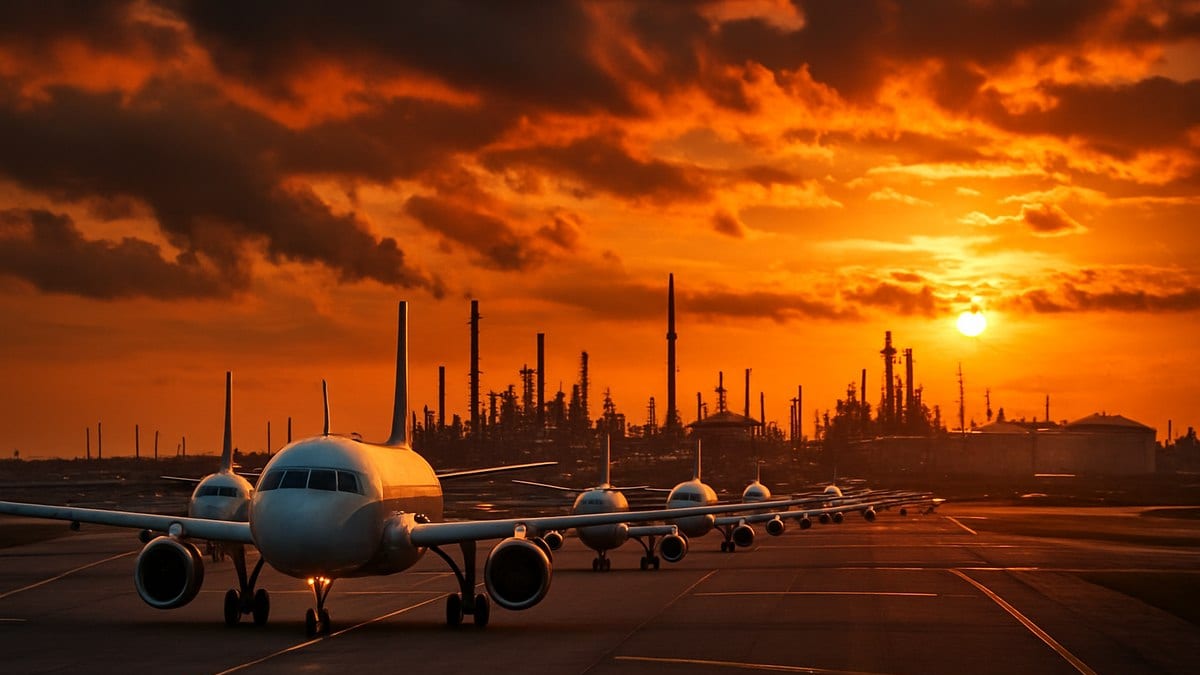
Hormuz Chokepoint Pushes Europe Toward Fuel Crunch
Months of conflict around the Strait of Hormuz, a corridor that handles roughly one fifth of global oil shipments and a major share of jet fuel feedstock, have tightened supplies across international energy markets. The effective closure of the route in March sharply restricted flows of crude and refined products from the Gulf, sending oil and jet fuel prices sharply higher through early April.
Airports Council International Europe has warned in a recent letter that, unless flows through Hormuz are restored in a stable way within weeks, European airports could face what it described as a systemic jet fuel shortage by early May. Industry data cited in recent coverage indicate that Europe relies on the Gulf for around half of its jet fuel imports, leaving airports and airlines highly exposed to any prolonged disruption.
While a short-term, conditional reopening linked to a ceasefire has been reported in recent days, shipping movements remain far below pre-crisis levels. Analysts note that even partial resumption of traffic through Hormuz may not be enough to rebuild inventories before the main summer holiday wave, keeping pressure on prices and supply security.
Market observers describe the situation less as an abrupt cut-off and more as a slow-motion squeeze, where constrained flows, higher costs and logistical bottlenecks combine to erode the margin of safety that normally underpins European flight schedules.
Airports and Airlines Begin Adjusting Summer Schedules
Signs of stress are already emerging on both the airport ramp and airline planning desks. Reports from Italy and other parts of Europe point to fuel rationing measures at selected airports, forcing carriers to adjust refuelling practices, reroute aircraft or trim frequencies. Trade and travel outlets have documented capacity cuts in the range of 5 to 10 percent at some airlines as they move to conserve fuel and protect core routes.
Several European carriers have publicly acknowledged schedule reductions and tactical cancellations heading into late April, particularly on short-haul and off-peak services. Scandinavian airlines, for example, have reported cutting hundreds of flights in April, while low-cost operators have indicated they may scale back growth plans if the fuel squeeze persists into May and June.
At the same time, large network groups such as IAG, Lufthansa and Air France-KLM are drawing on fuel-hedging strategies to cushion the price shock, even as they assess operational exposure to actual supply disruptions. Financial hedges can limit the impact of higher prices on balance sheets, but they do not solve the physical challenge of securing sufficient volumes at particular airports if local stocks run tight.
Industry commentary suggests that airlines are prioritising long-haul connectivity, key business routes and high-yield leisure markets, while being more willing to pare back marginal frequencies and secondary destinations. That approach aims to preserve network integrity, but it increases the risk of thinner options and fuller flights for many travellers across Europe this summer.
Rising Fares, Tankering Strategies and Route Rerouting
The jet fuel shock is already feeding through to ticket prices. Economic and travel analysis published in March and early April shows that jet fuel, which can represent around a fifth of an airline’s operating costs, has risen sharply since the Hormuz disruption began. With margins under pressure and limited ability to absorb sustained increases, many airlines are adding fuel surcharges or nudging base fares higher for peak-season departures.
Operationally, carriers are also turning to so-called tankering, uplifting extra fuel at airports that are less exposed to shortages in order to reduce refuelling needs at constrained locations. Reports highlight increased tankering on routes involving northern European hubs and select airports in North America and the Middle East that retain more secure access to fuel supplies.
However, tankering brings trade-offs. Carrying additional fuel adds weight and increases burn, partly offsetting the savings achieved by skipping refuelling at more expensive or supply-constrained airports. Environmental advocates have previously criticised this practice for raising emissions, but in a crisis scenario it is re-emerging as one of the few levers airlines can pull to maintain schedules.
Some carriers are also adjusting routings to take advantage of alternative refuelling points, even if this lengthens flight times. Combined with higher fares and reduced frequency, these measures contribute to a more fragmented and less predictable travel landscape for passengers planning European and intercontinental trips in summer 2026.
What Summer 2026 Travelers Should Expect
For travellers looking ahead to trips between May and September, the developing fuel situation around Hormuz adds another layer of uncertainty to an already busy season. Forecasts earlier this year had pointed to solid growth in European passenger traffic in 2026, but updated assessments now emphasise the risk that capacity constraints, higher prices and ad hoc cancellations could limit that rebound.
Travel industry reporting suggests that the immediate impact is likely to fall unevenly across the continent. The United Kingdom and Italy, which are seen as more dependent on Gulf-origin fuel imports, are frequently cited as among the more vulnerable markets. By contrast, countries with easier access to alternative supply routes or domestic refining capacity may experience less acute disruption, though they are not immune to price pressures.
Passengers are being urged by consumer groups and travel analysts to build more flexibility into summer plans. Recommendations commonly include allowing longer connection times, avoiding tight same-day links to cruises or events, and monitoring bookings closely for schedule changes. Some experts also note that earlier booking can lock in fares before further price adjustments, though there is no guarantee against operational disruptions closer to departure.
For now, the jet fuel crunch has not translated into blanket shutdowns of European air travel, but it has significantly narrowed the system’s resilience. Any renewed escalation in the Gulf, setbacks in maritime security, or unexpected refinery outages could quickly tip a tight supply balance into a more severe shortage as the main holiday season approaches.
Search for Alternatives Highlights Structural Vulnerabilities
The unfolding crisis is also prompting a broader debate about Europe’s long-term energy and aviation strategy. Industry and policy analyses underline how concentrated the continent’s jet fuel supply chains are, with a substantial share of imports flowing from the Persian Gulf through Hormuz. The current shock is exposing how quickly that dependence can translate into operational risk when a single chokepoint is disrupted.
To bridge near-term gaps, import patterns are already shifting. Reports indicate that Europe is turning more to North American refineries for jet fuel cargoes, while domestic refineries are being incentivised to increase aviation fuel output relative to other products. These efforts may alleviate some pressure over the coming months, but analysts caution that reconfiguring supply chains at scale takes time and carries its own logistical challenges.
The situation is also renewing interest in strategic fuel reserves dedicated to aviation, an idea that has received periodic attention but limited implementation in many countries. Recent commentary from international aviation and energy bodies suggests that establishing such buffers could help airports and airlines better withstand future shocks tied to geopolitical crises or extreme weather events.
In parallel, the jet fuel squeeze is likely to amplify pressure for efficiency gains and alternative propulsion technologies in aviation. While sustainable aviation fuels and next-generation aircraft cannot decisively alter the picture for summer 2026, the current disruption is serving as a vivid reminder that Europe’s appetite for air travel remains tightly bound to a volatile global oil system centered in and around the Strait of Hormuz.