

More news on this day
Thousands of air travelers across Europe are facing widespread disruption as a fresh wave of cancellations and delays hits major hubs in Germany, the United Kingdom, Denmark, Spain, France and several neighboring countries, with publicly available data indicating at least 154 flights canceled and around 1,691 delayed in a single day.
Get the latest news straight to your inbox!
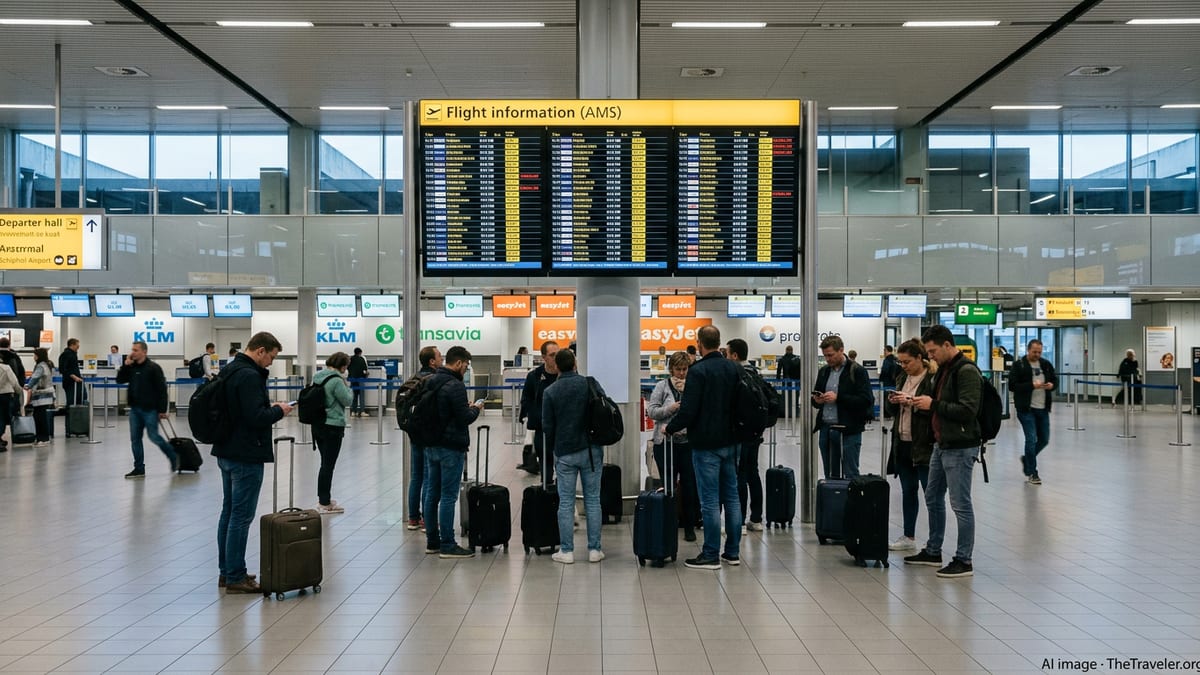
Major Hubs From London To Paris Log Heavy Disruption
Operational tallies compiled from flight-tracking and airport data show that delays and cancellations have clustered around Europe’s busiest hubs, including London Heathrow and Gatwick, Paris Charles de Gaulle, Amsterdam Schiphol and Oslo Gardermoen. Additional knock-on effects are being reported at large airports in Spain and Germany, as well as at regional Scandinavian and Mediterranean gateways.
In the latest wave of disruption, Amsterdam Schiphol has recorded one of the highest concentrations of delayed services, while London and Paris continue to see a mix of late departures and arrivals tied to congestion across northwestern European airspace. Oslo and Copenhagen have also featured repeatedly in daily disruption summaries, magnifying the impact on travelers using Scandinavia as a connecting region.
Airport operations reports indicate that traffic patterns in and out of these hubs are being further complicated by aircraft and crew arriving late from previous rotations. This reactionary effect means that even flights operating in clear weather or outside the most affected countries can still suffer secondary delays when they rely on aircraft or crew scheduled through disrupted airports.
German and Spanish airports are experiencing parallel problems, with delays spreading along popular leisure and business corridors. Congestion at Madrid and key German hubs has added another layer of complexity for airlines attempting to reposition aircraft and restore schedules.
Flag Carriers And Long Haul Brands Among Those Affected
Publicly available disruption logs list a broad roster of airlines caught up in the turbulence, including British Airways, Swiss, Virgin Atlantic and KLM. These carriers are central players on transatlantic and intra European routes, so delays on their networks are rippling outward to secondary cities and long haul destinations.
Reports from passenger rights platforms and aviation tracking services suggest that British Airways and Virgin Atlantic have experienced disruptions at London Heathrow and Gatwick, while KLM has faced sustained delay pressure at Amsterdam Schiphol. Swiss operations have seen schedule strain in and out of Switzerland, with onward connections into France, Germany and Spain affected when aircraft are out of position.
Low cost and leisure oriented airlines are also visible in the disruption statistics, particularly on routes linking the United Kingdom, Denmark, the Netherlands and southern Europe. When larger network carriers delay or cancel flights at major hubs, these point to point operators can struggle to absorb displaced passengers, contributing to crowding at customer service desks and longer rebooking queues.
While many airlines have maintained relatively low cancellation rates compared with previous years, punctuality data for the current week shows a pronounced spike in late departures and arrivals. This pattern indicates that carriers are striving to operate as many flights as possible but are frequently running behind schedule.
Weather, Staffing And Airspace Constraints Combine
Recent European weather systems have delivered bouts of heavy rain, low cloud and gusty winds across parts of the United Kingdom, France, the Benelux region and Scandinavia, limiting runway capacity during peak hours. Aviation analysts note that even modest weather restrictions at high traffic airports can quickly cascade into widespread delays when the network is already operating close to capacity.
At the same time, airline and ground handling staffing levels remain under pressure in several countries, particularly during shoulder season peaks when schedules expand faster than hiring pipelines. Publicly available operational updates from previous disruption days this month reference a combination of crew availability issues, ground handling bottlenecks and congested airspace sectors, particularly over the North Sea and central Europe.
Airspace management measures have also played a role. Rerouting around busy sectors or constrained military and training areas can lengthen flight times, forcing aircraft to hold or divert and compressing already tight turnaround windows at destination airports. Once turnarounds slip, subsequent flights on the same aircraft often depart late, contributing to the high volume of reactionary delays now being recorded.
Industry observers point to this interplay of weather, staffing and airspace as a key factor behind the current pattern, where outright cancellations remain comparatively limited but significant numbers of flights are departing more than 30 or 60 minutes behind schedule.
Knock On Effects Across Continental And Holiday Routes
The latest disruption has not been confined to traditional business corridors. Passenger reports and airport summaries indicate that flights serving Mediterranean leisure destinations in Spain, France and other southern European countries have also been hit, particularly when they rely on connections via London, Paris, Amsterdam or Scandinavian hubs.
Travel industry coverage highlights that a delayed morning departure from northern Europe can result in late evening arrivals in coastal Spain or on popular island routes, complicating ground transfers and hotel check in for holidaymakers. In some cases, late arriving aircraft are forced to turn around quickly or reposition out of sequence, producing further schedule instability the following day.
Central and northern European airports such as Copenhagen, Oslo and regional hubs in Germany and Denmark have reported secondary congestion as passengers attempt to re route around bottlenecks at London, Paris and Amsterdam. This is particularly evident on routes linking Scandinavia with the United Kingdom and the Netherlands, where even small timetable shifts can cause travelers to miss tight connections.
As aircraft and crews chase their planned rotations across the continent, airlines are having to make tactical decisions about which sectors to prioritize, occasionally trimming short haul frequencies to protect long haul services or critical evening departures.
What Stranded Passengers Can Expect Under EU And UK Rules
Consumer organizations and passenger rights services are reminding travelers that European and United Kingdom regulations provide a framework for care and potential compensation when flights are significantly delayed or canceled. Under these regimes, airlines generally must offer rerouting or refunds when services are canceled, and in many cases they are required to provide meals, refreshments and accommodation when passengers are left waiting for extended periods.
Eligibility for financial compensation depends on factors such as the length of delay on arrival, the distance of the flight and the reason for the disruption. Technical or staffing issues within an airline’s control can, in some situations, trigger compensation, while severe weather or specific airspace restrictions are more likely to fall under extraordinary circumstances where compensation is not payable, even though assistance must still be provided.
Public guidance from passenger advocacy groups suggests that affected travelers should retain boarding passes, booking confirmations and receipts for reasonable expenses, and should submit claims directly through airline channels when operations stabilize. Many advisories also note that connecting itineraries involving carriers such as British Airways, Virgin Atlantic, Swiss or KLM may still be covered by European style protections even when one leg of the journey operates outside the European Union or United Kingdom.
Given the current volume of disrupted flights, response times for claims and customer service inquiries may be longer than usual. Travel industry analysts recommend that passengers monitor their flight status frequently on day of departure, allow extra time at the airport and consider flexible routing options through less congested hubs where available.