

More news on this day
Air travel across parts of northern and southern Europe is facing a fresh wave of disruption, with new data indicating 1,813 delayed flights and 98 cancellations in a single operating period, snarling connections through major hubs in the Netherlands, Denmark, the United Kingdom and Italy and impacting carriers such as Lufthansa, Ryanair and other leading European airlines.
Get the latest news straight to your inbox!
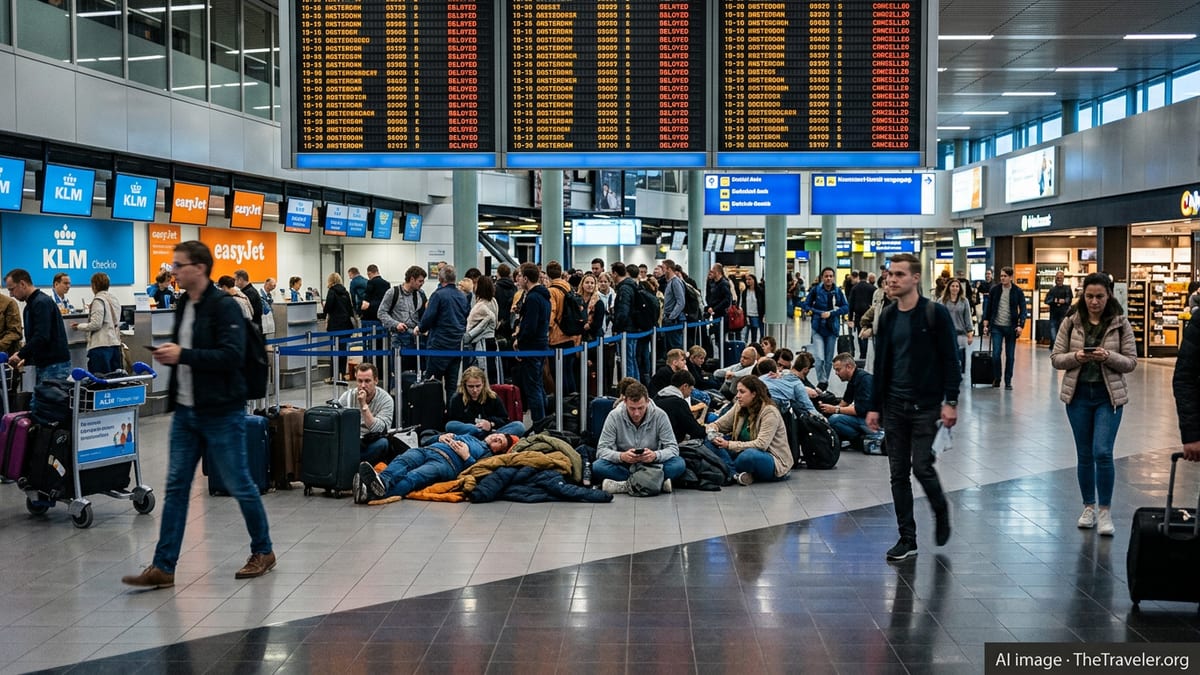
Widespread Delays From London To Rome
Published operational data for early April 2026 points to a sharp spike in disruption at several of Europe’s busiest hubs, including London Heathrow and Rome Fiumicino. The latest figures indicate that 1,813 flights were delayed and 98 were cancelled across a sample of European operations, with knock on effects across national networks in the United Kingdom, Italy, the Netherlands and Denmark.
Heathrow and Fiumicino remain among the most heavily used gateways on the continent, with Rome to London alone accounting for dozens of weekly frequencies in April 2026. Public timetables show at least seventy direct flights per week on the Rome Fiumicino to London Heathrow route, underscoring how even a short period of disruption can ripple quickly through airline schedules and connecting banks on both ends.
The delays are part of a broader pattern of operational strain following a busy winter and early spring travel season in Europe. Recent punctuality reports for major airports highlight how relatively modest schedule slippages can accumulate into hundreds of late departures on high density city pairs, especially when weather or airspace constraints reduce available capacity for key hours of the day.
For travelers, that has translated into missed onward connections, extended time on the ground and growing pressure on rebooking systems as airlines attempt to re accommodate affected passengers within already busy schedules.
Amsterdam And Copenhagen Feel The Knock On Impact
Amsterdam and Copenhagen, two of northern Europe’s most important connecting hubs, have also been swept up in the latest disruption. Both airports handle significant volumes of European transfer traffic, and historic punctuality data already shows average departure delays of several minutes even under normal operating conditions.
Amsterdam Schiphol in particular remains a linchpin for passengers traveling between the United Kingdom, Scandinavia and the rest of mainland Europe. Past storm events have demonstrated how quickly conditions there can deteriorate into large scale disruption, with hundreds of cancellations and diversions when runway capacity is constrained. Recent travel alerts issued by major Dutch carriers again emphasize flexible rebooking and refund options for itineraries touching Amsterdam during extended periods of irregular operations in early 2026.
Copenhagen Airport plays a similar role for Denmark and the wider Nordic region. When services into or out of Heathrow, Rome or other high volume hubs are delayed, aircraft and crews that feed Copenhagen often arrive late, creating secondary delays and in some cases cancelled rotations. Passenger accounts from recent months describe long queues at transfer desks and limited same day alternatives when multiple waves of flights are affected at once.
This interconnectedness means that even when local weather around Amsterdam or Copenhagen is relatively stable, disruptions hundreds of kilometers away can still trigger schedule changes, particularly for travelers relying on single connection itineraries across multiple European cities.
Lufthansa, Ryanair And Other Carriers Under Pressure
Operational data and consumer facing disruption trackers show traditional network airlines and low cost carriers alike caught in the latest wave of delays. Recent European disruption tallies published earlier in 2026, citing similar large one day totals of delayed and cancelled flights, highlighted Lufthansa, Ryanair and British Airways among the airlines most affected on select days, reflecting their scale across the continent.
Lufthansa’s extensive network through Frankfurt, Munich and other German hubs relies heavily on high frequency links to Amsterdam, Copenhagen, London and Rome. Any instability at those outstations can push aircraft out of position and interfere with tightly timed connection banks. Industry guidance notes that congestion at large hubs often cascades into late arrivals across secondary airports as rotations run behind schedule.
Ryanair, with its dense point to point web of routes, can face a different but equally challenging pattern of disruption. When a base such as London or Rome faces delays or airfield constraints, multiple short haul sectors may be affected in sequence. The carrier’s past cancellation lists have shown how operational issues at a single airport can temporarily remove specific rotations between capital cities, affecting leisure and business travelers alike.
Other major European airlines, including hybrid and low cost competitors, are exposed in similar ways on popular city pairs such as London to Amsterdam, Copenhagen to southern Europe, and intra Nordic links that rely on timely feeding flights from the United Kingdom and central Europe.
Rail Disruption Adds To Spring Travel Strain
The latest flight delays coincide with a challenging spring period for cross border rail travelers. Eurostar has published a rolling series of cancellations and timetable adjustments around the Easter holiday window, affecting services through Amsterdam, London and Paris as well as parts of the Belgian, Dutch, French and German high speed networks.
Recent updates show same day cancellations and extended disruption periods stretching into mid April 2026, prompting warnings from travel analysts that passengers should treat the holiday window as a low margin period for time sensitive journeys. For those already coping with flight delays or missed connections, reduced rail capacity has limited the usual fallback option of switching to high speed trains for short haul hops.
The combined effect is particularly visible in cities such as Amsterdam, where both flight and rail traffic converge. Travelers planning multi leg itineraries through the Dutch capital have reported having to adjust departure times, add overnight stays or accept more complex routings through alternative hubs in Germany or Belgium to keep plans intact.
In the United Kingdom, intermittent rail disruption has further complicated surface travel to and from airports, particularly for those using long distance services to reach London before international departures. While local transport remains available, extended journey times and last minute platform changes have added another layer of uncertainty for passengers already watching flight status boards closely.
What Passengers In Affected Countries Can Expect
For passengers departing from or arriving in the Netherlands, Denmark, the United Kingdom, Italy and neighboring countries, publicly available guidance continues to emphasize preparation and flexibility. Airlines advise travelers to monitor their booking portals and mobile apps closely on the day of departure, as same day schedule changes and gate swaps remain common during periods of heavy disruption.
In the European Union and associated countries, air passenger rights regulations entitle travelers to specific forms of assistance in the event of long delays or cancellations, subject to certain conditions. The EU wide framework sets common rules covering re routing, refunds and care obligations such as meals and accommodation when flights are significantly disrupted and the circumstances are within an airline’s control.
Consumer organizations recommend that travelers keep boarding passes, booking confirmations and any written notifications of disruption, which can support later claims for reimbursement or compensation. They also advise checking whether travel insurance policies include separate delay or missed connection benefits, which can cover additional costs not reimbursed by airlines or rail operators.
With air and rail operations under pressure in multiple countries, travel experts suggest allowing longer connection windows, considering early morning departures when feasible and building extra flexibility into itineraries. For now, the combination of 1,813 delayed flights and 98 cancellations in the latest reporting period serves as a reminder that Europe’s tightly woven transport network remains vulnerable to shocks that can quickly spread from one hub to many.