

More news on this day
Hundreds of air passengers across Europe faced disrupted travel as 85 flights were cancelled and more than 1,500 delayed on Sunday, affecting major carriers and key hubs from London to Zurich, Berlin and Athens.
Get the latest news straight to your inbox!
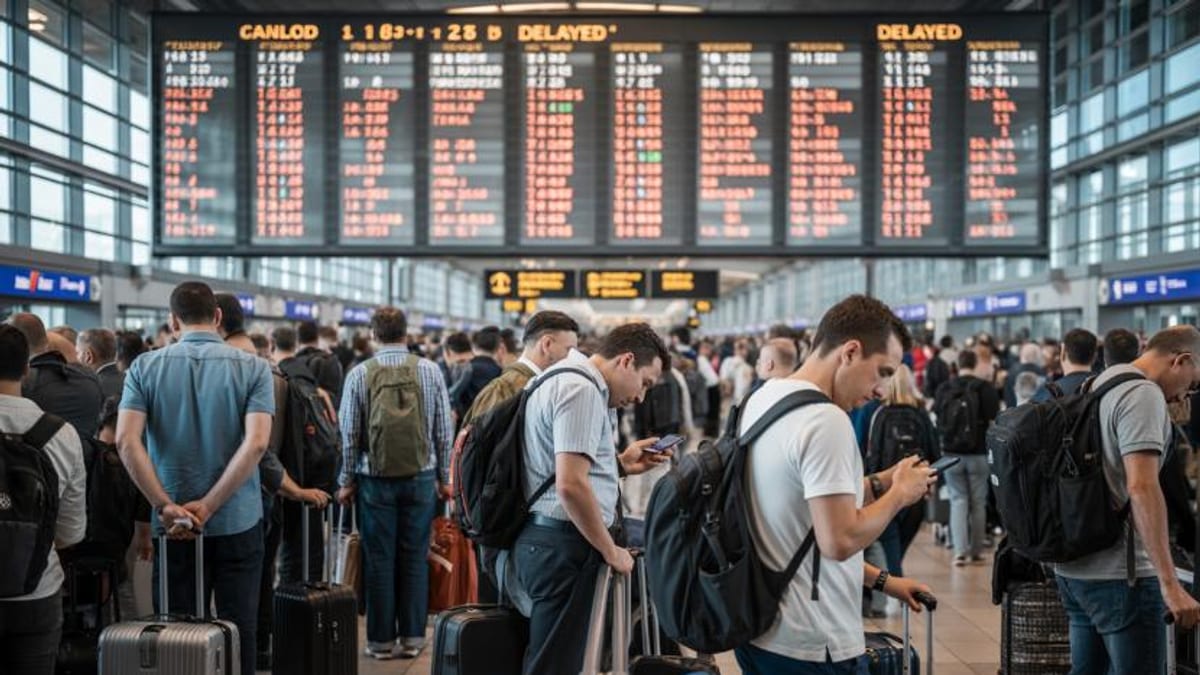
Image by Travel And Tour World
Flag Carriers Among the Hardest Hit
Publicly available flight-tracking data and airport status boards indicate that the disruption has cut across some of Europe’s best-known airlines, including British Airways, Scandinavian carrier SAS, Virgin Atlantic and Germany’s Lufthansa group. Several regional and low-cost operators have also reported scattered cancellations and extended delays as schedules backed up through the day.
While the total of 85 cancellations represents a small fraction of Europe’s overall daily traffic, the impact has been magnified by the concentration of disruption at large connecting hubs. Passengers on multi-leg itineraries found that even relatively short delays on first segments created missed connections, forcing airlines to rebook travelers hours later or, in some cases, into the following day.
Reports from major hubs suggest that long-haul services operated by affected airlines have been particularly vulnerable when arriving aircraft were late into Europe. With tight turnaround times already in place at busy airports, knock-on delays have cascaded into outbound flights bound for North America, the Middle East and Asia.
Published operational updates from airlines show efforts to consolidate lightly booked departures and reroute passengers via alliance partners in order to stabilize the network. However, limited spare capacity during the busy spring travel period has meant fewer alternative options for stranded customers.
Pressure Points in Zurich, Berlin, Athens and London
According to live airport information and network operations data, Zurich, Berlin and Athens have been among the most visible chokepoints, alongside London’s main airports. Each plays a significant role in its national or regional network, so localized problems quickly produced wider European effects.
At Zurich, reduced arrival capacity linked to unsettled weather and air traffic flow restrictions translated into holding patterns and late inbound operations. Aircraft arriving behind schedule then departed late, compounding delays for passengers continuing onward to destinations across Germany, Scandinavia and Southern Europe.
Berlin’s main airport also reported a spike in delays, which aviation analysts connect to a combination of tight runway scheduling and minor weather disruptions in Northern Europe. With Berlin serving as a key spoke for both leisure and business travel to Scandinavia and Central Europe, late departures there fed into evening congestion at larger hubs.
In Southern Europe, Athens experienced schedule slippage on several intra-European routes, adding to connection pressures for travelers heading to and from island destinations and the eastern Mediterranean. London, one of the most constrained pieces of airspace in the region, saw a familiar pattern of knock-on delays as arriving aircraft were absorbed into already busy afternoon and evening traffic peaks.
Weather, Congested Skies and Operational Strain
Operational summaries and recent European network reports point to a familiar mix of causes behind the latest disruption. Periods of low visibility, shifting winds and bands of rain over parts of Western and Central Europe have reduced runway capacity at times, forcing air traffic managers to meter arrivals and departures.
These constraints have been layered onto an already dense flight schedule, with network data for recent months showing that even small tactical restrictions can produce outsized delays when airports are running near capacity. A single weather front affecting multiple hubs can therefore generate wide-ranging congestion across the continent.
Industry observers also highlight ongoing resource and staffing challenges in certain parts of the aviation system. Publicly available information on air traffic control staffing and ground handling capacity indicates that some airports have limited resilience when operations come under pressure. Once delays accumulate, recovery can take several hours, particularly late in the day when fewer spare aircraft and crew are available.
Despite these challenges, European passenger rights rules, known as Regulation 261, continue to frame how airlines must respond when flights are significantly delayed or cancelled. Travelers may be entitled to assistance in the form of meals, accommodation and rebooking, and in some circumstances financial compensation, depending on the cause and length of the disruption.
Impact on Travelers and What Passengers Can Do
For passengers caught up in the latest wave of cancellations and delays, the immediate effects have included missed connections, overnight stays and disrupted holiday and business plans. Social media posts and traveler forums describe long lines at customer service desks, as well as crowded departure halls at several of the affected airports.
Travel advisers note that during widespread disruption, the most practical step for passengers is to monitor flight status frequently via airline apps or airport information screens and to move quickly to secure alternative itineraries when cancellations appear. Many carriers now allow same-day changes or self-service rebooking within their digital platforms when operations are irregular.
Passengers traveling on itineraries involving multiple airlines are being reminded to check which carrier issued the ticket and which airline is operating each segment, as responsibility for assistance and potential compensation can vary. Clear documentation of boarding passes, booking confirmations and any written notices of delay or cancellation can make it easier to pursue claims later.
Consumer groups continue to encourage travelers to familiarize themselves with European air passenger protections in advance of travel. Knowing the thresholds for care, rerouting and possible compensation can help passengers make informed decisions when faced with the choice of accepting rebooked travel, seeking refunds or arranging their own alternatives.
Outlook for the Coming Days
Network forecasts published by European aviation bodies suggest that traffic volumes will remain elevated as the continent moves further into the spring travel season. Any additional bouts of unsettled weather in key regions, combined with ongoing capacity limits at major hubs, could lead to further localized disruption.
Analysts point out that airlines and airports have been working to improve resilience after several difficult summer seasons marked by staff shortages and infrastructure bottlenecks. Investments in ground handling, airport systems and air traffic modernization are expected to ease some of the pressure over time, but short-term vulnerabilities remain when multiple challenges coincide.
Travelers with upcoming journeys through hubs such as London, Zurich, Berlin and Athens are being advised, in publicly available guidance, to allow extra time for connections and to consider earlier departures when possible. Flexible booking options and comprehensive travel insurance are also being recommended more widely, particularly for complex itineraries.
While the current tally of 85 cancellations and 1,577 delays underscores the fragility of Europe’s tightly woven air network, aviation specialists note that the system has also shown an ability to recover operations within a day or two when conditions improve. For passengers, however, even a brief episode of disruption can turn a routine journey into a protracted and stressful experience.