

More news on this day
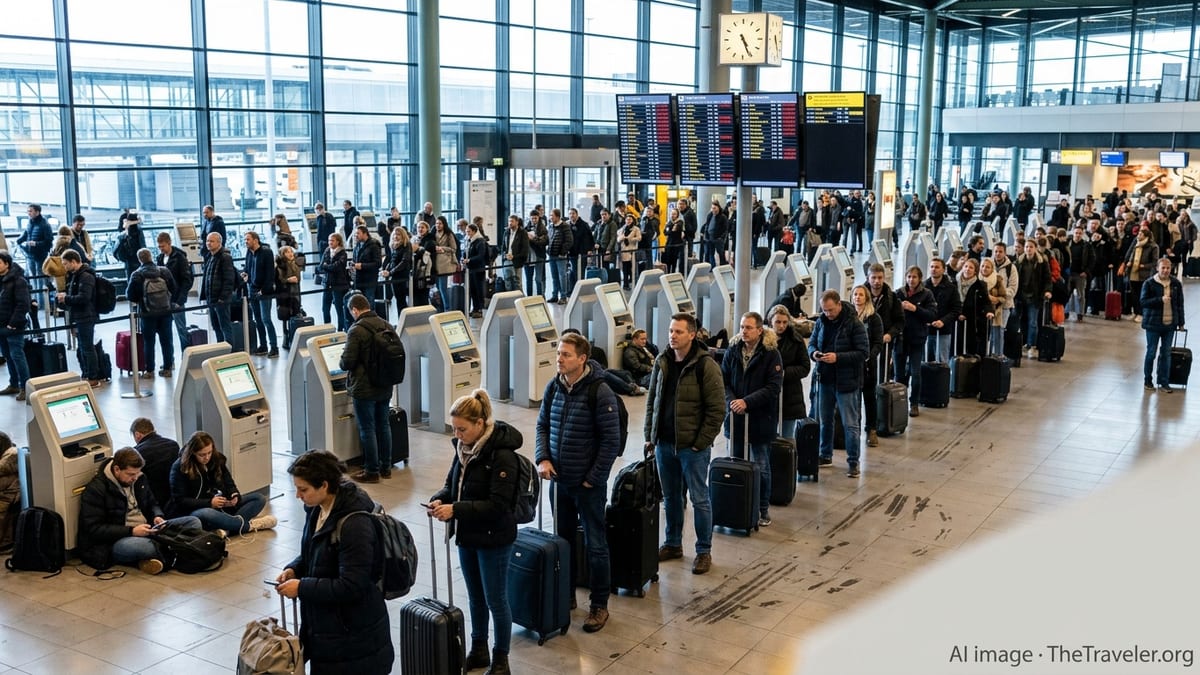
Thousands of travelers across Europe are facing missed connections, overnight stays and rapidly changing itineraries as a fresh wave of flight disruption spreads through major hubs, with tracking snapshots indicating at least 53 cancellations and more than 1,000 delays affecting departures and arrivals in the UK, the Netherlands, Italy, Portugal, Turkey and beyond.
Get the latest news straight to your inbox!
Major Hubs From London to Amsterdam Under Strain
Operational data compiled on April 4 indicates that Europe’s busiest airports are again struggling to keep schedules on track, with London and Amsterdam among the hardest hit. London’s main airports have reported hundreds of delayed departures and a cluster of cancellations in recent days, affecting both short haul and long haul routes and leaving aircraft and crews out of position for subsequent rotations.
Amsterdam Schiphol is also experiencing a renewed spike in disruption after a winter marked by repeated weather and capacity issues. Earlier season data showed the airport cancelling and delaying hundreds of flights on storm-affected days, and current tracking suggests that lingering congestion and tight turnaround times continue to translate into knock on delays for carriers such as KLM, easyJet and Delta on intra European and transatlantic services.
In Scandinavia, SAS has seen its own schedules pulled into the wider turbulence as flights feeding into key hubs run late or are cancelled. Passengers connecting through northern European airports report extended waits at transfer desks and rebooking counters as airlines attempt to recover disrupted networks with limited spare aircraft and crews.
Published coverage from flight tracking and passenger rights platforms describes a rolling pattern of disruption spreading across multiple days rather than a single, contained outage. That pattern is leaving travelers vulnerable to a cumulative series of minor delays that ultimately push connections beyond minimum transfer times and trigger missed onward flights.
Southern Gateways in Italy, Portugal and Turkey Also Affected
While northern hubs are bearing much of the operational stress, southern European gateways are also reporting disruption. Venice has seen a mix of cancellations and late running flights on both point to point and connecting services, impacting leisure travelers and cruise passengers heading into or out of the lagoon city at the start of the spring season.
In Portugal, Porto is experiencing elevated delay levels as airlines juggle busy weekend traffic with aircraft arriving late from northern Europe. According to publicly available monitoring, even a modest number of cancellations at a regional hub can create long queues at service desks as passengers from multiple full flights seek rebooking on a limited pool of alternative departures.
Turkey’s Dalaman, a key entry point to the Turquoise Coast, is also recording higher than usual disruption as carriers adjust to changing conditions along European and Mediterranean routes. Services operated by European and Turkish airlines alike have been affected, with passengers reporting extended ground holds, rolling departure time changes and, in some cases, last minute cancellations that force overnight stays.
The result is that travelers bound for sun destinations along the Mediterranean and Atlantic coasts are facing similar uncertainty to those transiting major northern hubs. With connections from London, Amsterdam and other core airports feeding into Venice, Porto and Dalaman, any upstream delay can quickly cascade into missed charter links and resort transfers.
Airlines From Legacy Carriers to Low Cost Players Impacted
The current wave of disruption is cutting across airline business models. Legacy network carriers including British Airways, KLM, Delta and SAS are seeing delays ripple through their hub and spoke systems, where a single late arriving aircraft can affect multiple onward legs. Publicly accessible operations summaries from recent days point to clusters of disruption on both European and long haul sectors.
Low cost airlines such as easyJet are also prominently represented in delay and cancellation tallies. With many aircraft scheduled on intensive daily rotations, even short ground delays can have a compounding effect as the day progresses, leading to late evening services running significantly behind schedule or being cancelled altogether when curfews and crew working time limits are reached.
Schedule data and operator advisories reviewed in early April suggest that some cancellations are also linked to pre planned capacity adjustments, industrial actions and continuing recovery from earlier weather events. However, for passengers on the ground, the practical impact is similar: crowded terminals, long queues at customer service points, and uncertainty over when a reliable departure will be available.
Airline travel alerts for early April indicate that carriers are encouraging passengers to monitor their bookings closely and to use digital tools where possible to secure rebookings, refunds or alternative routings. Some networks that link Air France, KLM, Delta and Virgin Atlantic are offering flexible reissue policies on affected itineraries during the disruption window.
Knock On Effects Across Wider European and Transatlantic Networks
While the headline figures of 53 cancellations and more than 1,000 delays focus attention on specific countries and airports, the operational reality is far broader. When a flight from London or Amsterdam runs several hours late or is cancelled outright, the aircraft and crew that should have operated a later service to another region are often unavailable, creating additional disruption far from the original problem.
Recent snapshots published by aviation analysts for late March and early April show this domino effect in action across Europe. Delays at London and Copenhagen, for example, have translated into missed connections for flights headed to European Russia and other eastern destinations, while late departures from Amsterdam have been visible on transatlantic routes to North America as aircraft depart behind schedule.
Similar patterns are emerging on routes linking Europe with the Middle East and Asia, as late running European feeder flights arrive after long haul departures have closed. In some cases, travelers report being rerouted through alternate hubs or rebooked 12 to 24 hours later, effectively losing a travel day as airlines prioritize moving large volumes of stranded passengers with the aircraft they have available.
Industry monitoring groups note that this type of interlinked disruption is particularly challenging to resolve quickly. Airlines must balance crew duty limits, airport slot constraints and maintenance requirements when redesigning daily schedules on the fly, which often results in more conservative timetables and an extended period of elevated delay statistics even after the initial trigger has passed.
What Stranded Travelers Can Expect Under European Rules
For passengers caught up in the current disruption, European and UK passenger rights frameworks provide an important backdrop. Regulation EC 261/2004 and aligned UK rules set minimum standards for care and assistance when flights are heavily delayed or cancelled, including provisions for meals, refreshments and accommodation in certain circumstances.
Public guidance from consumer organizations explains that, in many cases, travelers departing from or arriving in Europe may also be entitled to financial compensation if the disruption is not caused by extraordinary circumstances such as severe weather or airspace closures. However, determining eligibility can be complex, especially when delays stem from a combination of factors including earlier knock on issues at other airports.
Information published by passenger advocacy services recommends that affected travelers keep boarding passes, booking confirmations and receipts for any out of pocket expenses such as hotels and meals purchased during an unexpected overnight stay. These documents can be vital when submitting claims to airlines or seeking assistance from third party claims services after the trip.
Travel experts also encourage passengers to act quickly when disruption hits. Rebooking tools on airline websites and mobile apps can often secure remaining seats on alternative flights faster than traditional airport queues, particularly during large scale events that leave thousands of travelers seeking assistance at once. At the same time, travelers are advised to monitor real time updates closely, as rapidly changing conditions at busy European hubs can alter departure and arrival times with little warning.