

More news on this day
Hundreds of air travelers have been stranded across Europe in early April 2026 as a new wave of delays and cancellations ripples through an already fragile aviation network, extending disruption that began in March and raising concerns about the continent’s readiness for the coming summer season.
Get the latest news straight to your inbox!
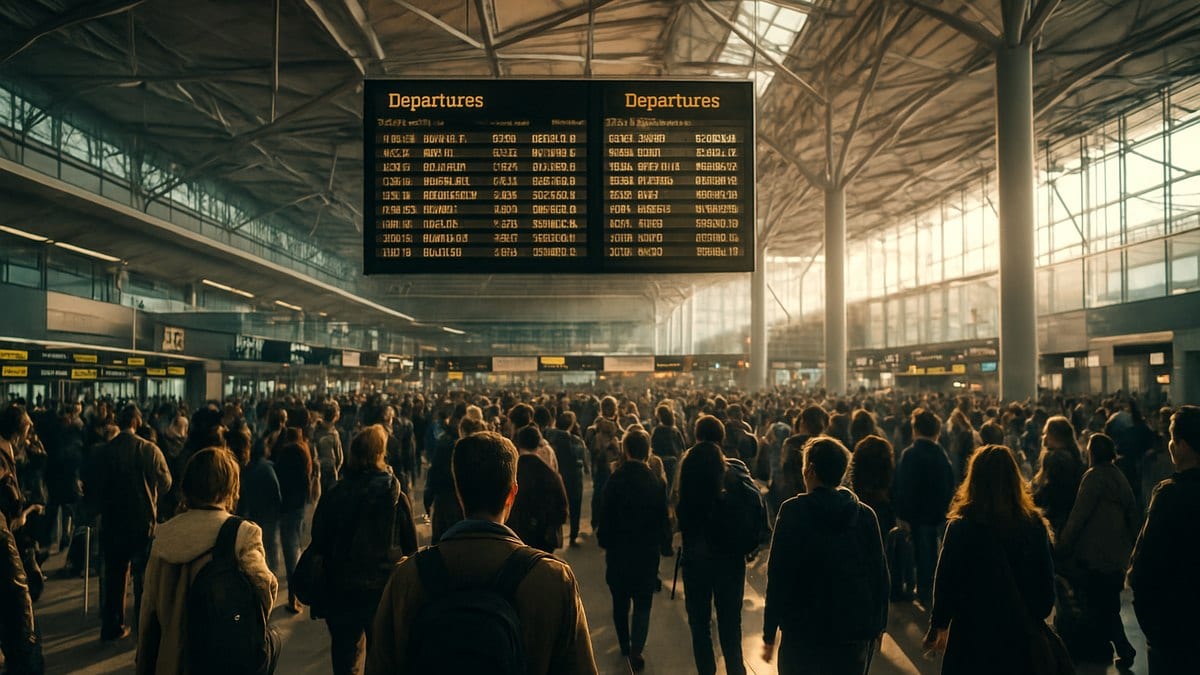
Fresh Wave of Delays Across Key European Hubs
Flight tracking data and published reports indicate that the first full week of April brought a sharp uptick in disruption at major European airports, with delays and cancellations affecting routes across at least half a dozen countries. On 9 April alone, more than 1,600 flights were delayed and nearly 40 cancelled across hubs including London Heathrow and London Gatwick, according to figures compiled by aviation and travel advisory platforms.
Earlier in the week, additional coverage from regional outlets described thousands of passengers dealing with missed connections and overnight stays as delays cascaded through the network. One report put the tally at around 1,475 delays and 172 cancellations on 6 April, affecting airports from Amsterdam and Paris to Rome, Zurich and Lisbon, with widespread knock-on impacts for airlines such as Air France, British Airways, KLM, Ryanair and ITA Airways.
The pattern is familiar to frequent flyers in Europe: relatively small timetable slippages in the morning deepen into major schedule distortion by afternoon, leaving aircraft and crews out of position and forcing airlines to trim rotations. Publicly available information from analytics and passenger rights sites suggests that many of those stranded in recent days have faced rebooking windows stretching well beyond 24 hours, particularly on busy intra-European routes.
Weather, Airspace Congestion and Technical Issues Combine
Reports from aviation data providers point to a mix of factors behind the latest April disruption, with unsettled spring weather in northern and western Europe intersecting with chronic air traffic control congestion and isolated technical problems. Severe weather systems at the turn of March and April were still disrupting close to 500 flights at major hubs such as Frankfurt, Munich, Madrid, Heathrow and Oslo as recently as this week, according to passenger assistance platforms that track operational performance.
At the same time, industry observers highlight that Europe entered 2026 with air traffic control delay levels already significantly higher than a decade ago, reflecting structural capacity and staffing constraints. A review released by an international airline association in late 2025 showed that en route air traffic control delays in the region had more than doubled over ten years, even though flight numbers rose at a much slower pace. That imbalance has left the system more vulnerable when weather fronts or local incidents arise.
Local technical events have added to the strain. Recent coverage from specialist aviation media described an emergency diversion involving a Swiss aircraft into Brussels on 8 April, which left travelers overnight in the Belgian capital. While isolated safety incidents of this kind are rare and carefully managed, they can absorb scarce aircraft capacity and contribute to broader scheduling stress when they occur during already busy periods.
Knock-on Effects From March Disruptions Still Felt
The latest problems come on the heels of a turbulent March for European and global aviation, and evidence suggests that the network had not fully recovered when the April disruption began. In mid to late March, data collated by travel law and advocacy sites recorded more than 1,800 delays and around 90 cancellations in a single multi-day episode involving carriers such as Lufthansa and easyJet. Those events left hundreds of passengers waiting for rebooking and refunds, and created a backlog in aircraft and crew rotations that can take days to clear.
Separate coverage of aviation conditions in Asia and the Middle East during March points to large-scale disruption there as well, including thousands of delays linked to airspace closures and operational bottlenecks. Although geographically distant, such events feed into European schedules, particularly on long haul services and connecting traffic, as airlines juggle aircraft availability and crew duty limits across global networks.
Network operations updates from European agencies for February 2026 already flagged a series of localized incidents that contributed to delay growth, ranging from ground radar issues at Amsterdam Schiphol to a fire alarm at the Paris Charles de Gaulle control room and a major strike at Lufthansa. Analysts note that when a system enters the busy spring period with this kind of operational overhang, each new disruption has a larger marginal impact on passengers.
Airports and Airlines Under Scrutiny as Summer Nears
The concentration of delays in early April has renewed scrutiny of how European airports and airlines plan for resilience. Commentators quoted in recent coverage, including pieces on TheTraveler.org, argue that the latest wave of disruptions underscores deeper structural challenges, from limited spare runway and gate capacity at saturated hubs to tight staffing levels in both ground handling and air traffic control.
Industry bodies and travel analysts have repeatedly called for closer European Union and United Kingdom coordination on air traffic management reforms, aiming to smooth cross-border flows and add capacity before peak summer demand. Proposals include modernizing airspace design, investing in new traffic management technology and reviewing staffing models so that national air navigation service providers can better handle seasonal peaks and weather-related restrictions.
For airports, operational reviews following recent storms and winter weather events have emphasized the importance of robust de-icing capacity, faster turnaround handling and clearer contingency plans for accommodating stranded travelers when large numbers of flights are disrupted at once. Observers note that several hubs still rely on infrastructure and staffing models designed for less volatile traffic patterns, even as climate variability and post-pandemic demand swings have made schedules more unpredictable.
Passengers Face Long Waits and Complex Compensation Rules
For travelers caught up in the April 2026 disruption, the experience on the ground has ranged from extended queues at check in and security to long waits at customer service desks as airlines attempt to rebook passengers across limited remaining seats. Social media posts and passenger forums describe situations in which travelers have slept in terminals or accepted last minute hotel vouchers while waiting for space on the next available flight.
Publicly available guidance from compensation and advisory platforms stresses that passengers on flights departing from or arriving in the European Union may be entitled to support such as meals, refreshments, accommodation and in some cases financial compensation, depending on the cause and length of the delay. However, the rules are complex, and eligibility can hinge on whether a disruption is classed as extraordinary, such as severe weather or airspace closures, or within the airline’s control, such as crew rostering or certain technical issues.
Consumer advocates caution that this distinction is likely to come under renewed scrutiny if the April disruptions persist. With weather, system congestion and operational decisions all playing a role, they argue that transparent communication and consistent application of passenger rights will be essential to maintaining public confidence as Europe’s airports brace for the busier late spring and summer period.