

More news on this day
Europe’s long-awaited shift to biometric border controls has entered a crucial phase, with the European Union’s new Entry/Exit System now fully operational but early reports pointing to delays, technical glitches and uneven implementation across the Schengen area.
Get the latest news straight to your inbox!
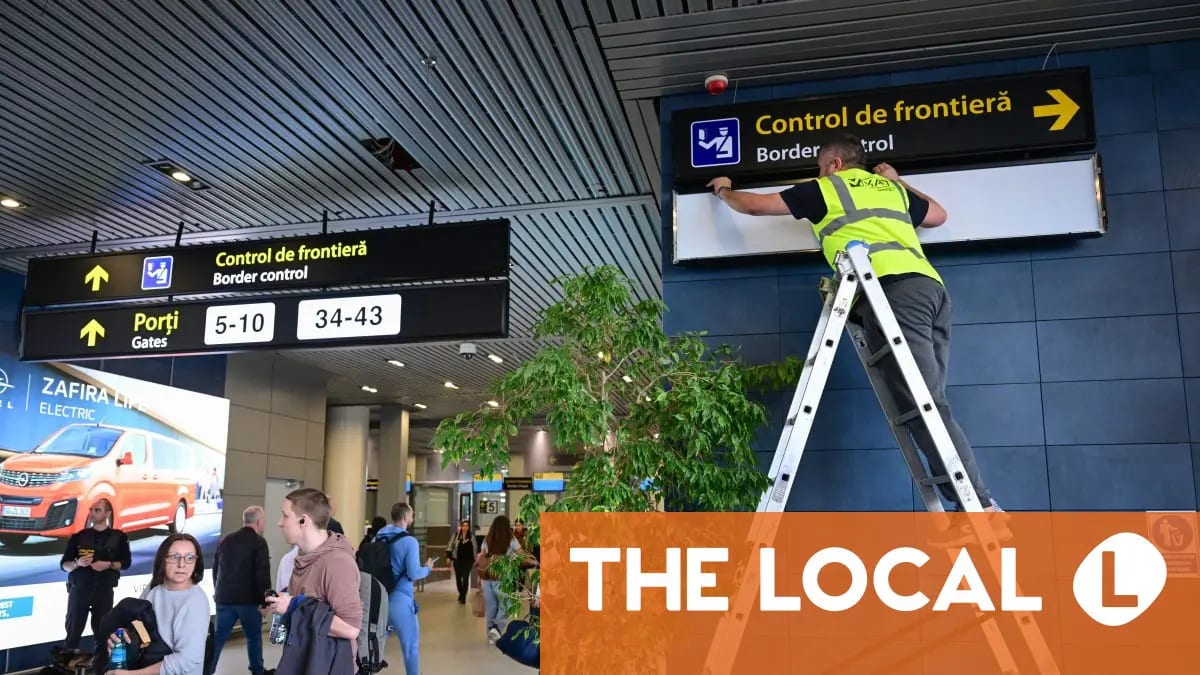
Digital border system reaches full operational date
The EU’s Entry/Exit System, a digital platform that records the movements of non EU nationals entering and leaving the Schengen area, reached full operational status in all participating countries on 10 April 2026 after a phased rollout that began in October 2025. The system replaces traditional passport stamping for short stay visitors with biometric checks and electronic records at land, sea and air borders.
Publicly available information from EU institutions describes the system as a major overhaul of external border management designed to identify overstays more accurately, curb document fraud and streamline checks by storing traveller profiles for repeat visits. Authorities have presented the project as a prerequisite for the launch of the separate ETIAS travel authorisation, which is due to follow later in 2026.
Under the new procedure, most non EU travellers, including British and American passport holders, must now provide fingerprints and a facial image at their first crossing after activation, with their personal and travel details stored in a central database operated by the EU agency eu LISA. Subsequent crossings are intended to be quicker because border staff can retrieve existing records instead of collecting full biometrics again.
The full activation date has arrived after multiple postponements over several years, as member states struggled with procurement, staffing and technical integration. In the months leading up to April, transport associations had repeatedly highlighted the risk that the final shift to mandatory registration could strain airports and land crossings during busy holiday periods.
Queues, glitches and calls for more flexibility
As the system moved from partial to full use, early travel reports indicated that long queues and missed flights emerged at several airports and land borders, particularly where a high share of passengers required first time enrolment. Border processing times at some locations were described as having increased sharply, with wait times stretching to two or three hours during peak flows.
Industry bodies representing airports and airlines publicly urged EU institutions and national governments to allow more operational flexibility during the transition, pointing to what they characterised as "significant disruptions" on the first days of full operation. Their statements highlighted missed flight connections and bottlenecks at border control points where hardware capacity, staffing levels or passenger information were insufficient to match the new requirements.
Some national and local authorities have made use of provisions that allow temporary easing of obligations, such as limiting the proportion of travellers who must be registered on particularly busy days or briefly reverting to manual processing when systems fail. These measures have created a patchwork picture in which some crossings are fully digital while others continue to rely in part on passport stamps.
Travel forums and passenger testimony indicate that the experience can vary widely not only between countries but even between terminals at the same airport, depending on how many biometric kiosks are installed, how early passengers arrive and how well staff can direct separate flows for EU and non EU travellers.
Channel ports and key hubs face added strain
The rollout has been particularly sensitive at UK facing border points, where juxtaposed controls and tight turnround schedules leave little room for delay. Reports from cross Channel services describe technical glitches at some biometric kiosks that prompted a temporary reversion to manual passport stamping, creating congestion for coach and car passengers waiting to clear French immigration before boarding.
At major hubs in Spain, Greece, Italy and Germany, where large numbers of non EU tourists arrive on seasonal flights, local media and traveller accounts describe extended queues as border officers complete initial registrations. In some cases, airport operators have advised passengers on third country passports to arrive even earlier than the usual two to three hours before departure to account for potential bottlenecks at exit checks.
Some airports that trialled the system during the phased period appear to have adjusted more smoothly, having already installed additional e gates, staffed dedicated lanes, and run public information campaigns explaining the new procedures. Others that delayed full deployment until close to the April deadline now face pressure to scale up capacity quickly before the summer peak.
Ferry ports and regional airports, which often have limited space for new kiosks and mixed flows of locals and tourists, are emerging as particular pinch points. Local authorities in several tourist regions have warned that unmanaged queues at border control could spill into terminal areas, affecting overall passenger safety and crowd management.
Member states test the limits of ‘progressive’ implementation
Although the system is officially in full operation, the reality on the ground remains more nuanced, with member states relying on the legal framework that allowed a progressive introduction. That framework permitted national authorities to ramp up registration requirements over several months and, in certain circumstances, temporarily suspend full use at specific crossing points to avoid severe disruption.
Travel industry analysis suggests that this flexibility is now being pushed to its limits, as some countries seek short term exemptions for particular ports or during major events and holidays. For travellers, this can result in uncertainty about whether they will be enrolled at a given crossing and what documentation or time buffer they should plan for.
Advocacy groups have also drawn attention to uneven staffing levels and training across the bloc. While some police and border agencies have long been preparing for the switch to biometric checks, others are still adjusting work rosters and seeking additional personnel, particularly at land borders where coaches and private vehicles can arrive in unpredictable surges.
Observers note that the patchwork approach can complicate the system’s core purpose of maintaining a consistent, reliable record of entries and exits. If registration is suspended or relaxed too frequently at busy points, gaps in data could emerge that will need to be reconciled later, potentially creating administrative burdens for both travellers and authorities.
What travellers can expect in the coming months
As the initial wave of first time registrations passes, border processing times for previously enrolled travellers are expected to fall, especially where automated gates can verify identities against stored biometric templates. EU briefings suggest that the long term goal is to make routine crossings faster and more predictable, even if the short term impact involves adjustment costs for both passengers and border staff.
For now, however, travel advisors are recommending that non EU visitors treat the coming months as a transition period marked by possible delays and localised disruption. Passengers on early morning and late evening flights, when staffing is often leaner, may be particularly exposed if a high number of first time enrolments coincide with technical issues or flight delays.
Special attention is likely to focus on the northern summer season, when leisure travel to Mediterranean destinations peaks and the risk of bottlenecks is highest. Airport operators in countries such as Greece, Spain and Italy have indicated through public communications that they are continuing to add kiosks, reconfigure queues and coordinate with airlines on passenger information to reduce pressure at border checkpoints.
The rollout is also being closely watched in the context of the forthcoming ETIAS travel authorisation, which will add an online pre screening layer for many visa exempt visitors by the end of 2026. Together, the two systems are intended to tighten external border controls while preserving ease of travel, but their combined impact on passenger experience will depend heavily on how effectively the lingering delays and disruptions from the current transition are resolved.